
Picking
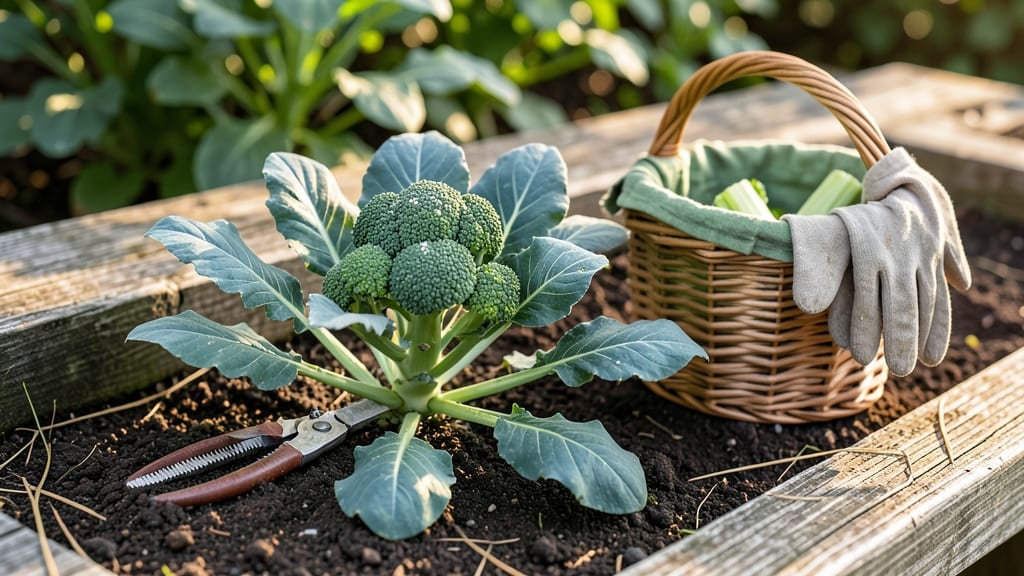
To pick broccoli 🥦 from the garden at the perfect moment means snapping off heads that are tight, flavorful, and ready to eat—before they turn bitter or woody.
Picking broccoli at the wrong time can mean the difference between a crisp, flavorful harvest and a bitter, woody disappointment—so timing matters more than you think.
Look for florets that are deep green, compact, and about 6-8 inches wide, with buds still closed at the center. If you wait too long, those buds will loosen, the stems will toughen, and the taste will suffer.
In this guide, I’ll walk you through the exact visual cues to watch for, the best time of day to harvest, and how to encourage regrowth for a continuous supply all season long.

How to determine broccoli harvest time by floret color & size
Timing your broccoli harvest correctly ensures you enjoy those crisp, sweet florets at their peak. The key lies in watching for three critical visual cues: floret color, head size, and stem firmness.
When these factors align, you're ready to harvest. I’ve learned that waiting too long turns those delicious buds into tough, bitter stems—so let’s break down exactly what to look for.
First, focus on the color of the florets. Mature broccoli heads should be a deep, vibrant green, almost bordering on blue-green or even purple in some varieties like Purple Sprouting Broccoli.
If the florets start turning yellow or brown, they’ve passed their prime. The color shift happens quickly, so check your plants every 2-3 days during the harvest window.
Next, examine the size of the broccoli head. Aim for heads between 6 to 8 inches in diameter. Smaller heads (under 4 inches) are still immature and lack flavor, while larger heads (over 10 inches) become woody and tough.
I’ve found that dwarf varieties like ‘Calabrese’ stay sweeter when harvested on the smaller side, while standard varieties can handle the full 6-8 inch range.
Don’t forget to check the stem thickness and the buds at the center. The stem should feel firm but not woody, and when you gently bend it, it should snap easily.
At the center, the buds should remain tightly closed—if they start opening into tiny yellow flowers, your broccoli has gone past its best.
| Harvest Cue | Ideal Specification | What to Avoid |
|---|---|---|
| Floret Color | Deep green to blue-green or purple (varies by variety) | Yellowing or brown florets |
| Head Size | 6–8 inches in diameter | Heads under 4 inches (too small) or over 10 inches (woody) |
| Stem Firmness | Firm but snaps easily when bent | Hard or fibrous stems |
| Center Buds | Tightly closed, no yellow flowers | Open buds or flowering |
| Harvest Window | 60–80 days after transplanting (varies by variety) | Waiting beyond 80 days |
One trick I’ve picked up is to harvest broccoli early in the morning when temperatures are cooler. This helps preserve the crispness and sweetness of the florets. Use a sharp knife or pruning shears to cut the stem about 5–7 inches below the head.
This leaves room for side shoots to grow, giving you a second harvest in just a few weeks.
For varieties like Romanesco broccoli, the rules are slightly different. These compact heads should be harvested when they reach 3–5 inches in diameter and still have a tight, conical shape. Their unique fractal pattern is most striking when they’re young, so don’t wait too long!
If you’re growing purple broccoli varieties, the color changes dramatically after harvest. The florets will turn green when cooked, but harvesting them at the right time ensures they’re sweeter and more vibrant before cooking. Look for the same deep purple hue across the entire head—no pale or greenish patches.
Pro tip: Keep an eye out for side shoots that emerge after the main harvest. These smaller shoots can be just as flavorful and often appear within 2–3 weeks of the initial harvest.
Harvest them using the same color and size guidelines, but they’ll be smaller—typically 2–4 inches in diameter.
Finally, store your freshly picked broccoli in the crisper drawer of your fridge or wrap it in a damp paper towel to maintain moisture. When stored properly, harvested broccoli stays fresh for 5–7 days, though I’ve found it’s best enjoyed within 2–3 days for peak flavor.
Signs your broccoli is overripe (and how to fix it)
Even the most attentive gardeners sometimes miss the perfect harvest window for broccoli. If you wait too long, your once-vibrant dark green florets can turn yellow, and the tender stems become tough and bitter.
Overripe broccoli isn’t just less flavorful—it can also signal the end of your plant’s productivity if you don’t act quickly. The good news? You can still salvage partially overripe heads and encourage new growth from side shoots.
One of the first visual warning signs is when the central florets start opening up and revealing tiny yellow flowers. This isn’t just about looks—it means the nutritional quality is declining fast.
The florets may also start to loosen and spread apart, losing that tight, compact structure that makes broccoli so appealing. If you’ve ever bitten into a broccoli head that’s past its prime, you know the crunchy texture turns woody, and the flavor shifts from fresh to bitter.
⚠️ WARNING: Don’t Ignore These Overripe Signs! ⚠️
- Yellowing florets (even just a few buds)
- Loose, spread-out buds instead of tight clusters
- Tough, fibrous stems that resist bending
- Bitter taste when tested (trust your palate!)
If your broccoli head is only partially overripe, don’t toss it entirely! Start by cutting the main stem about 5-7 inches below the head. Then, trim off any yellow or woody florets and save the rest for stir-fries or roasting.
The remaining dark green buds will still deliver that sweet, crisp flavor you love. Pro tip: Store the trimmed head in a perforated plastic bag in the fridge to slow down further ripening.
Here’s the best part: broccoli plants are prolific producers if given the chance. After harvesting the main head, keep an eye on the side shoots that will emerge from the leaf axils near the base. These smaller heads take 4-6 weeks to mature, so stay vigilant.
To encourage more side shoots, ensure your plant gets consistent water and balanced fertilizer (like a 5-10-10 mix) every 4-6 weeks during the growing season.
For future harvests, set a reminder to check your broccoli every 2-3 days once the main head reaches 4-6 inches in diameter. A quick gentle squeeze test can help: if the florets feel firm and the buds are still tightly closed, it’s ready.
If you notice even slight yellowing, act fast—your broccoli can go from perfect to past its prime in just 24-48 hours.
Remember, overripe broccoli isn’t the end of the world—it’s just a sign to adjust your harvesting routine. With a little practice, you’ll train your eyes to spot the ideal moment for picking, ensuring your garden delivers crisp, flavorful broccoli all season long. Happy harvesting! 🥦