
Picking
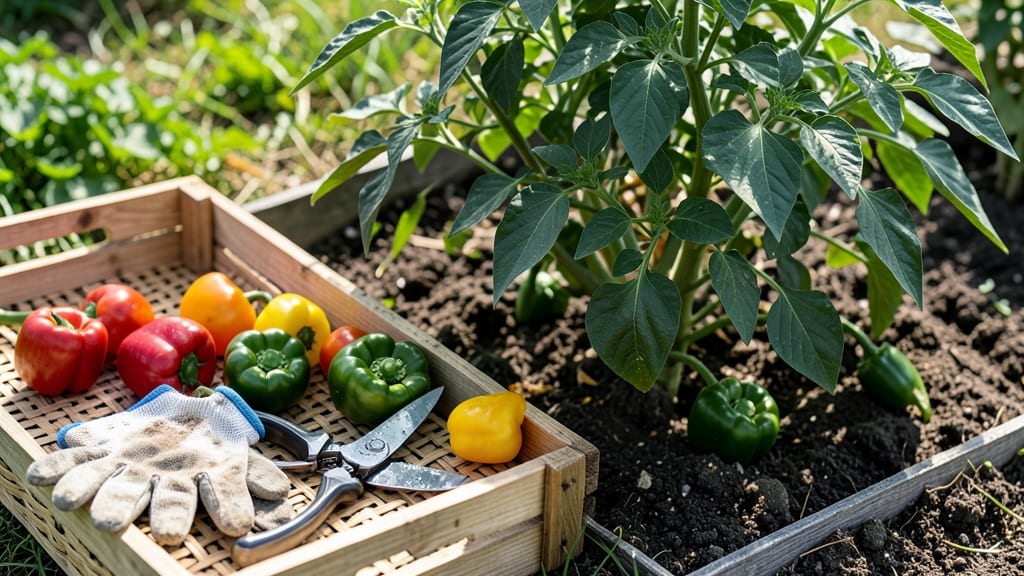
To pick bell peppers from your garden at the perfect moment, watch for deep color and firm skin—these are your two biggest clues that flavor and texture are at their peak.
Ever sliced into a pepper only to find it still bitter or underripe? You’re not alone, and it’s not just about color—size, stem separation, and even the time of day play a role.
Below, I’ll break down the exact visual cues to harvest, plus how to avoid the two biggest mistakes that ruin your crop.
Harvesting too early means missing out on sweetness, while waiting too long can turn your peppers mealy or tough. The good news? With a few simple checks, you’ll know when to pluck them for maximum flavor—whether you’re stuffing them, grilling, or freezing for later.
From green to red (or yellow, orange, or purple, depending on your variety), this guide covers everything you need to know to time your harvests like a pro. Ready to turn your garden into a flavor factory?

Bell pepper ripeness by color: the exact harvest timing guide
Bell peppers change color as they mature, but understanding the exact timing for each stage ensures peak flavor and texture. Green peppers are often picked early, but waiting for color changes unlocks sweeter, more complex flavors.
The key lies in visual cues like glossiness, size, and stem separation—not just color alone. Let’s break down the color-coded ripeness chart to help you harvest at the perfect moment.
Most gardeners make one of two mistakes: picking too early (resulting in bitter, underdeveloped peppers) or waiting too long (leading to overripe, wrinkled fruit). The ideal harvest window depends on your variety—some are bred to stay green, while others transition through yellow, orange, and red.
Below, you’ll find a color-by-color breakdown of when to pick, plus how texture and taste evolve at each stage.
Pro Tip: Always harvest in the morning when peppers are cool and firm. Use a clean, sharp knife or pruners to avoid damaging the plant. Twisting peppers off can harm the stem and reduce future yields.
| Color Stage | Size (inches) | Skin Texture | Flavor Profile | Harvest Time |
|---|---|---|---|---|
| Green | 3-4 | Thin, slightly waxy | Mild, slightly bitter | 60-75 days (early harvest) |
| Yellow | 3.5-4.5 | Firmer, glossy | Sweeter, floral notes | 75-90 days (mid-harvest) |
| Orange | 4-5 | Thick, slightly leathery | Rich, caramel-like | 90-100 days (late harvest) |
| Red | 4.5-5.5 | Thick, firm, glossy | Sweetest, fruity | 100-120 days (peak harvest) |
| Purple/Black | 3.5-4.5 | Firm, glossy | Earthy, slightly sweet | 75-90 days (varies by variety) |
Green bell peppers are the most commonly harvested early because they’re versatile in cooking. However, they’re less sweet and can taste slightly bitter if picked too soon. If you’re growing a green-only variety (like ‘Sweet Banana’), aim for 3-4 inches long with a firm, glossy skin.
The stem should separate cleanly when twisted gently.
Yellow peppers signal the first major flavor shift. They’re sweeter and more aromatic than green, with hints of citrus. Look for a deep, even yellow color and a thicker wall (press gently—it should resist your thumb).
These peppers are perfect for stuffing or roasting and are ready around 75-90 days after transplanting.
Orange bell peppers are often overlooked but pack a bold, caramel-like sweetness. Their skin becomes slightly leathery and thicker, indicating higher sugar content. Harvest when the color is uniform and deep, and the pepper feels heavy for its size.
These are ideal for grilling or dehydrating into sweet pepper flakes.
Red bell peppers are the sweetest and most flavorful but take the longest to mature. They should be deep red with no green at the stem and feel firm and glossy.
Overripe red peppers develop wrinkles or soft spots, so act quickly once they reach peak color. These are best used raw in salads or roasted for maximum sweetness.
Purple or black bell peppers (like ‘Black Beauty’) follow a similar timeline to yellow but with an earthier, almost smoky flavor. Harvest when the color is deep and consistent, and the skin is thick and firm.
These peppers are stunning in gourmet dishes or pickled for a unique twist
5 Key signs your bell peppers are ready to harvest (beyond color)
Bell pepper color is just the beginning—true ripeness hides in subtle details most gardeners miss. I’ve learned the hard way that picking based on color alone can leave you with bitter, underdeveloped peppers or overly soft ones.
The secret? Look for these 5 non-negotiable signs that scream "harvest me now!" before you even check the color chart.
Climate and variety play huge roles too. A heirloom pepper like 'Black Beauty' ripens slower in cooler zones, while hybrid varieties like 'California Wonder' mature faster in heat. That’s why I always test for stem separation and wall thickness—these never lie, no matter the weather or seed packet promises.
- 🌱 Stem Snaps Cleanly: Gently twist the stem at the base—it should break off with a slight crack, not tear. If it resists or pulls away with the pepper, wait 2-3 days.
- 📏 Wall Thickness ≥ 1/4": Press your thumb firmly—ripe peppers feel thick and firm, not hollow. Thin walls = immature peppers, even if colored.
- 🌶️ Size Matches Variety: Compare to the seed packet specs. A 'Jalapeño' should be 2-3" long; a 'Banana Pepper' 4-6". Smaller = underripe.
- 💧 Glossy, Not Dull: Ripe peppers have a slight sheen from natural oils. Dull skin = overripe or stressed by heat/drought.
- 👅 Sweet Aroma Near Stem: Crush a tiny section near the stem—ripe peppers smell sweet and fruity. Bitter or grassy = not ready.
Pro tip: Morning harvests are your best bet—peppers are coolest and firmest after the night’s rest. I always grab my pruners and basket at dawn and work for 30 minutes. The flavor difference when cooked is night-and-day compared to afternoon picks.
Climate tweaks matter too. In hot, dry zones, peppers ripen faster—check for readiness every 48 hours. In cooler climates, extend the window to 7-10 days between checks. I once left 'Carolina Wonder' peppers on the vine 14 days past color change in my Zone 6a garden, and they turned mealy and seedy.
Don’t overlook flavor testing—this is the ultimate sign. Cut open a suspect pepper and check for thick flesh and minimal seeds. Thin walls or white seed clusters mean it’s past its prime.
My heirloom 'Chocolate Beauty' peppers always pass this test with flying colors when harvested at the right time.
Remember: Every pepper variety has its own rhythm. Hybrids mature in 60-75 days, while heirlooms can take 90-120 days. Bookmark this guide next to your seed packets, and you’ll never second-guess harvest time again. Your future stir-fries will thank you!