
Picking
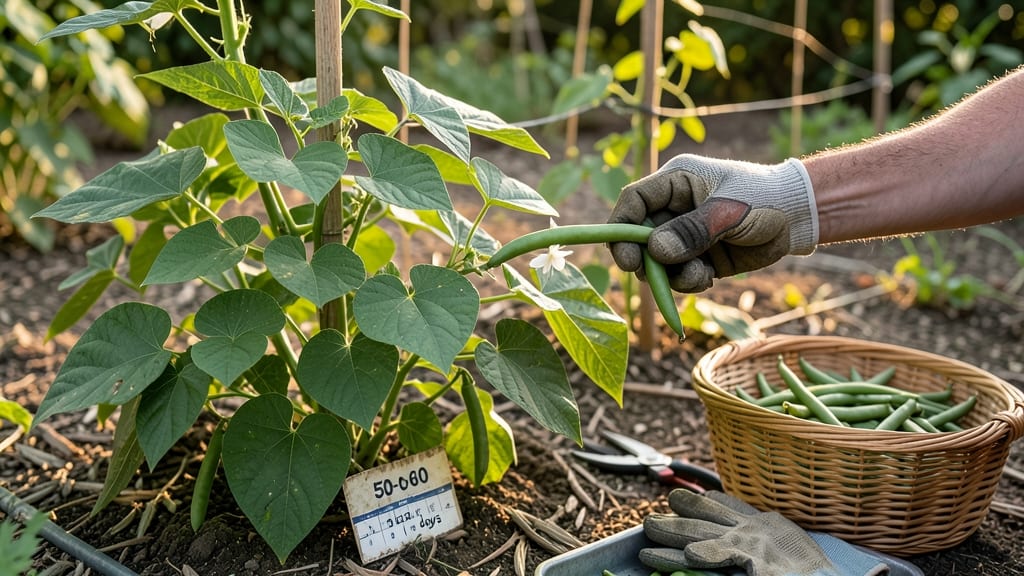
To pick beans from your garden at their peak—when they’re crisp, tender, and bursting with flavor—aim for pods that are 4 to 6 inches long and still bright green.
Picture this: You’ve nurtured your 🌱 green beans all season, only to pull a pod that’s tough as shoe leather or shriveled into nothing. That’s the difference between a harvest worth celebrating and one that goes straight to the compost.
Timing is everything, especially in Zone 6a where beans thrive from July through September. Too early, and they’re underdeveloped; too late, and they turn woody or split open. I’ll show you how to spot the perfect moment—plus how often to check your plants to keep the harvest flowing.
You’ll also discover why morning picks preserve freshness longer, how to store your harvest to keep it crisp, and the one mistake that turns flavorful beans into bland disappointment. Let’s get started.

How to identify perfect bean size for harvesting (4-6 inches explained)
Harvesting beans at the right size guarantees the best flavor and texture. When pods reach 4 to 6 inches, they're typically at peak tenderness. This ideal window ensures your beans stay crisp and sweet instead of becoming tough or stringy.
I’ve learned the hard way that waiting too long turns those delicious pods into woody sticks—so timing is everything!
Start by examining the pod length and straightness. A perfectly ripe bean should measure between 4 and 6 inches from tip to stem. If you’re unsure, use a ruler or compare it to a standard 6-inch measuring tape.
The pods should also feel firm when gently squeezed—like a fresh green snap pea, not a floppy noodle.
Color changes are another key indicator. Most green beans transition from a pale green to a deeper, richer hue when ready. For wax beans, look for a slight yellowish tint, while purple or speckled varieties will deepen in color. These visual cues help me avoid the common mistake of picking too early or too late.
Inside the pod, you’ll notice visible seeds but not bulging ones. If the seeds are barely visible or the pod feels hollow, it’s not ready yet. On the flip side, if the seeds press against the pod walls, the bean has passed its prime.
I always check this last because it’s the most reliable sign of maturity.
Here’s a quick reference to help you visualize the perfect harvest:
| Stage | Pod Size | Texture | Seed Visibility | Best Action |
|---|---|---|---|---|
| Too Early | Under 3 inches | Soft | Barely visible | Wait 2-3 days |
| Perfect | 4-6 inches | Firm & crisp | Visible but not bulging | Harvest now! |
| Overripe | 6+ inches | Woody | Bulging seeds | Discard or compost |
Different bean varieties have slight variations in ideal size. For example, bush beans often mature faster than pole beans, so I check them every 2-3 days during peak season.
Meanwhile, snap peas or sugar snap peas might be ready at 3-4 inches. Always refer to the seed packet for variety-specific guidance.
Another pro tip: Harvest in the morning when temperatures are cooler. This ensures the pods are at their crispest. I’ve noticed that beans picked in the afternoon can sometimes feel slightly softer, especially in hot climates.
If you’re harvesting for storage, trim the stems with a sharp pair of scissors or pruners to prevent damage.
Regular harvesting encourages more production. When you pick beans consistently, the plant focuses on producing new pods instead of letting old ones overmature. I’ve seen my yield double just by harvesting every 2-3 days during peak season. Plus, it’s satisfying to watch the plant respond with fresh, tender growth!
If you miss the window, don’t despair. Overripe beans can still be used in soups or stews, but they’ll lose that prized crunch. For the best results, aim to harvest at least every other day once the plants start flowering. This keeps the flavor consistent and the plants healthy.
Finally, store freshly picked beans in the fridge for up to 5-7 days to maintain freshness. I like to wrap them in a damp paper towel and place them in a sealed container.
This simple trick extends their shelf life and keeps them tasting like they just came from the vine.
Common mistakes that ruin bean flavor (and how to avoid them)
One of the biggest mistakes I see in home gardens is waiting too long to harvest beans. When pods grow past 6 inches, they become tough and mealy, losing that sweet, crisp texture we all love.
Even green beans and snap peas suffer when left on the vine too long—overripe beans develop woody fibers and bitter flavors that ruin the harvest.
On the flip side, picking beans too early also backfires. Immature pods are underdeveloped, often brittle or hollow inside, and lack the full flavor potential. For example, wax beans need to reach at least 4 inches before harvesting, while pole beans should be 5-6 inches long for peak tenderness.
⚠️ callout-warning ⚠️
⚠️ Warning: Overripe Beans Are a Flavor Crime
If your beans show these signs, they’re past their prime:
- 🌱 Dry, wrinkled pods – A clear sign of overmaturity.
- 🌟 Seeds bulging inside – Means the pod is too old.
- 🌿 Yellowing leaves – Plant is exhausted from producing.
Action: Snip every 2-3 days during peak season to encourage more production!
Different bean varieties also have unique timing needs. For instance, snap beans (like 'Blue Lake') should be harvested when pods are crisp and straight, while dried beans (like 'Pinto') need to fully mature and dry on the vine.
Mixing up these timelines leads to uneven quality—some pods perfect, others ruined.
Another common trap is harvesting in extreme heat. Beans picked during the hottest part of the day (after 2 PM) can wilt quickly and lose moisture, making them less crisp. Always aim for morning harvests when pods are cool and firm for the best texture.
To troubleshoot flavor issues, check your soil and watering habits. Overwatering or poor drainage can cause beans to develop mushy textures, while nutrient deficiencies (like lack of nitrogen) lead to stunted growth and weak flavors. A simple fix: test your soil and amend with compost if needed.
Remember, consistency is key. Regular harvesting—every 2-3 days—keeps plants productive and ensures you always get tender, flavorful beans. Skip this, and you’ll end up with a bitter, fibrous mess that’s nearly inedible. Your taste buds (and your plants) will thank you!