
Picking
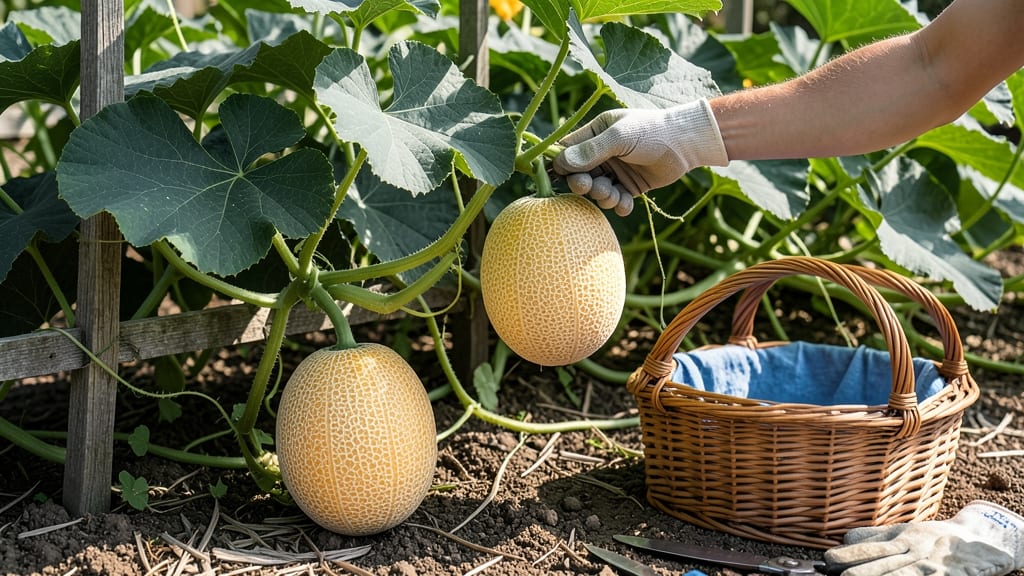
Harvesting cantaloupe at the right time means the difference between a sweet, juicy 🍈 reward and a bland, underripe disappointment — here’s how to nail it using foolproof garden tests.
Picture this: you’ve waited all summer for that first ripe cantaloupe, only to slice into one that’s still hard or watery. It’s a gut-punch for any gardener, but the good news is that ripeness isn’t just luck — it’s science you can see, smell, and even feel.
From the telltale color shift at the blossom end to the "thigh give" test (yes, really), I’ll walk you through the exact cues to pick cantaloupe at peak flavor.
No more guessing, no more wasted effort — just a foolproof method to turn your garden’s hard work into a sweet harvest.
Ready to learn the 3 key signs of a perfectly ripe cantaloupe? Let’s dive in.


How to identify cantaloupe ripeness using blossom end color & scent
When it comes to cantaloupe, blossom end color and scent are your two most reliable indicators of ripeness. Unlike size or vine detachment—which can be misleading—these visual cues tell you exactly when your fruit is ready to pick.
I’ve learned the hard way that ignoring these signs leads to either bland, underripe melons or overly mushy ones. Let’s break down what to look for and why these matters so much.
The blossom end (the flat side where the stem attaches) undergoes a dramatic color shift as cantaloupe ripens. Initially, it’s a pale green or white, but when ripe, it turns a creamy beige or tan.
This change happens because the fruit’s sugars develop fully, triggering the color transformation. I always check this first—it’s the most foolproof sign I’ve found in my garden.
Don’t rely solely on the fruit’s overall color, though. A cantaloupe might look golden-yellow on the outside but still be underripe inside. The blossom end’s color shift is your secret weapon for accuracy.
I’ve seen cantaloupes with perfect external color but taste like nothing—until I checked the blossom end and realized they weren’t ready yet.
Next, your nose is your best tool. A ripe cantaloupe releases a powerful, sweet fragrance near the blossom end—almost like a mix of honey and musk. If you’re standing near the vine and don’t smell anything, your fruit isn’t ready.
Pro tip: Sniff the blossom end directly; sometimes the scent is subtle but unmistakable once you know what to look for.
Here’s why these cues matter more than other methods: Vine detachment can be misleading—some varieties naturally slip easily even when underripe. Size alone doesn’t guarantee sweetness; a large cantaloupe can still be tough and flavorless. Blossom end color and scent are directly tied to sugar development, making them the most accurate predictors of flavor.
| Ripeness Cue | What to Look For | Why It Matters |
|---|---|---|
| Blossom End Color | Creamy beige/tan (not green) | Indicates full sugar development |
| Scent at Blossom End | Sweet, musky honey fragrance | Confirms volatile compounds (flavor) are active |
| Rind Texture | Dull, slightly waxy (not shiny) | Signals peak ripeness and moisture balance |
| Net Pattern | Well-defined, tan-colored net | Genetic marker for ripe cantaloupe varieties |
One common mistake I see is waiting for the stem to dry and fall off—this is a late sign and often means the fruit is overripe. By then, the flesh might be stringy or mushy.
Instead, harvest when the blossom end shows its tan hue and the scent is strong, even if the stem is still attached. This gives you that perfect window of sweetness.
Climate plays a role too. In hotter summers, cantaloupes ripen faster, so I check the blossom end every 2-3 days once they’re near size. In cooler areas, the process slows down, and you might need to extend your monitoring by a week.
Always trust the blossom end over the calendar.
If you’re growing multiple cantaloupe varieties, remember that color and scent cues vary slightly. Some heirloom types might have a deeper tan or a more pronounced fragrance.
I keep a small notebook to track what works best for each variety in my garden—it’s saved me from harvesting too early more than once.
Once you’ve confirmed ripeness with these cues, the next step is the thigh give test (which I’ll cover in the next section). But for now, focus on the blossom end—it’s your golden ticket to cantaloupe perfection.
The thigh give test: physical tricks to confirm cantaloupe sweetness before cutting
When your cantaloupe looks close to ripe but you're not sure, skip the guesswork and use your hands instead. The thigh give test and other tactile methods reveal hidden ripeness clues that visual checks alone might miss.
These tricks let you confirm sweetness without damaging the fruit, so you can harvest at peak flavor.
Start by gently pressing the cantaloupe's blossom end (the flat side) with your thumb. A ripe cantaloupe will yield slightly under pressure, almost like pressing your inner thigh. This "give" signals the fruit's sugars have fully developed. Avoid pressing too hard—you're testing for softness, not bruising.
Next, try the stem twist test. Grasp the stem between your fingers and give it a gentle twist. If the stem breaks cleanly or the fruit detaches easily from the vine, it's ready.
Resistance means it needs more time. This test works best in the late morning when fruits are warmest.
Listen for the hollow sound when you tap the cantaloupe's side with your knuckles. A ripe fruit produces a deep, resonant thud—like knocking on a wooden door. An unripe cantaloupe sounds dull, while an overripe one may feel mushy and produce a flat thump.
⚠️ callout-warning
- Harvesting too early based on size alone—sweetness develops last!
- Using excessive force on the thigh test, which can bruise the fruit.
- Ignoring the blossom end color—it should turn creamy yellow or tan.
- Confusing vine detachment with ripeness—some varieties stay attached longer.
For best results, combine these tests with the blossom end aroma. A ripe cantaloupe releases a powerful sweet scent near the stem—like a mix of honey and melon.
If it smells faint or sour, wait a few more days. Remember, cantaloupes continue ripening off the vine, but they won't sweeten further once picked.
Pro tip: Mark your harvest calendar based on your plant's maturity date (typically 75-90 days after transplanting). Use these physical tests in the final 5-7 days before the expected harvest window to avoid missing the sweet spot.
Once you master these tactile tricks, you'll never second-guess your cantaloupe again. The key is patience—let the fruit tell you when it's ready through pressure, sound, and scent, not just what it looks like. 🍈