
Tools
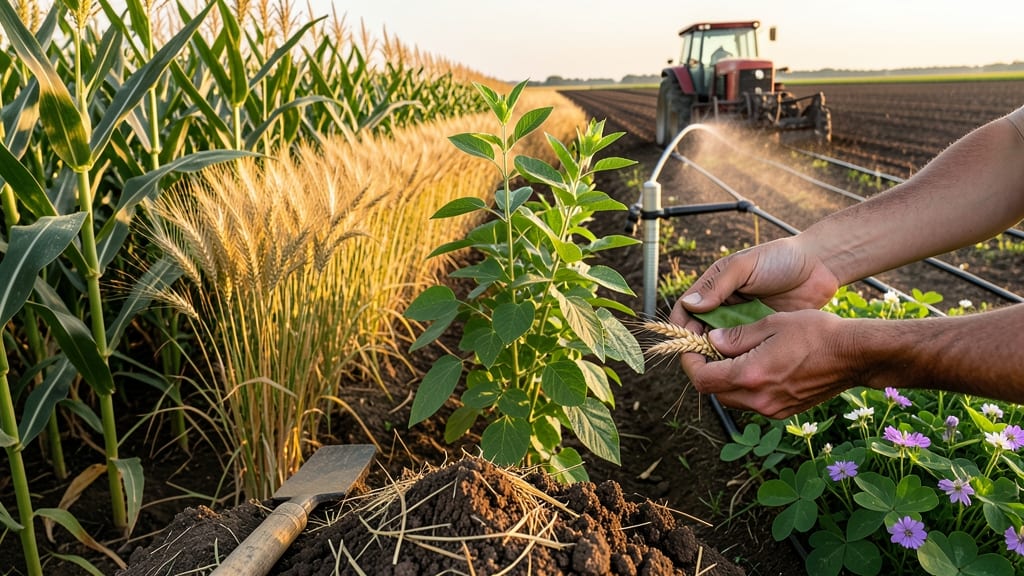
Gardening in agriculture involves the intentional growing of plants—such as vegetables, fruits, herbs, and flowers—on a smaller scale compared to commercial farming, often using eco-friendly methods to improve soil quality and support biodiversity. This practice helps maintain diverse food sources, protect rare plant varieties, and strengthen local food networks through sustainable growing techniques.
Gardening in agriculture isn't just about growing plants—it's a hands-on approach to food production that prioritizes sustainability and community resilience.
Unlike large-scale farming, which often relies on monocultures and synthetic inputs, gardening embraces diverse plantings and natural soil-building methods like composting. 🌱 These practices create healthier ecosystems, reduce chemical runoff, and connect people directly to their food sources, making it a cornerstone of modern agroecology.
What sets gardening apart is its adaptability—whether in backyard plots, community gardens, or even vertical urban farms. This flexibility makes it a powerful tool for food security, especially in areas with limited access to fresh produce.
By focusing on heirloom varieties and traditional growing methods, gardeners also help preserve genetic diversity that industrial agriculture often overlooks.
💡 In This Article
- Key Differences Between Gardening and Large-Scale Farming
- How Small-Scale Gardening Contributes to Sustainable Food Systems
Key differences between gardening and large-scale farming
At its core, gardening operates on a human scale—typically cultivating 0.1 to 1 acre of land—while large-scale farming covers hundreds to thousands of acres using heavy machinery. This difference isn't just about size; it's about philosophy.
Gardens prioritize polyculture, growing multiple crop types together (like tomatoes with basil), which mirrors natural ecosystems and boosts resilience against pests. In contrast, industrial farms often rely on monoculture, planting single crops in vast rows to maximize efficiency, but this creates vulnerability to diseases and soil depletion.
The labor intensity reveals another key distinction. Gardening requires high-touch care: hand-weeding, composting, and daily monitoring for pests—tasks that take 30-40 hours per week for a 500-square-foot plot.
Large farms, however, optimize for speed with mechanized planting, chemical fertilizers, and automated harvesters, reducing labor costs but often sacrificing soil health.
For example, a garden's compost pile might add 1-2% organic matter annually to the soil, while conventional farms may lose up to 70% of topsoil over decades due to erosion and synthetic inputs.
Ecological impact is where gardening truly shines. A well-managed garden can support 10-20 species of pollinators per acre (like bees and butterflies) through diverse plantings, while monoculture fields often require pesticide applications every 2-4 weeks to attract beneficial insects.
The sensory difference is striking too: gardens hum with life—crunching underfoot from decomposing leaves, the sweet aroma of blooming herbs, and the rustle of birds in shrubs—whereas industrial farms can feel sterile, dominated by the roar of tractors and the chemical tang of fertilizers.
Soil management highlights the divide between the two approaches. Gardeners use compost, cover crops, and crop rotation to build soil organically, often increasing its fertility by 20-30% in just one season.
Large farms, however, frequently depend on synthetic nitrogen fertilizers, which can leach into groundwater and contribute to dead zones in oceans like the Gulf of Mexico.
The contrast is visible in the soil itself: garden soil is dark, crumbly, and teeming with worms, while farmed soil can appear compacted and lifeless.
Water usage further underscores the gap. A garden's drip irrigation system might deliver 0.5 gallons per plant per day, while center-pivot systems on farms can waste 30-50% of water through evaporation and runoff.
This efficiency isn't just about conservation—it's about sustainability. Gardens prove that small-scale, labor-intensive methods can produce food with far less environmental harm than industrial systems, making them a critical tool for regenerative agriculture.
Consider the case of heirloom tomatoes. In a garden, you might grow 5-10 varieties like 'Brandywine' or 'Sungold,' each with unique flavors and textures, preserving genetic diversity. On a farm, only 1-2 hybrid varieties (like 'Celebrity') are typically planted for uniformity and shelf life.
The loss of these varieties isn't just culinary—it's ecological, as each plant species supports different pollinators and soil microbes.
The bottom line? Gardening isn't just a hobby—it's a living laboratory for sustainable agriculture, proving that smaller, more diverse systems can feed communities while healing the land. 🌱