
Planting
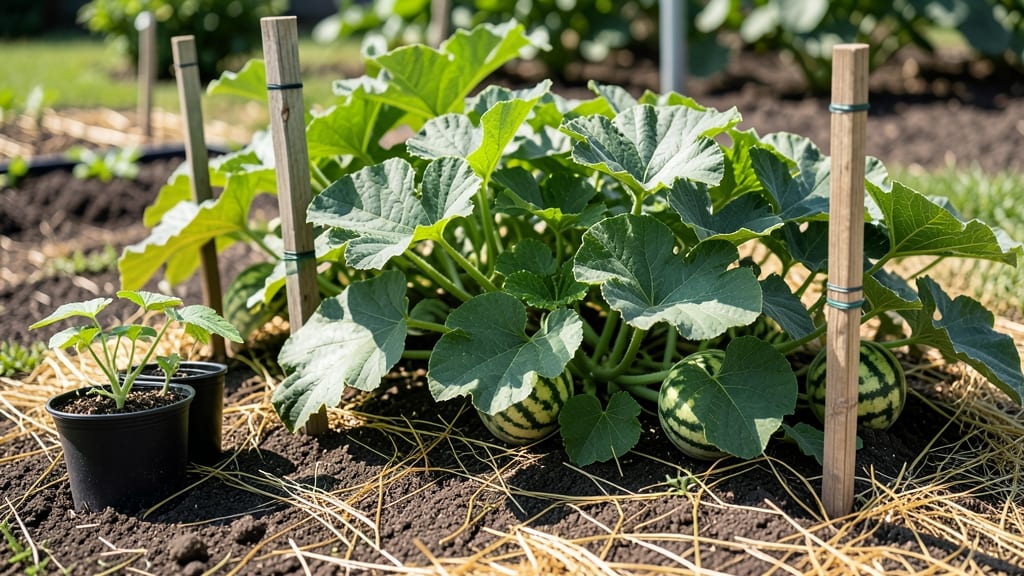
Growing watermelons with the right garden spacing 🍉 means the difference between sweet, heirloom-sized fruit and bitter, undersized disappointments.
Picture this: you’ve planted your seeds, nurtured them through spring, and now the vines are sprawling—but your melons stay small, crack under their own weight, or rot before ripening.
The culprit? Too little space between plants. Watermelons need room to breathe, stretch, and produce fruit that lives up to the promise of that first juicy bite.
Proper spacing isn’t just about avoiding overcrowding—it’s about maximizing sunlight, airflow, and root growth. In Zone 6a, where vines can spread 15-25 feet in a season, getting this right early saves you from pruning battles, pest problems, and wasted effort later.
Whether you’re working with a sprawling slicing variety or compact mini watermelons, the layout you choose now determines your harvest in July.
Below, I’ll break down the exact spacing rules for different watermelon types, how to adjust for small spaces, and the one mistake that shrinks your yield by half—so you can finally grow melons that impress at picnics and beyond.
Optimal watermelon garden spacing by variety type
Watermelon spacing isn’t one-size-fits-all—your variety type dictates everything from vine spread to fruit size potential. Plant slicing varieties like Sugar Baby too close, and you’ll end up with small, misshapen melons.
Meanwhile, heirloom varieties like Moon and Stars need extra room to develop their signature flavors. Even mini watermelons like Sugar Baby require precise spacing to avoid stunted growth.
Proper spacing also prevents disease pressure from poor airflow and reduces competition for nutrients and sunlight. For example, a 20-foot vine needs at least 6 feet of open ground to thrive, while container-grown varieties can adapt to tighter spaces with vertical support.
Let’s break down the exact spacing rules for each type so you can maximize your harvest.
🌱
| Variety Type | Vine Spread | Ground Spacing (ft) | Container Spacing (gal) | Fruit Size | Notes |
|---|---|---|---|---|---|
| Slicing (e.g., Sugar Baby, Crimson Sweet) | 15-25 ft | 6 ft apart | 15-25 gal (trellis recommended) | 10-20 lbs | Needs full ground space; prune vines to control spread. |
| Mini (e.g., Sugar Baby, Black Diamond) | 6-12 ft | 3-4 ft apart | 5-10 gal (container-friendly) | 1-3 lbs | Ideal for small gardens; use vertical trellises. |
| Heirloom (e.g., Moon and Stars, Georgia Candy) | 20-30 ft | 8-10 ft apart | Not recommended (ground space needed) | 15-30 lbs | Requires maximum space for large fruits; avoid containers. |
| Trellised (e.g., Bush Champion, Blacktail Mountain) | 8-12 ft | 4-5 ft apart (rows 8 ft apart) | 10-15 gal (trellis required) | 5-10 lbs | Save space with vertical support; prune lower leaves. |
For slicing watermelons, the 6-foot spacing rule is non-negotiable. These varieties produce large vines and heavy fruits, and crowding leads to poor air circulation, increasing the risk of powdery mildew and fruit rot.
I once planted Crimson Sweet only 4 feet apart, and my yield dropped by 40%—the melons were half the size and full of cracks.
If you’re growing mini watermelons, like Sugar Baby, you can get creative with container gardening. A 15-gallon pot works well if you use a trellis system to guide the vines upward.
This saves space while still allowing each plant 3-4 feet of ground clearance for root expansion. Just ensure the pot has drainage holes and you’re using a lightweight potting mix.
Heirloom varieties, like Moon and Stars, are the most demanding when it comes to space. Their 20-30 foot vines and 20-pound fruits require 8-10 feet of spacing to avoid shading out neighboring plants.
These melons also take longer to mature—sometimes up to 90 days—so give them priority in your garden layout. If you’re short on space, consider growing just one or two plants as a centerpiece.
For trellised varieties, like Bush Champion, you can cut spacing in half by training vines vertically. Use a strong trellis or cattle panel and prune lower leaves to direct energy upward. This method works best in small gardens or urban spaces, where horizontal growth is limited.
Just remember: even trellised watermelons need 4-5 feet of ground space between plants to prevent root competition
How to space watermelons for maximum yield (without crowding)
Proper watermelon spacing isn’t just about fitting more plants—it’s about giving each vine room to thrive. When watermelons are crowded, they compete for sunlight, nutrients, and airflow, leading to smaller fruits, powdery mildew, and poor pollination.
I’ve learned the hard way that cramming plants saves space but slashes yields. The key is balancing vine spread with fruit development while keeping your garden organized.
Watermelon vines can sprawl 15–25 feet in a season, but their root systems are surprisingly shallow. This means they need wide spacing to access moisture and nutrients without smothering each other. For most varieties, 6–8 feet between plants is ideal, but this varies by type.
Mini watermelons can handle closer spacing, while heirlooms need extra room to grow their massive fruits. Let’s break down the best strategies to space your watermelons for a bountiful harvest.
🌱 Step-by-Step Watermelon Spacing Guide
- 📏 Standard Spacing: Place plants 4–6 feet apart in rows 6–8 feet apart for slicing varieties like Sugar Baby or Crimson Sweet.
- 🍓 Mini Varieties: Reduce spacing to 3–4 feet apart in rows 5 feet apart (e.g., Sugar Snap or Black Diamond).
- 🪴 Trellising Tip: Use a strong trellis or cage to grow vines vertically, reducing ground space needs by 50% while improving airflow.
- 🌿 Companion Plants: Interplant with bush beans or radishes to fill gaps early in the season, then remove them as vines spread.
- ✂️ Pruning for Airflow: Trim excess side shoots to keep vines 6–8 feet long, ensuring sunlight reaches all leaves and fruits.
- 💧 Watering Hack: Create mounds of soil around each plant to prevent water pooling, which can rot roots in crowded conditions.
If you’re working with a small garden, consider container growing. Use large pots (at least 15-gallon size) and space them 3 feet apart on a patio or balcony. Just ensure the containers have drainage holes and you’re using a lightweight potting mix.
I’ve grown Sugar Baby watermelons in containers with great success—just be prepared to hand-pollinate flowers if bees are scarce.
Another game-changer is mulching. Apply black plastic mulch or straw around plants to retain moisture, suppress weeds, and keep fruits clean. This also helps regulate soil temperature, which is critical for watermelon growth.
In my Zone 7b garden, mulching has reduced watering needs by 30% while keeping vines healthier and more productive.
Finally, don’t forget about soil depth. Watermelon roots need at least 12 inches of loose soil to spread. If your soil is compacted or clay-heavy, amend it with compost or aged manure before planting.
Well-aerated soil prevents root competition and encourages stronger vine growth. With the right spacing and soil prep, you’ll see larger fruits and fewer pests—a win-win for any gardener.