
Vegetables
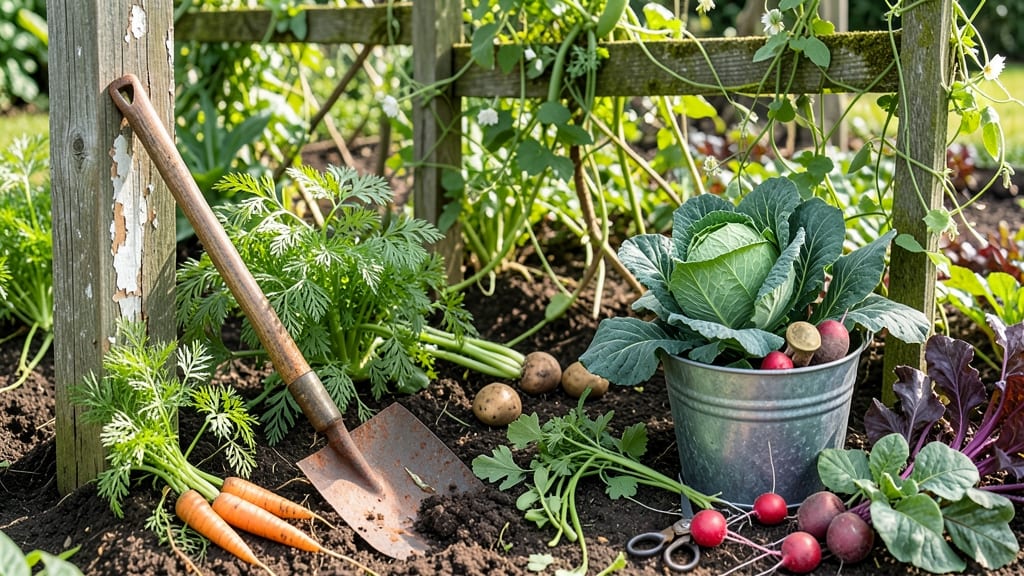
War gardens in WW1 transformed Britain by growing vegetables like cabbage, potatoes, and carrots to combat food shortages, saving millions of tons of produce annually and reshaping modern home gardening practices.
During World War I, these victory gardens became a patriotic duty, with over 1 million British households cultivating them by 1918. 🌱 The government actively promoted them through posters and seed distributions, emphasizing crops that grew quickly and required minimal space.
What’s fascinating is how this movement didn’t just feed families—it created a cultural shift toward self-sufficiency that still influences community gardening today. Many of the techniques used, like intensive planting and companion cropping, remain staples in modern urban agriculture.
The impact extended beyond food security. These gardens provided jobs for women and children during wartime, giving them purpose while easing labor shortages in factories. The success of WW1 war gardens laid the foundation for post-war allotment systems, proving that even small-scale gardening could make a massive difference during crises.
💡 In This Article
- How WW1 Victory Gardens Boosted Britain’s Food Supply
- Plants That Defined WW1 War Gardens and Their Legacy
How WW1 victory gardens boosted Britain’s food supply
At their peak, Britain’s war gardens produced an astonishing 1.5 million tons of food annually—enough to feed 4 million people for a year. The government launched the "Dig for Victory" campaign in 1915, encouraging even urban families to cultivate 100 square feet of land.
This wasn’t just about growing food; it was a calculated strategy to reduce reliance on imports, which were heavily disrupted by the U-boat blockade cutting off 70% of Britain’s food supply by 1917. The campaign’s success proved that small-scale gardening could be a national security tool. 🌱
The most strategic crops were chosen for their high yields and quick harvest times. Potatoes, for example, could produce 10-15 tons per acre—far more than cereals—and stored well in root cellars. Cabbage, kale, and Brussels sprouts thrived in cooler climates and provided essential vitamins to counter malnutrition.
Meanwhile, peas and beans fixed nitrogen in the soil, improving future harvests. These crops weren’t just practical; they were chosen based on scientific data from agricultural experiments conducted during the war to maximize output with minimal resources.
What made these gardens so effective was their adaptability to urban spaces. Many families grew vegetables in window boxes, rooftops, and even backyards, using techniques like double-digging to enrich poor soil. The government distributed 1.5 million packets of seeds in 1917 alone, with potatoes and carrots being the most requested.
These efforts didn’t just feed bodies—they also boosted morale, giving families a sense of purpose and self-reliance during a time of national crisis. The psychological impact was just as significant as the physical output. ✨
The rationing system played a crucial role in making these gardens successful. By 1918, meat, butter, and sugar were severely restricted, shifting dietary focus to vegetables. Families who grew their own produce could supplement rations with fresh, nutrient-dense foods like spinach (rich in iron) and turnips (high in fiber).
This shift in eating habits laid the groundwork for post-war dietary guidelines that emphasized vegetable consumption. The war gardens proved that even in times of scarcity, people could thrive with the right knowledge and resources.
One often-overlooked aspect was the role of women in these gardens. With men serving overseas, women took on agricultural roles for the first time, managing everything from seed selection to harvest. This empowerment extended beyond the garden—it contributed to the broader social changes of the era, including women’s suffrage movements.
The skills learned in war gardens also translated into post-war allotment systems, creating a lasting legacy in British gardening culture. 💫
The data speaks for itself: by 1918, war gardens accounted for 10% of Britain’s total vegetable production. Without this effort, the country would have faced severe famine.
The success of these gardens demonstrated that food security isn’t just about large-scale farming—it’s also about community, innovation, and the willingness to adapt. This lesson remains relevant today, especially as urban farming movements grow in response to modern food crises.
The war gardens of WW1 weren’t just a temporary solution; they were the beginning of a revolution in how we think about food production. 🌟