
Tools
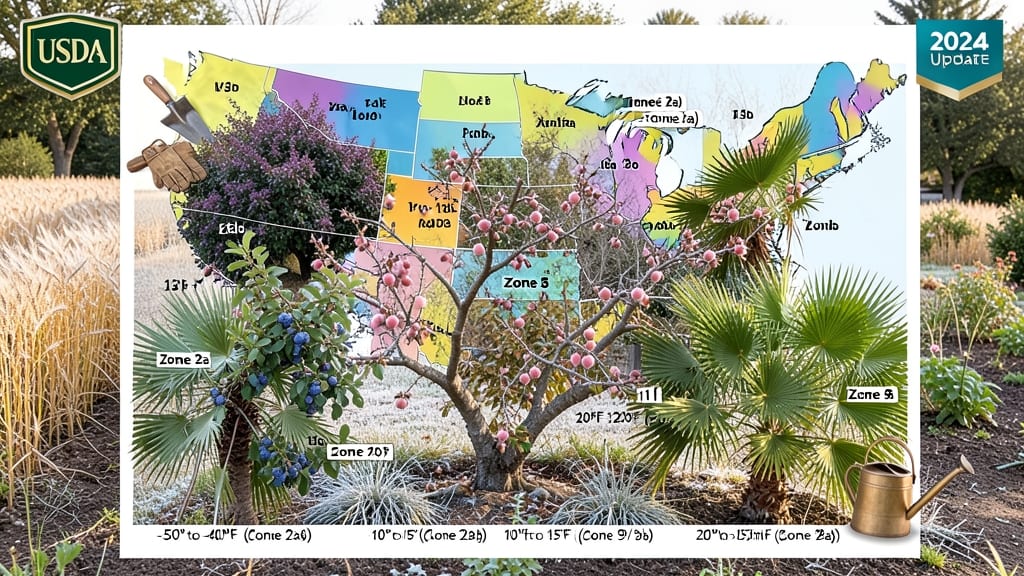
The 2024 USDA gardening zones reflect updated climate data, shifting some regions into warmer classifications (e.g., Zone 6b to 7a) due to rising temperatures, requiring gardeners to adjust planting schedules and hardy plant selections accordingly. Check the interactive USDA Plant Hardiness Zone Map for your location’s new zone designation.
The 2024 USDA gardening zones update reflects 10+ years of temperature data, with some areas moving half a zone warmer than before. This shift means plants that once thrived in Zone 6b may now need Zone 7a care—think earlier spring planting and heat-tolerant varieties like Lavender or Rosemary.
The interactive map lets you pinpoint your exact zone, which is critical for perennials and fruit trees that need precise cold-hardiness matches. 🌱
What’s most impactful? The zones now account for microclimates—urban areas often run warmer than rural zones, while valleys can stay cooler. I’ve seen gardeners in Zone 7a struggle with frost-sensitive plants because their backyard sits in a cold pocket.
Always verify your specific microclimate before making big planting decisions—it could save your tomatoes or peppers from winter kill!
💡 In This Article
- How Climate Change Impacts 2024 USDA Plant Hardiness Zones
- Adjusting Your Garden Plan for the New USDA Zones
How climate change impacts 2024 USDA plant hardiness zones
The 2024 USDA Plant Hardiness Zone Map reflects a 1.5°F average temperature increase since the last update in 2012, with some regions warming by 2-3°F—equivalent to shifting from Zone 6a to 7a. This change isn't uniform; coastal areas warm faster due to ocean currents, while inland zones may see slower shifts.
The USDA now uses 30-year climate averages (1991-2020) instead of the previous 1981-2010 baseline, capturing recent warming trends more accurately. 🌡️
What drives these shifts? Long-term climate data reveals that minimum winter temperatures—the key factor for plant hardiness—are rising faster than summer highs.
For example, Chicago's Zone 5b area now overlaps with Zone 6a because cold snaps below -15°F occur half as often as they did in the 1980s. The Arctic's warming also creates "polar vortex" disruptions, pushing cold air southward in unpredictable bursts that can still damage tender plants.
This makes microclimate mapping even more critical.
Microclimates now play a bigger role in zone adjustments. A 5°F difference can exist between a south-facing slope (warmer) and a north-facing valley (cooler) just 100 yards apart. Urban areas with concrete and pavement can be 2-5°F warmer than surrounding rural zones due to the "heat island effect."
The 2024 map includes detailed microclimate overlays for cities like Los Angeles and Phoenix, where gardeners might find their backyard falls into Zone 9b while the official city designation is Zone 10a. 🌆
How does this compare to past updates? The 2012 map showed Zone 10a expanding northward by 200 miles in some areas, but the 2024 revision is more granular.
For instance, Zone 6b in the Midwest now has tighter boundaries, with some counties reclassified as 7a because their average annual minimum temperature (AAMT) crossed the -5°F threshold. The USDA also refined zone letters (e.g., 6a/b/c) to better reflect 10°F increments±5°F precision.
For gardeners, this means planting zones are no longer static. A peach tree that thrived in Zone 6b may now need Zone 7a care in the same location. The updated map also highlights heat zones—areas where summer temperatures exceed 90°F for 60+ days—which affects vegetable choices.
For example, okra and sweet potatoes now grow successfully in zones that previously struggled with heat stress. 🌿
What most people overlook is how these shifts affect perennial plants. A hydrangea planted in Zone 5b may survive the first winter but suffer dieback if the zone shifts to 6a. The solution?
Use the new map to gradually transition perennials by selecting varieties with 1-2°F wider hardiness ranges, like 'Endless Summer' hydrangeas (Zone 3-9) instead of 'Annabelle' (Zone 3-8). This buffer gives plants time to adapt to new temperature norms. ⚡