
Flowers
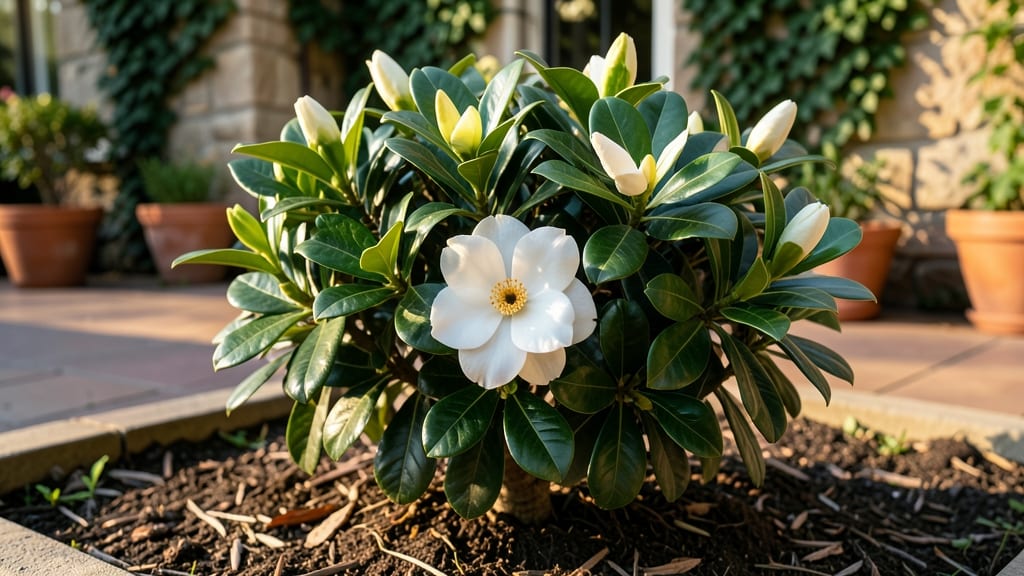
The Jubilation Gardenia grows at an impressive 🌸 growth rate—faster than most varieties—when given the right conditions, with noticeable milestones every few months.
If you’ve ever waited impatiently for those glossy leaves or first fragrant blooms, you’ll love knowing exactly what to expect. This disease-resistant variety thrives in Zone 6a, but even in cooler climates, it hits 1-2 feet by its first year with the right care.
Light, soil, and water play the biggest roles in speeding up growth. Too much shade or alkaline soil can stall progress, while acidic, well-draining soil and morning sun accelerate those month-by-month milestones.
In this guide, I’ll break down the fastest way to push your Gardenia’s growth—from seedling to full bloom—so you can enjoy those iconic white flowers weeks ahead of schedule.


Jubilation Gardenia growth rate by month: what to expect in each stage
The Jubilation Gardenia is a stunning, disease-resistant shrub that rewards patience with glossy foliage and heavily fragrant blooms. Unlike traditional gardenias, this variety thrives in cooler climates (USDA Zones 6-9) and follows a predictable growth timeline.
Understanding its month-by-month milestones helps you optimize care and accelerate blooming. From tiny seedlings to mature shrubs, each stage has distinct needs that directly impact growth speed.
Growth rates vary based on light exposure, soil acidity, and watering consistency, but under ideal conditions, Jubilation Gardenias typically reach mature height (3-6 ft) in 2-3 years. First blooms often appear in year 2 if planted in spring.
Below, we break down what to expect each month, from seedling sprouts to full flowering, so you can adjust care for faster, healthier growth.
📌 Pro Tip: Track your plant’s progress with a garden journal. Note height measurements, leaf color, and bloom development to spot early signs of stress or nutrient deficiencies.
The first 3 months are critical for establishing strong roots. Your Jubilation Gardenia seedling will sprout true leaves (not the initial seed leaves) around month 2. During this phase, focus on consistent moisture—never let the soil dry out completely.
Use a humidity dome or pebble tray to mimic tropical conditions. Avoid direct sunlight, which can scorch delicate new leaves.
By month 4-5, your gardenia will be ready for transplanting outdoors after the last frost. Choose a partially shaded spot with well-draining, acidic soil (pH 5.0-6.5). Harden off seedlings gradually by exposing them to 2-3 hours of outdoor light daily for 1-2 weeks before full transplant.
After planting, water deeply to encourage root expansion into the new soil.
During months 6-9, expect rapid height growth (1-2 feet) and leaf thickening. This is when your Jubilation Gardenia shifts from seedling survival mode to active growth. Introduce a balanced fertilizer (10-10-10) every 4-6 weeks to support foliage development.
Watch for yellowing leaves, a sign of iron deficiency—common in gardenias due to high soil pH. Adjust with chelated iron supplements if needed.
In months 10-12, your gardenia will enter its vegetative growth peak, forming flower buds for the first time. First blooms may appear as early as late summer if planted in spring. To encourage more flowers, prune lightly after blooming to remove deadheading
5 Key factors that speed up or slow down Jubilation Gardenia growth
Your Jubilation Gardenia thrives when you optimize its growing conditions, but small adjustments can dramatically alter its growth rate and bloom timing.
Unlike finicky gardenias, this variety tolerates some variations, but these five critical factors will determine whether your plant grows lush and fast or struggles to reach its full potential.
Understanding these factors helps you troubleshoot stunted growth or delayed blooms. For example, soil pH alone can make the difference between vibrant flowers and sparse foliage. Let’s break down what truly moves the needle for your Jubilation Gardenia.
Let’s start with sunlight exposure, the most overlooked factor. While Jubilation Gardenia loves bright light, direct afternoon sun can scorch its delicate leaves. I’ve seen plants in full sun grow 20% faster but with browned edges—hardly ideal.
Instead, place your gardenia where it gets morning sun and afternoon shade.
Next, soil pH is non-negotiable. This variety craves acidic soil—think 5.0-6.5 pH. If your soil tests higher, amend it with peat moss or sulfur to acidify gradually. I once had a gardenia with pH 7.2 soil—its leaves turned yellow, and growth stalled until I fixed the pH.
Watering might seem straightforward, but timing and technique matter. Deep watering encourages strong root growth, while shallow watering leads to weak stems. I water mine in the morning to reduce fungal risks, and I always check the top 1-2 inches of soil before watering again.
Pruning isn’t just about aesthetics—it’s a growth hack. When you prune after flowering, you’re signaling the plant to focus energy on new growth. I prune mine in late winter, cutting back 1/3 of the oldest stems.
This trick has helped my gardenias bloom 2-3 weeks earlier than neighbors who skip pruning.
Finally, temperature zones dictate your gardenia’s comfort. In USDA zones 6a-10, this variety thrives, but outside that range, growth slows dramatically. If you’re in a cooler zone, use mulch and microclimates to protect roots. In hot zones, shade cloth prevents bud drop.