
Tools
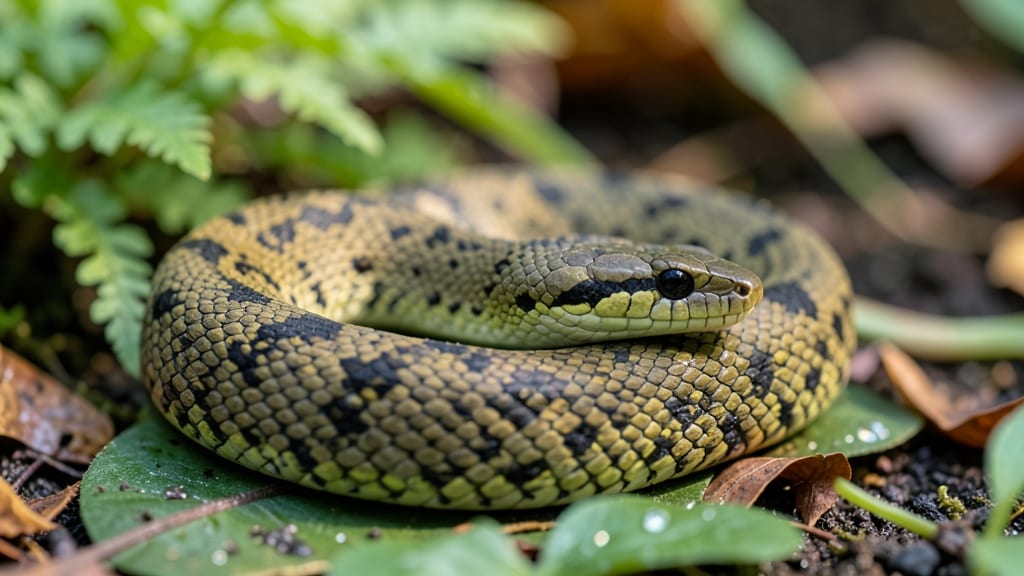
Finding images of garden snakes reveals these non-venomous species—like rat snakes or garter snakes—commonly spotted in grassy areas, flower beds, or near water sources. Their slender builds and smooth scales make them masters of camouflage, so capturing clear photos helps identify them safely without disturbing their natural behavior.
Garden snakes often go unnoticed because their sleek bodies mimic garden foliage, but their distinctive patterns—like the garter snake's yellow stripes or the rat snake's blotchy markings—make them fascinating subjects for photography. 🌿 The best images come from observing them in their natural habitats, especially during early morning hours when they're most active.
A 50mm lens with a macro setting works wonders for capturing their intricate scales and subtle color variations without startling them.
What makes these reptiles so photogenic is their behavior—many garden snakes bask on rocks or logs, giving you prime opportunities for natural lighting shots. Just remember to keep a safe distance (at least 3 feet) and never attempt to handle them, as stress can trigger defensive behaviors.
For identification, focus on head shape, scale patterns, and body proportions—these visual cues are key to telling species apart in your photos.
💡 In This Article
- Identifying Garden Snake Species Through Visual Traits
- Best Practices for Photographing Garden Snakes Safely
Identifying garden snake species through visual traits
Garden snakes showcase unique visual traits that help distinguish between species. Rat snakes, for example, typically measure 3-6 feet long with smooth, glossy scales and a distinctive pattern of dark blotches along their backs, often bordered by lighter edges.
Their heads are slightly wider than their necks, and their eyes have vertical pupils—key features visible in high-quality images. 🐍 Garter snakes, on the other hand, are slimmer (1.5-2.5 feet) with three yellow or white stripes running down their bodies, which appear more vivid in natural lighting.
The color patterns aren’t just for show—they serve survival functions. Rat snakes use their blotchy markings to blend into dappled sunlight on forest floors, while garter snakes rely on their striped patterns to mimic the shadows of reeds near water sources.
In images, these distinctions become clearer when you focus on the snake’s midsection and head shape. For instance, a snake with a rounded snout and smooth scales is likely a garter snake, whereas a flatter head with keeled scales suggests a rat snake. 🌿
Scale patterns also vary by species. Rat snakes have keeled (ridged) scales that catch light differently under photography, creating a shimmering effect in images. Garter snakes, however, have smooth scales that reflect light more uniformly.
This difference is subtle but critical for accurate identification—especially when comparing photos taken at different angles or lighting conditions. A 100mm macro lens can reveal these details without disturbing the snake.
Size plays a role too. Juvenile rat snakes may resemble garter snakes in coloration but lack the bold blotching until they mature. This is why photographing multiple angles—especially the head and tail—helps confirm species.
For example, a garter snake’s tail often tapers to a point, while a rat snake’s tail is more rounded. These visual cues become your best tools when studying images for identification. 📸
Ethical photography means observing from a distance—typically 3-5 feet—to avoid stressing the snake. Use a telephoto lens (200mm or higher) to capture close-up details without intrusion.
The goal is to document, not disturb, so focus on natural behaviors like basking or foraging, which reveal the most informative visual traits.
For advanced identification, compare your images to regional field guides. Many garden snakes share similar traits, so local variations—like color intensity or pattern density—can narrow it down. For instance, Eastern garter snakes in the Midwest may have brighter stripes than their Pacific Northwest counterparts.
These regional differences highlight why photography is invaluable for citizen science and conservation efforts. ✨