
Watering
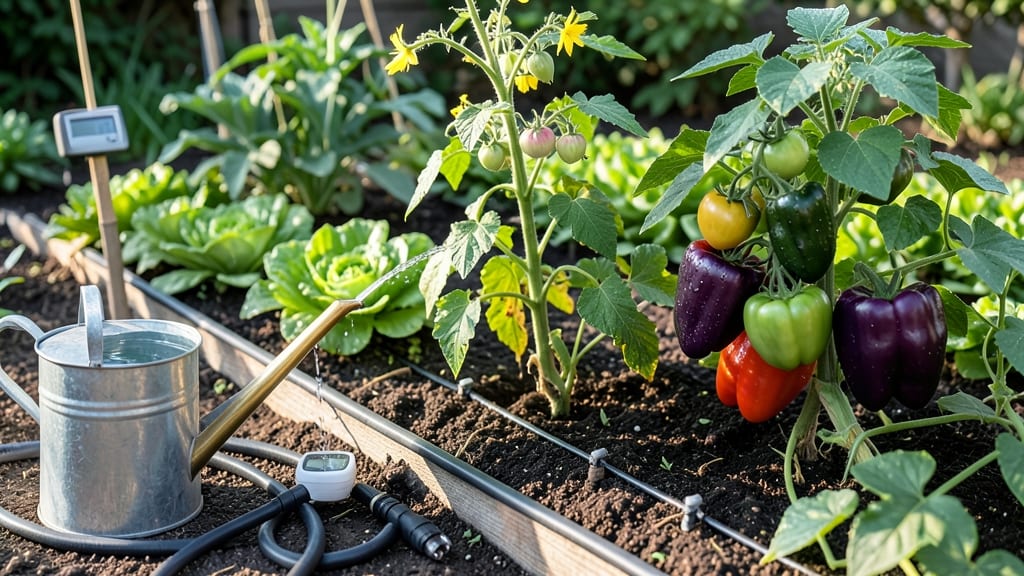
Watering your vegetable garden the right amount—how often and how deep—is the secret to avoiding wilted disappointment and maximizing your harvest.
Overwatering or underwatering your 🥬 vegetable garden can mean the difference between a thriving plot and a sad, shriveled mess. Yet most gardeners guess rather than measure, leading to wasted water, stressed plants, or even disease.
The truth? Perfect growth starts with knowing when to water—not just dumping a hose on it.
In Zone 6a, where spring planting kicks off in April, your watering schedule should shift with the seasons. Leafy greens like lettuce need frequent, shallow drinks, while root crops like carrots prefer deep, infrequent soaks.
But soil type plays a huge role too: clay holds moisture longer than sandy soil, and a simple finger test can save you from overdoing it.
Below, I’ll break down the soil-moisture tricks that keep your veggies thriving—no guesswork required. You’ll learn how to adjust for heatwaves, container gardens, and even the signs your plants are begging for (or warning against) more water.
The perfect watering schedule for vegetable gardens by plant type
Watering your vegetable garden isn't one-size-fits-all—leafy greens, root crops, and fruiting plants all have unique moisture needs. I've grown everything from tomatoes to carrots and learned the hard way that overwatering can drown roots while underwatering stresses plants.
The key is matching watering frequency to each plant's growth stage and soil type.
Most gardeners water based on guesswork, but science-backed schedules prevent common pitfalls like blossom-end rot in tomatoes or forked roots in carrots. For example, lettuce thrives with frequent shallow watering, while squash prefers deep, infrequent soakings.
Let's break down the perfect schedule by plant type to keep your garden lush and productive.
💡 Pro Tip: Always water in the early morning (6-9 AM) to reduce evaporation and fungal risks. Avoid evening watering, which can leave foliage damp overnight—perfect conditions for powdery mildew.
| Plant Type | Growth Stage | Water Frequency | Depth | Soil Moisture Goal |
|---|---|---|---|---|
| Leafy Greens (Lettuce, Spinach, Kale) | Seedling | Every 1-2 days | 1-2 inches | Consistently moist |
| Leafy Greens | Mature | Every 2-3 days | 1 inch | Top 1-2 inches moist |
| Root Crops (Carrots, Radishes, Beets) | Seedling | Every 2-3 days | 1 inch | Evenly moist |
| Root Crops | Mature | Every 3-5 days | 2-3 inches | Deeply moist |
| Fruiting Plants (Tomatoes, Peppers, Cucumbers) | Seedling | Every 2 days | 1-2 inches | Consistently moist |
| Fruiting Plants | Flowering/Fruiting | Every 3-4 days | 3-4 inches | Deeply moist |
| Herbs (Basil, Cilantro, Parsley) | All Stages | Every 2-3 days | 1 inch | Top 1 inch moist |
| Alliums (Onions, Garlic, Leeks) | Seedling | Every 2-3 days | 1 inch | Evenly moist |
| Alliums | Bulbing | Every 4-5 days | 2 inches | Deeply moist |
For leafy greens, shallow watering keeps the topsoil moist but prevents root rot. I water my spinach and kale every 2-3 days in summer, using a gentle sprinkler to avoid disturbing loose soil.
These plants hate soggy conditions, so I always check the soil's surface before watering—if it's still damp, I wait.
Root crops like carrots and beets need consistent moisture to prevent forked roots, but they can't tolerate waterlogged soil. During their early stages, I water every 2-3 days, then reduce to every 3-5 days as they mature. The key is keeping the soil evenly moist without creating puddles.
Fruiting plants such as tomatoes and peppers require the most attention. When they're flowering or fruiting, I water deeply every 3-4 days to encourage strong root development. Shallow watering can cause blossom-end rot, so I always water at the base and avoid wetting the leaves.
Mulching with straw helps retain moisture and keeps roots cool.
Herbs like basil and
Soil-moisture test methods to water like a pro (no guessing!)
Stop guessing how much your vegetable garden needs to drink! The key to consistent watering lies in testing soil moisture—not just eyeballing your plants. Different soil types (clay vs. sandy) and weather conditions change how often you should water, and these simple tests reveal the truth.
Whether you're growing tomatoes, lettuce, or peppers, mastering these methods will save water, prevent waste, and keep your crops thriving.
Overwatering is just as harmful as underwatering—both can stunt growth, attract pests, and even kill your plants. That’s why I rely on three foolproof soil-moisture tests: the finger-poke test, the trowel check, and moisture meters.
Each method gives you actionable insights so you can water with confidence, no matter your garden’s size or soil type. Let’s dive into how to use them like a pro.
- 1 Finger-Poke Test (Best for Beginners): Stick your finger 1-2 inches into the soil. If it feels dry, water deeply. For sandy soil, test at 3 inches—it drains faster!
- 2 Trowel Check (For Deep Roots): Dig a small hole near your plants. If the soil at 4-6 inches is dry, it’s time to water. Clay soil stays moist longer—wait until it’s noticeably dry.
- 3 Moisture Meters (Precision Watering): Insert the probe 2-3 inches deep. Readings below 30% mean it’s time to water. Adjust for hot weather—check twice daily if temps exceed 90°F.
- 4 Adjust for Weather: After rain, skip watering for 2-3 days. In droughts, water early morning to reduce evaporation and fungal risks.
Now that you’ve mastered the tests, let’s talk soil type adjustments. Sandy soil drains like a sieve, so you’ll need to water more frequently—sometimes daily in summer. On the flip side, clay soil holds moisture like a sponge, so you can stretch watering to every 3-4 days.
Always water deeply (1-2 inches per session) to encourage root growth and prevent shallow roots that lead to weak plants.
Pro tip: Mulch your garden beds with straw or wood chips to lock in moisture and reduce evaporation. This simple step cuts your watering needs by up to 30%! Pair mulch with your soil tests, and you’ll have a self-regulating watering system that keeps your veggies happy without the guesswork.
Remember, the goal is consistent moisture, not soggy soil or bone-dry dirt.
Start with the finger-poke test today—it’s free, easy, and works instantly. Once you get the hang of it, graduate to the trowel check for deeper insights or invest in a moisture meter for high-stakes crops like cucumbers or eggplants. Your plants (and your water bill) will thank you!