
Watering
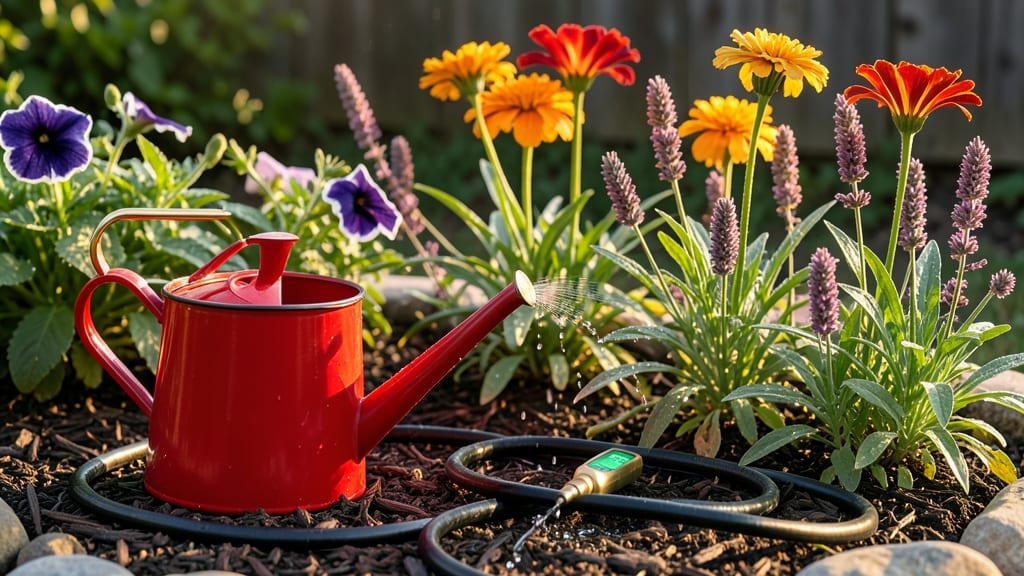
To water a flower garden correctly, you need a schedule that matches your plants' needs, soil type, and climate—not just a one-size-fits-all rule.
Overwatering or underwatering your flower garden can mean the difference between vibrant blooms and wilted disappointment—yet most gardeners guess rather than follow a science-backed schedule tailored to their plants.
Whether you're growing drought-tolerant lavender or thirsty petunias, the right watering frequency keeps roots healthy, blooms bright, and pests away. Below, I break down how often to water by plant type, soil, and season—plus tools to make it effortless.
You’ll learn the exact intervals for spring planting, summer heatwaves, and fall transitions, so you never over- or underdo it again. Let’s dive into the details.
Science-backed watering frequency by flower type (with soil conditions)
Watering your flower garden isn't a one-size-fits-all task—each plant type has unique needs, and your soil type plays a huge role. According to USDA guidelines, most flowers need 1-2 inches of water per week, but annuals like petunias require more frequent watering than perennials like black-eyed Susans.
Let's break down the science so you can water with confidence and avoid guesswork.
Soil type dramatically changes how often you should water. Clay soil holds moisture for days, while sandy soil drains quickly, requiring more frequent watering. Loamy soil—the gardener's gold—balances moisture retention and drainage perfectly.
Understanding your soil type means you can adjust your watering schedule to match your plants' needs without over- or under-watering.
| Flower Type | Soil Type | Watering Frequency | Notes |
|---|---|---|---|
| Annuals (e.g., Marigolds, Petunias) | Sandy | Every 1-2 days | Fast-draining soil needs frequent watering. |
| Annuals (e.g., Marigolds, Petunias) | Clay | Every 3-4 days | Retains moisture longer; check soil before watering. |
| Perennials (e.g., Coneflowers, Lavender) | Loamy | Every 5-7 days | Balanced moisture; ideal for most perennials. |
| Drought-Tolerant (e.g., Succulents, Sedum) | Any | Every 10-14 days | Store water in leaves; minimal watering needed. |
| Bulbs (e.g., Tulips, Daffodils) | Loamy | Every 7-10 days | Water deeply after planting; reduce in dormancy. |
For annual flowers like marigolds and petunias, stick to a daily or every-other-day schedule in sandy soil, but extend to every 3-4 days in clay soil. These plants thrive on consistent moisture but can't handle soggy roots.
I've found that morning watering is key—it gives roots time to absorb moisture before the heat of the day.
Perennial flowers, such as coneflowers and lavender, are more resilient. In loamy soil, they typically need watering every 5-7 days, but always check the top 1-2 inches of soil first. If it's dry, water deeply; if it's still moist, hold off. Perennials often establish deep roots, so they can handle slightly drier conditions once established.
If you're growing drought-tolerant flowers like succulents or sedum, you can relax your watering schedule. These plants store water in their leaves and stems, so every 10-14 days is usually sufficient—even in sandy soil.
Overwatering is their biggest enemy, so always let the soil dry out completely between waterings. A quick finger test in the soil will save you from waterlogged roots.
Bulbs, including tulips and daffodils, have unique watering needs. After planting, water deeply every 7-10 days to encourage root growth, but once they're established, reduce watering to every 2-3 weeks. During dormancy, almost no water is needed. Bulbs are all about balance—too much water can rot them, while too little can stunt their growth.
Seasonal adjustments are crucial. In summer months, increase watering frequency by 25-50% due to higher evaporation rates, while in winter, reduce it by 75% or more. Mulching with 2-3 inches of organic mulch helps retain moisture and regulate soil temperature, making your watering job easier.
I’ve seen mulch reduce my watering needs by nearly 30% in hot climates.
Don't forget to monitor your garden for signs of stress. Wilting leaves or yellowing foliage can indicate underwatering, while mushy stems or fungal growth often mean overwatering. Adjust your schedule based on what you observe—your plants will thank you with healthier growth and more vibrant blooms. 🌸
For extra precision, invest in a moisture meter
5 Signs your flower garden is overwatered or underwatered (and how to fix it)
Your flower garden thrives on balance—too much or too little water can turn lush blooms into a sad, struggling mess. I’ve seen yellowing leaves from overwatering and wilting stems from drought, and the fixes are simpler than you think.
The key is understanding your plants’ signals and adjusting your watering schedule before damage sets in.
Most gardeners overestimate how often their flowers need water, especially in clay soil or humid climates. A quick check of the soil moisture just 1 inch below the surface can save your annuals and perennials from stress. Let’s decode the 5 red flags and how to correct them—no guesswork required.
🌱 How to Fix Watering Mistakes: Quick Action Guide
- Yellow leaves + mushy stems → Stop watering for 3 days, loosen compacted soil, and improve drainage.
- Dry, crispy edges on leaves → Water deeply 2x/week (early morning) and add mulch to retain moisture.
- Wilting despite wet soil → Check for root rot; repot in fresh, well-draining soil if needed.
- White powdery spots → Fungal disease from overwatering; space plants for airflow and water at soil level, not leaves.
- Hard soil crust → Break up top layer with a rake and water slowly to avoid runoff.
Start with a soil test to understand your garden’s moisture retention. Sandy soil drains fast and needs frequent, shallow watering, while clay soil holds moisture longer—often requiring less.
My roses in clay soil only need watering every 5-7 days in summer, but my petunias in sandy soil wilt by midday if I skip a day.
If your flower stems feel soft or pull out easily, root rot is likely. Snip away blackened roots and replant in a mix of potting soil and perlite to prevent future issues.
For underwatered plants, a deep soak in the morning mimics natural rainfall cycles and reduces evaporative loss.
Prevention is easier than fixing damage. I use a moisture meter to track soil conditions and adjust my watering schedule by season. In hot, dry months, I water every 2-3 days, while spring and fall require watering only once a week.
Mulching with straw or shredded leaves keeps moisture consistent and reduces weeds.
Remember, healthy roots mean stronger blooms. If you spot yellowing leaves or mushy stems, act fast—your flowers will thank you with vibrant, long-lasting color. The secret? Observe, adjust, and repeat based on your garden’s unique needs. 🌸