
Light Requirements
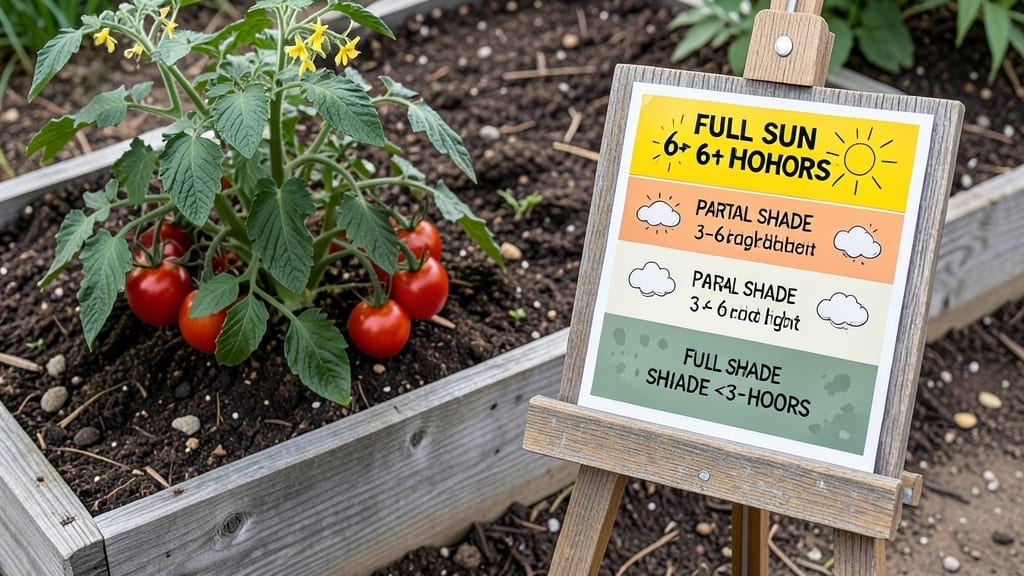
A garden needs 4 to 8 hours of sunlight daily, with full-sun plants requiring 6+ hours, partial-shade plants thriving on 3-6, and shade-loving plants tolerating less than 3. Adjust based on plant type and seasonal sunlight shifts.
A garden's sunlight needs vary dramatically depending on what you're growing. 🌱 Full-sun plants like tomatoes or sunflowers demand at least six hours of direct sunlight to thrive, while partial-shade varieties such as lettuce or ferns prefer three to six hours.
Shade-loving plants, including hostas or ferns, can survive with minimal light, but their growth may be stunted. I always recommend testing your garden's sunlight exposure by moving a plant around for a few weeks—this helps you identify the best spots for each type.
Seasonal changes complicate things further. Summer sun is more intense, so plants may need afternoon shade, while winter light is weaker, requiring adjustments to your planting strategy.
Many gardeners use shade cloths during peak summer months to protect delicate plants, and rotating crops can help balance sunlight exposure across the season. Understanding your garden's microclimates—like areas near fences or trees—can make all the difference in maximizing growth.
💡 In This Article
- Sunlight Requirements by Plant Category: Full Sun vs Partial Shade vs Shade
- Adjusting Sunlight for Seasonal Changes and Garden Layout Tips
Sunlight requirements by plant category: full sun vs partial shade vs shade
Sunlight isn't just about hours—it's about light intensity and quality that drive photosynthesis. Full-sun plants like tomatoes and peppers need 6+ hours of direct sunlight because their leaves have high chlorophyll density, allowing them to absorb maximum light energy.
These plants develop thicker stems and larger leaves to capture more sunlight, which is why you'll see tomato plants sprawling outward if they're happy.
The light intensity during these hours matters too: summer sun delivers 1,000-1,200 foot-candles (a measure of light strength), while winter sun drops to 500-700 foot-candles—a 50% reduction that can stress full-sun plants if unaccounted for. 🔥
Partial-shade plants like lettuce and basil operate in a 3-6 hour sweet spot because they balance light absorption with moisture retention. Too much sun causes their delicate leaves to wilt (ever seen bolted lettuce?), while too little results in leggy growth.
These plants have adapted by developing thinner leaves with fewer stomata (pores), reducing water loss in moderate light. For example, Swiss chard thrives in partial shade because its colorful stems can photosynthesize even when leaves aren't fully exposed.
The key is morning sun (cooler, less intense) and afternoon shade to prevent leaf scorch.
Shade-loving plants like hostas and ferns have evolved to thrive with less than 3 hours of direct light by developing larger, thinner leaves that maximize surface area for low-light photosynthesis.
Their roots grow deeper to access moisture and nutrients, while their leaves often contain higher concentrations of chlorophyll to capture what little light reaches them.
In deep shade, these plants may grow slowly but develop vibrant foliage—like the deep purple hues of shade-loving impatiens—which is their way of compensating for reduced energy production. 🌿
Here's where it gets interesting: some plants change categories based on climate. In hot, dry regions, a partial-shade plant like coleus might need only 3 hours of morning sun to avoid wilting, while in cooler coastal areas, it could handle 6 hours of dappled light.
The same tomato variety might need afternoon shade in Arizona but thrive in full sun in Oregon. This is why gardeners in different zones often disagree about "sunlight rules"—local microclimates create wildly different conditions.
Let's talk about the science behind why these differences matter. Photosynthesis peaks at 25-30°C (77-86°F), but temperatures above 35°C (95°F) damage chlorophyll, reducing a plant's ability to convert light into energy.
Full-sun plants handle this heat better through mechanisms like transpiration (sweating), while shade plants would cook in intense light. That's why you'll see shade plants wilting dramatically if moved to full sun—it's not just about light, but the temperature that comes with it. 🌡️
Consider this comparison: A sunflower in full sun produces 50-100 seeds per head, while the same variety in partial shade might yield only 10-20 seeds. The difference comes from reduced energy for flowering and seed development.
Even herbs like basil go from producing 50+ leaves per plant in full sun to just 10-15 leaves in deep shade. These numbers show why sunlight isn't just about survival—it's about maximizing your garden's potential.
Pro tip: Use a light meter app (many are free) to measure your garden's actual light levels. I've seen gardens where the sun only hits for 4 hours because of surrounding buildings, yet the homeowner assumed it was full sun.
This simple check can save you from planting the wrong varieties and dealing with disappointed plants. 📱