
Light Requirements
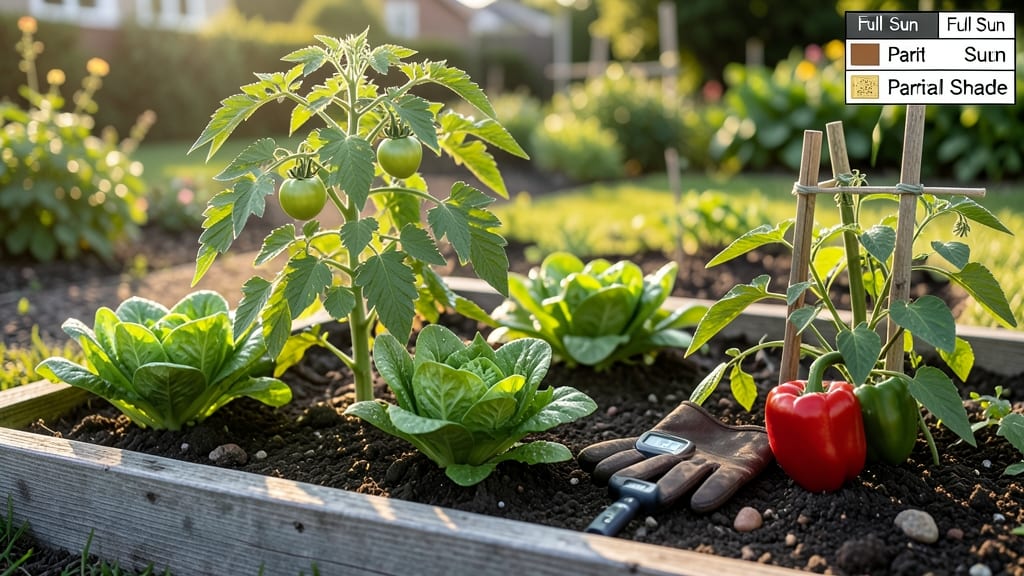
A vegetable garden needs how much sun for vegetable garden to thrive, but not all crops demand the same amount—getting this wrong can mean the difference between a thriving harvest and wasted effort.
Struggling to decide where to plant your tomatoes or why your lettuce keeps bolting? Sunlight is the #1 factor in vegetable garden success—and getting it wrong can mean the difference between a bountiful harvest and wasted seeds. Too little sun and your plants stretch weakly; too much and they scorch.
The good news? With the right placement and a few smart adjustments, you can maximize every square foot of your garden, even in partial shade.
Most vegetables—like tomatoes, peppers, and cucumbers—crave full sun, but leafy greens and root crops can handle less. Below, I’ll break down the exact sunlight needs for 20+ common crops, plus how to measure your garden’s light and tweak plant placement for the best results.
You’ll also discover the shade-tolerant vegetables that thrive in low-light spots and how to use companion planting to stretch your sun exposure. Whether you’re working with a sunny patch or a shady corner, this guide ensures your 🥦 vegetable garden gets the perfect balance of light for peak growth.

Sunlight requirements for vegetable gardens: exact hours by crop type
Understanding how much sun your vegetables need is the foundation of a thriving garden. Most vegetables crave full sun—meaning 6 to 8+ hours of direct sunlight daily—but some tolerate partial shade or even full shade. Placing plants incorrectly can lead to stunted growth, poor yields, or even plant death.
For example, tomatoes and peppers will bolt or produce bitter fruit if deprived of sunlight, while lettuce and spinach may bolt prematurely in hot, sunny conditions. Let’s break down the exact sunlight needs for 20+ common vegetables and how to optimize your garden layout.
Before diving into specifics, remember that sunlight quality matters as much as quantity. Morning sun (cooler and less intense) benefits leafy greens, while afternoon sun (warmer) suits fruiting plants like tomatoes. Microclimates in your yard—like areas near fences or trees—can create pockets of partial shade.
Use this to your advantage by grouping shade-tolerant plants together and reserving sunny spots for heavy sun-lovers. For small spaces, consider vertical gardening or container setups to maximize sunlight exposure.
Full sun (6-8+ hours/day) is ideal for most vegetables, but some thrive in partial shade (3-6 hours/day) or even full shade (<3 hours/day). Below is a detailed breakdown of sunlight needs, including growth impacts and positioning tips for small gardens.
| Vegetable | Sunlight Needs | Growth Impact | Positioning Tips |
|---|---|---|---|
| Tomatoes | 6-8+ hours | Bitter fruit, slow ripening | South-facing beds, trellises |
| Peppers | 6-8+ hours | Poor fruit set, weak stems | Raised beds for warmth |
| Cucumbers | 6-8 hours | Powdery mildew risk | Trellis for airflow |
| Zucchini | 6-8 hours | Smaller yields | Sunniest corner |
| Lettuce | 3-6 hours | Bolting, bitter taste | Dappled shade, morning sun |
| Spinach | 3-6 hours | Slow growth, weak leaves | North side of garden |
| Carrots | 4-6 hours | Deformed roots | Partial afternoon shade |
| Beets | 4-6 hours | Woodier texture | East-facing beds |
| Radishes | 3-6 hours | Pithy, tough roots | Container with afternoon shade |
| Green Beans | 6
How to measure sunlight in your garden and adjust plant placementSunlight isn't just about hours—it's about quality, timing, and consistency. Morning sun feels gentler than afternoon heat, and partial shade can actually protect delicate greens from scorching. Before you plant, I recommend testing your garden's sunlight patterns for at least 2 weeks to catch seasonal shifts. Start by marking your garden into 4-ft squares with stakes or spray paint, then observe how sunlight moves across these zones throughout the day. Most gardeners focus only on total sunlight hours, but morning vs. afternoon sun matters too. For example, tomatoes and peppers thrive with 6+ hours of afternoon sun—the intense light boosts fruit production. Meanwhile, leafy greens like spinach prefer morning sun and afternoon shade to prevent bolting. Use a simple sunlight journal to track which areas get direct sun at different times of day. ⚠️ Common Mistake: Overestimating Sunlight6 hours of sun ≠ 6 hours of full sun! Dappled shade from trees or buildings can reduce intensity by 30-50%. Use this quick test: If you can read a book comfortably under a spot, it's partial shade (3-6 hours of light). For full sun, no shade should block light between 10 AM and 4 PM. Many gardeners accidentally plant sun-lovers like cucumbers in "full sun" spots that are actually partial shade, leading to poor yields. Create a shade map by placing a white sheet of paper in each test square every hour from 8 AM to 6 PM. Trace the shadow edges with a marker—this reveals microclimates in your garden. For instance, a north-facing wall might cast 3 hours of shade in summer but only 1 hour in winter. Adjust your plant placement seasonally: Move heat-sensitive crops like basil to shadier spots in July, then return them to full sun in May. Rotate crops annually to balance soil nutrients and sunlight exposure. For example, if your tomato plants get 8 hours of sun in their current spot, swap them next year with shade-tolerant carrots that were previously in a sunnier area. This prevents soil depletion and ensures every plant gets its ideal light conditions. Pro tip: Use reflective mulch (like white gravel) to bounce extra light onto edge-of-garden plants that might otherwise get overlooked. Don't forget to account for future growth. A bush bean might start in partial shade but will need full sun once it reaches 2 feet tall. Plan your garden layout with mature plant sizes in mind—taller plants like corn or sunflowers should face north to avoid shading shorter crops. For small spaces, use vertical trellises to lift sun-loving vines (like cucumbers or pole beans) above ground-level shade. Finally, adjust for seasonal sun shifts. Summer solstice delivers 15% more sunlight than spring equinox in the same spot. If your zucchini plants struggle mid-summer, they might need afternoon shade cloth (30-50% shade) to prevent wilting. Conversely, winter sunlight is 30% weaker, so winter greens like kale can handle spots that get only 4 hours of sun in December. Use a sunlight calculator app to track these changes month by month. |