
Light Requirements
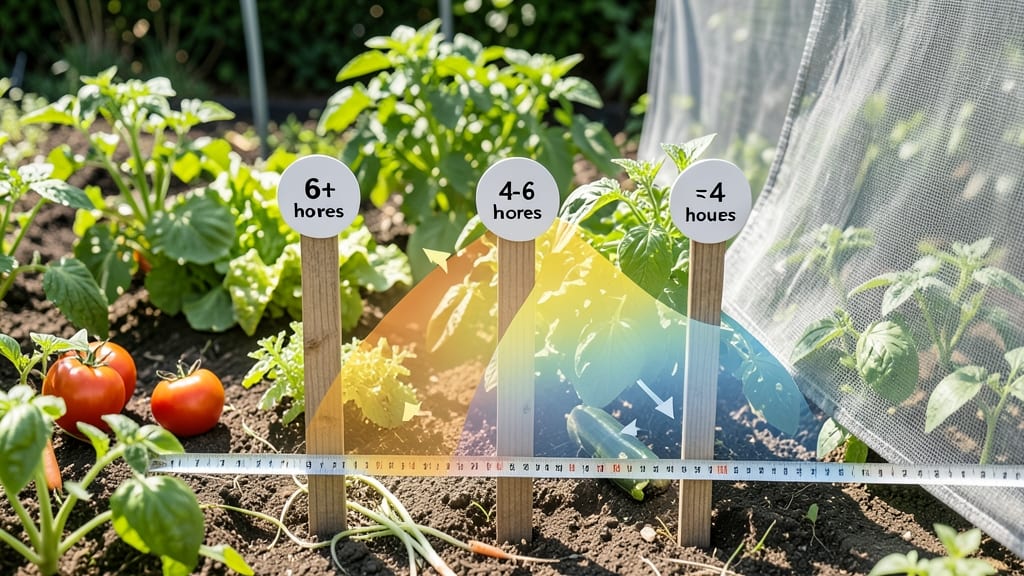
How much sun does a vegetable garden need? The answer is 6 to 8 hours of sunlight daily to produce strong, healthy crops—but too much or too little can ruin your harvest before it starts.
Struggling to decide where to plant your tomatoes or lettuce? Sunlight is the single most critical factor in determining whether your vegetable garden thrives or withers—but most gardeners don’t know the exact requirements for each plant.
From leafy greens that tolerate partial shade to sun-loving tomatoes that bolt in the heat, understanding your garden’s light patterns is the key to maximizing yields without wasting space.
Here’s how to assess your garden’s sunlight, match plants to the right spots, and fix common mistakes that kill growth—so you can enjoy a bumper crop instead of wilting disappointment.

Sunlight requirements by vegetable type: full sun vs partial shade explained
Understanding sunlight requirements for your vegetable garden is like learning a secret code—get it right, and your plants reward you with bountiful harvests. Full sun (6+ hours of direct sunlight) and partial shade (3-6 hours) labels aren’t just suggestions; they’re survival guides for your crops.
I’ve grown tomatoes that turned into shriveled oranges because they sat in too much shade, and basil that bolted to seed from too much afternoon heat. The difference between thriving and struggling often comes down to where you plant them.
Most gardeners assume all vegetables need the same amount of sunlight, but nothing could be further from the truth. Tomatoes, peppers, and cucumbers crave full sun, while leafy greens like spinach and lettuce can handle partial shade.
Even within categories, there are exceptions—like green beans, which tolerate partial shade better than sun-loving eggplants. The key is matching your garden’s sunlight patterns to each plant’s needs, and I’ll break it down so you can stop guessing and start growing.
Here’s the game-changer: 3-6 hours of sun is often enough for partial shade plants, but 6+ hours is non-negotiable for full-sun lovers. For example, basil and peppers wilt in less than 6 hours, while kale and carrots can thrive with just 3-4.
The trick is observing your garden’s sunlight throughout the day—morning sun is gentler, while afternoon sun can scorch delicate leaves. I once moved my zucchini plants from a sunny spot to partial shade during peak summer heat, and they produced twice as many fruits without burning.
| Vegetable | Sunlight Needs | Growth Impact of Undersun | Best Location |
|---|---|---|---|
| Tomatoes | 6-8+ hours (full sun) | Stunted growth, poor fruit set, leaf scorch | South-facing bed, trellis for support |
| Peppers | 6-8 hours (full sun) | Bitter fruit, weak stems, yellowing leaves | Protected from afternoon heat, raised bed |
| Leafy Greens (Lettuce, Spinach) | 3-6 hours (partial shade) | Bolting (going to seed), bitter taste, slow growth | Dappled shade under trees, north side of fence |
| Root Crops (Carrots, Beets) | 4-6 hours (partial sun) | Deformed roots, woody texture, poor yield | Morning sun + afternoon shade, loose soil |
| Basil | 6+ hours (full sun) | Leggy stems, weak aroma, early flowering | Containers near sunny window, trellis for air flow |
| Green Beans | 5-6 hours (full sun to partial shade) | Fewer pods, weak vines, yellow leaves | Trellis for airflow, avoid waterlogging |
Let’s talk about tomatoes—the poster child for full-sun plants. These guys need 6-8 hours of direct sunlight to produce the juicy, flavorful fruits you crave. I’ve seen heirloom tomatoes planted in partial shade turn into small, mealy disappointments. The same goes for peppers, which also demand full sun.
Without enough light, their fruits become bitter and underdeveloped. If your garden only gets 4-5 hours of sun, consider growing cherry tomatoes or pepper varieties like 'Sweet Banana'**, which are slightly more forgiving.
On the flip side, leafy greens like spinach and lettuce are the chill kids of the garden—they’re happy with just 3-6 hours of sun. Too much direct sunlight, especially in hot climates, causes them to bolt (go to seed) premature
How to measure sunlight in your garden and Adjust plant placement
Sunlight isn’t just light—it’s the lifeblood of your vegetable garden. But not all plants thrive in the same sun exposure. Morning sun feels gentle, while afternoon rays can scorch delicate leaves.
To place your plants perfectly, you need to measure sunlight accurately and understand how it shifts throughout the day and seasons.
Start by observing your garden for a full week.
Note how shadows move and how long each area stays in direct sunlight. Morning sun (6 AM–12 PM) is cooler and ideal for heat-sensitive crops like leafy greens, while afternoon sun (12 PM–6 PM) can be intense, especially in hot climates.
Use a DIY sunlight tracker—like a white board or chalkboard—to mark sun exposure times in different spots.
- 1 Full Sun (6+ hours): Tomatoes, peppers, cucumbers, and squash need this for maximum growth. Place them in the sunniest spots of your garden.
- 2 Partial Shade (3-6 hours): Leafy greens (lettuce, spinach), herbs (basil, parsley), and root veggies (carrots, beets) thrive here. Avoid midday heat to prevent bolting.
- 3 Dappled Shade (2-3 hours): Delicate crops like arugula or radishes can handle brief sun exposure. Use shade cloth (30-50%) to filter harsh rays.
- 4 Adjust seasonally: Summer sun is harsher—use reflective mulch or shade cloth to protect plants. In winter, move sun-loving crops to sunnier beds as shadows lengthen.
- 5 Rotate crops annually to balance nutrient depletion and sun exposure. Heavy feeders like tomatoes need full sun one year; swap them with greens the next.
If your garden lacks sufficient sunlight, try reflective surfaces like white gravel or mirrors to bounce light onto plants. For excessive heat, invest in shade cloths (30% for light filtering, 50% for moderate protection). Even a few hours of afternoon shade can save your peppers or eggplants from scorching.
Don’t forget to monitor sunlight shifts monthly. A spot that gets full sun in spring might only receive partial shade in summer due to tree growth or building shadows. Use seasonal adjustments—like moving heat-sensitive crops to shadier beds in July—to keep your garden thriving year-round.
With these practical tips, you’ll turn your garden into a sunlight-optimized powerhouse. Start small, observe closely, and let your plants guide your placement—they’ll reward you with bountiful harvests! 🌱☀️