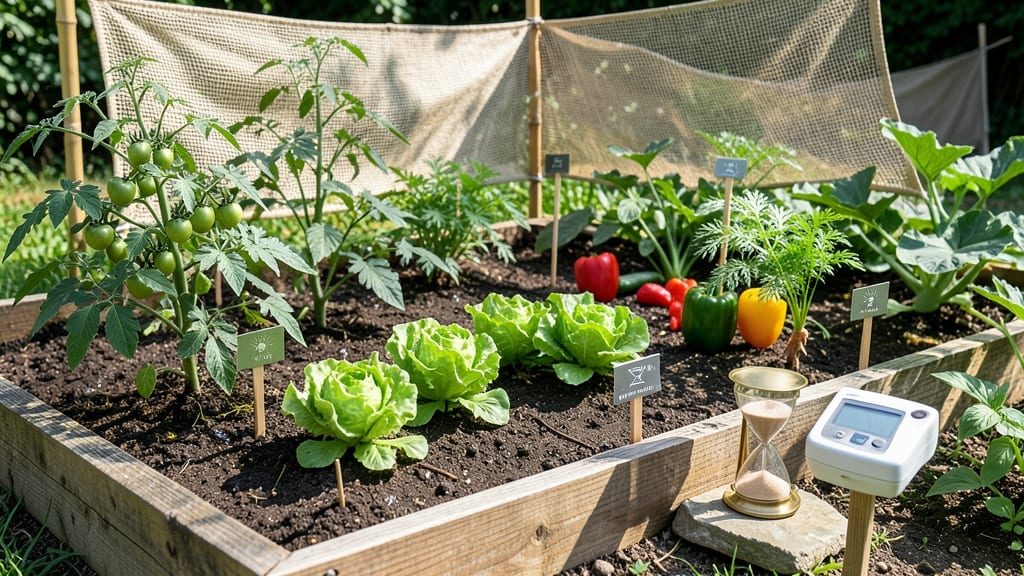
A vegetable garden needs 6 to 8 hours of sunlight daily to produce strong, healthy plants 🥬 — but not all veggies have the same requirements, and getting this wrong can mean the difference between a thriving harvest and wasted effort.
Struggling to decide where to place your vegetable garden? Sunlight is the #1 factor determining whether your plants thrive or wilt — and most gardeners overestimate how much their space actually gets.
A quick check with a sun calculator or even just watching your yard for a week can save you from planting tomatoes in the shade.
Some vegetables, like tomatoes and peppers, demand full sun all day, while leafy greens like spinach or lettuce can handle partial shade and even thrive in cooler mornings.
Herbs like basil and cilantro need bright light but can tolerate a little afternoon shade, making them perfect for containers or garden edges.
Below, I’ll break down the exact sunlight needs for 20+ common vegetables, how to measure sunlight in your garden, and what to do if your space just doesn’t get enough light. You’ll learn how to maximize yields — even in tricky spots.
Low Light
6-8 hrs
Shade tolerant
Partial Sun
6-8 hrs
Bright indirect
Full Sun
6-8 hrs
Direct sunlight
Sunlight requirements by vegetable type: full, partial, OR low-light needs
Sunlight is the lifeblood of your vegetable garden, but not all plants crave the same amount. Full sun lovers like tomatoes need 6-8 hours daily, while shade-tolerant greens thrive with 3-4 hours.
Getting this right means the difference between plump tomatoes and leggy, weak seedlings. Let’s break down exactly what each plant needs—and where to place them for maximum yields.
Most gardeners assume "full sun" means all day, but 6-8 hours of direct sunlight is actually ideal for heat-loving crops. However, partial shade (3-6 hours) works better for leafy greens, while low-light conditions (under 3 hours) can still support certain herbs and root vegetables.
The key is matching your garden layout to each plant’s sunlight tolerance.
Vegetable
Sunlight Needs
Optimal Placement
Yield Impact
Tomatoes
6-8 hours
South-facing bed, trellis
Poor yield, weak stems
Peppers
6-8 hours
Full sun, warm microclimate
Fewer peppers, bitter taste
Cucumbers
6-8 hours
Trellis near fence/wall
Powdery mildew risk
Leafy Greens (Spinach, Lettuce)
3-4 hours
Dappled shade, morning sun
Bitter taste, bolting
Carrots
4-6 hours
Partial shade, mulched bed
Forked roots, slow growth
Basil
4-6 hours
Containers near patio
Leggy stems, weak flavor
Green Beans
5-6 hours
Southwest corner
Lower pod production
Radishes
3-5 hours
North side of raised bed
Pithy texture, slow harvest
Onions
4-6 hours
East-west row
Small bulbs, poor flavor
Swiss Chard
4-6 hours
Under fruit tree
How to calculate sunlight hours in your garden location
Determining how many hours of sunlight your garden receives is the first step to creating an ideal growing environment for your vegetables. Too little sun leads to leggy, weak plants, while too much can cause heat stress or sunburn.
I’ve learned that even a 10% difference in sunlight exposure can drastically affect your harvest.
Start by observing your garden space from sunrise to sunset for at least a week. Use a sunlight tracker app or a simple notebook with timestamps to record when shadows fall across your garden. This helps account for seasonal variations—spring and fall often receive less direct sunlight than summer.
Pro Tip: Place a white garden stake or flag in your planting area. Mark the shadow’s edge every hour using a pencil or tape. By the end of the day, you’ll have a clear map of your garden’s sunlight zones. This method is foolproof and requires no fancy tools.
16-8 hours = Full sun (ideal for tomatoes, peppers, cucumbers)
23-6 hours = Partial shade (best for leafy greens like lettuce, spinach)
3Less than 3 hours = Low-light area (reserve for herbs like parsley or microgreens)
4Adjust for seasons: Summer sunlight lasts longer than winter—account for 2-4 extra hours in peak season.
5Use shade cloth (30-50%) for heat-sensitive plants like basil or beans during afternoon sun.
If your garden has uneven sunlight exposure, group plants with similar needs together. For example, place tomatoes and peppers in the sunniest spot and lettuce and kale where they’ll get morning sun and afternoon shade. This zoning strategy prevents overcrowding and maximizes your garden’s potential.
For container gardens, move pots throughout the day to follow the sun. A rotating stand or wheels makes this easy—just reposition them every few hours. I’ve seen herbs like basil double their yield by getting flexible sunlight access this way.
Finally, don’t forget to monitor sunlight changes over time. New buildings, trees, or even your own growing plants can cast new shadows. Reassess your garden’s sunlight map every season to keep your vegetables thriving.
With these tips, you’ll master sunlight calculation and grow a garden that’s always in the right light. 🌱