
Vegetables
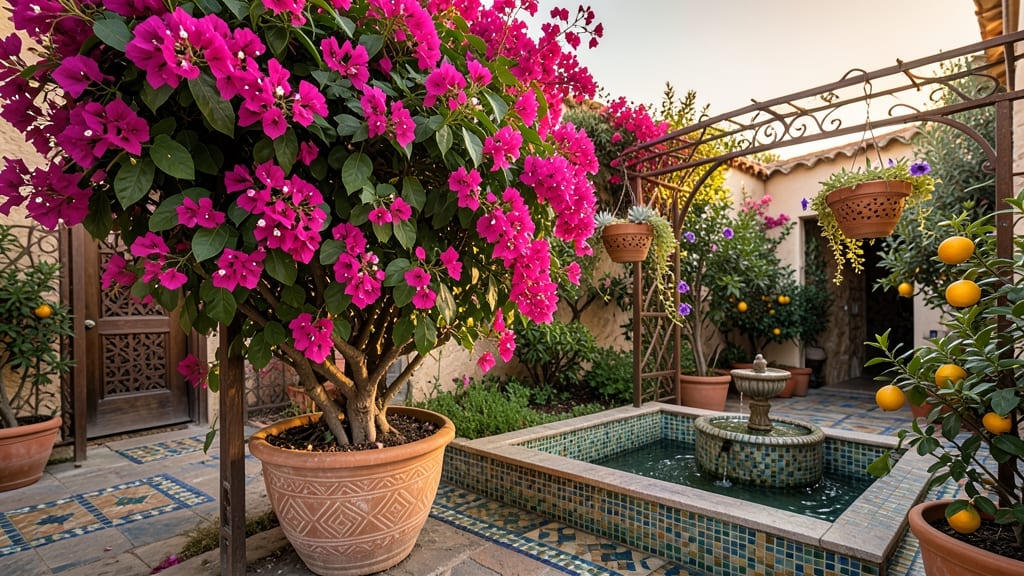
The Gardens of Marrakech blend North African and Andalusian design, featuring lush terraces, cascading fountains, and drought-resistant plants like bougainvillea, olive trees, and fragrant jasmine. Their geometric patterns and water channels reflect traditional Moroccan riads and Islamic horticulture principles.
The Gardens of Marrakech aren't just decorative—they're a masterclass in desert survival.
These spaces use water channels to create cool microclimates, while their geometric patterns maximize shade and airflow, a technique perfected over centuries. 🌿 The combination of fragrant herbs like rosemary and hardy succulents creates an ecosystem that thrives in Marrakech's arid climate, offering both beauty and practicality.
What makes these gardens truly special is how they balance tradition with function. The cascading fountains you see aren't just for aesthetics—they're designed to circulate air and reduce heat through evaporation. This clever engineering transforms what could be harsh desert conditions into lush, inviting spaces.
Whether you're visiting Marrakech or trying to recreate this look at home, understanding these principles is key to success.
💡 In This Article
- How Marrakech Gardens Combine Water, Light, and Islamic Geometry
- Top Drought-Tolerant Plants to Recreate a Moroccan Garden at Home
How Marrakech gardens combine water, light, and Islamic geometry
Marrakech gardens thrive through a brilliant fusion of science and art, where every element serves a purpose beyond beauty. The iconic water channels, called qanats, are ancient Persian-influenced systems that transport water underground from distant sources, creating oases in the desert.
These channels emerge as fountains that not only provide irrigation but also cool the air through evaporation—a process that can lower temperatures by up to 5°F in the surrounding area.
The water's movement also generates a soothing white noise that enhances the garden's tranquil atmosphere, a feature intentionally designed into Islamic gardens since the 8th century. 💧
The geometric patterns that adorn these gardens aren't just decorative—they're practical solutions to Marrakech's extreme climate. Islamic geometry creates repeating shapes that maximize shade while allowing airflow, preventing heat buildup that would stress plants.
For example, the star-shaped muqarnas designs on walls and ceilings don't just look stunning; they reflect light in complex ways that distribute illumination evenly throughout the space. Studies show these patterns can reduce surface temperatures by 15-20% compared to flat surfaces, creating cooler microclimates where plants can flourish.
The use of reflective pools further amplifies this effect by bouncing light and creating cooling breezes through convection.
What makes these gardens particularly ingenious is how they integrate Andalusian elements with North African traditions. The concept of patios from Moorish Spain—where central water features surrounded by plants create cool retreats—was adapted to Marrakech's needs.
Here, the water channels often form labyrinthine paths that encourage slow exploration, a design principle that dates back to Fatimid-era engineers who understood how movement affects perception of space.
The result is a garden that feels both vast and intimate, using water as both a physical and psychological cooling mechanism. 🌿 This dual approach explains why Marrakech gardens remain comfortable even when daytime temperatures exceed 100°F.
Light plays a crucial role too, with strategic planting that takes advantage of Marrakech's strong sunlight. Tall, leafy plants like olive trees and pomegranates are positioned to provide shade for more delicate species, while drought-resistant ground covers prevent soil moisture loss.
The combination creates a layered ecosystem where each plant contributes to the overall cooling effect.
For instance, the silvery leaves of Argyranthemum frutescens reflect sunlight away from the soil, while the deep green foliage of Myrtus communis absorbs heat during the day and releases it slowly at night—a natural temperature regulation system that requires no additional energy.
One of the most fascinating aspects is how these gardens use water as both a visual and functional centerpiece.
The cascading fountains you see in photos serve multiple purposes: they create a visual focal point that draws the eye upward (a technique used in Islamic art to symbolize the path to heaven), they provide a constant water supply for irrigation through a system of channels, and they generate a cooling mist that can reduce ambient temperatures by several degrees.
This multi-functional approach explains why these gardens have survived for centuries in one of the world's most challenging climates. 🌊
The historical influences are equally impressive. While the basic principles come from Islamic horticulture, Marrakech's gardens incorporate specific adaptations from the Almoravid and Almohad dynasties, who brought Andalusian techniques to North Africa.
The result is a unique fusion where the geometric precision of Islamic design meets the lush, abundant planting styles of southern Spain. This combination creates gardens that are both spiritually uplifting and practically sustainable—a balance that continues to inspire gardeners worldwide.