
Watering
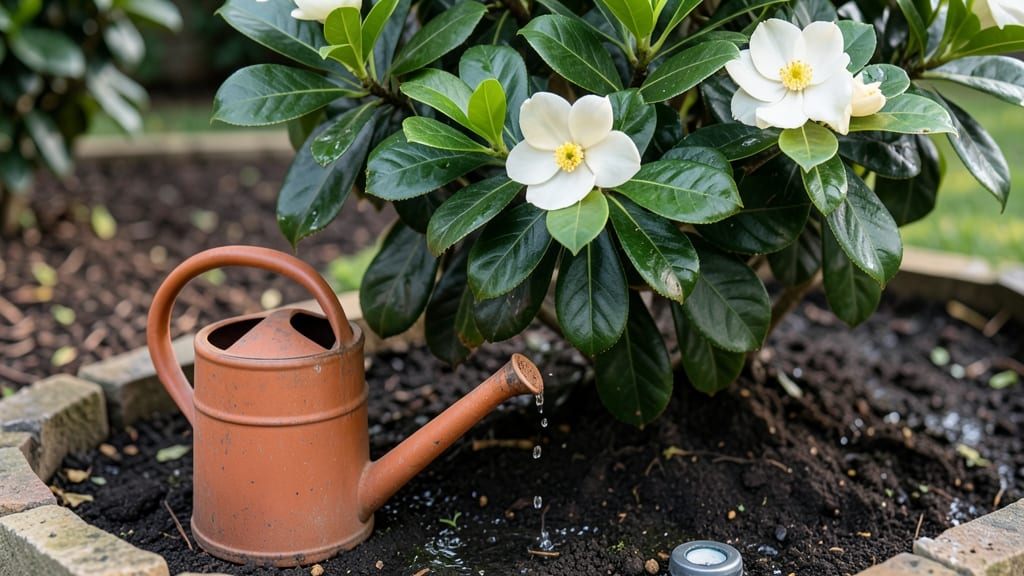
Your gardenia’s water requirements are the secret to those glossy leaves and intoxicating blooms 🌸—but get it wrong, and you’ll end up with a plant that looks as sad as a wilting bouquet.
Picture this: You’ve given your gardenia the perfect spot, but the leaves turn yellow, the buds drop, and the fragrance fades. The problem? Most gardeners either drown their plants or leave them high and dry.
Neither works. Gardenias crave consistency—moist but never soggy soil—and the stakes are high when summer heat cranks up the evaporation.
Here’s the game-changer: a watering schedule tailored to your gardenia’s season, soil, and whether it’s potted or planted in the ground. Too much water? Root rot sets in. Too little? The plant wilts faster than a cut flower.
I’ll break down the exact frequency, the telltale signs of trouble, and how to adjust for containers or in-ground plants so your gardenia thrives year-round.
You’ll learn how to test soil moisture, when to soak vs. mist, and why morning watering matters—plus how humidity plays a role in keeping those blooms coming. No more guessing. Just lush, fragrant gardenias that reward you with every sniff.
How often to water gardenias for healthy growth and blooms
Your gardenia thrives on consistency—watering too much or too little can stunt its glossy leaves and fragrant blooms. The key lies in understanding its root system, which prefers moist but well-drained soil.
Unlike drought-tolerant plants, gardenias demand attention, especially during their active growing season from spring to summer. Overwatering leads to root rot, while underwatering causes bud drop and wilted foliage. Let’s break down the science-backed schedule to keep your gardenia lush and blooming year-round.
Gardenias hate soggy soil but also despise dry spells. Their roots need consistent moisture without becoming waterlogged. Think of it like a sponge: you want it damp, not dripping wet.
The ideal soil moisture is about 1 inch deep—stick your finger in the soil, and if the top layer feels dry, it’s time to water. For container gardenias, this happens more frequently than in-ground plants, as pots dry out faster.
Adjust your schedule based on your local climate, soil type, and whether your gardenia is in a pot or planted in the ground.
During spring, your gardenia is waking up from dormancy and needs frequent watering to encourage new growth. Aim for every 3 days, checking the top 1-2 inches of soil.
Look for bud formation as a sign it’s thriving—this is when your plant is most sensitive to water stress. In summer, heat and humidity increase evaporation, so you’ll need to water daily or every other day.
The key is to water deeply in the early morning to prevent fungal diseases like powdery mildew, which thrives in damp foliage. If your gardenia’s leaves start to wilt by late afternoon, it’s a clear sign it’s time to water.
As fall approaches, reduce watering to every 5-7 days as your gardenia prepares for dorm
Gardenia watering mistakes that kill flowers (and how to fix them)
Your gardenia’s glossy leaves and fragrant blooms are a labor of love—but even small watering mistakes can turn them into a sad, drooping mess. I’ve seen gardeners overwater until roots rot, underwater until buds drop, and ignore drainage until the soil becomes a swamp.
The key is consistency and proper technique, not just frequency.
Most gardeners assume gardenias need lots of water, but the truth is they prefer consistently moist soil with excellent drainage. Too much water suffocates roots, while too little causes stress that shows up as yellowing leaves or bud drop.
Let’s fix these common mistakes before your gardenia throws in the towel.
⚠️ Warning: Your Gardenia’s Water Requirements Are Being Ignored
Overwatering is the #1 killer of gardenias—it causes root rot and yellow leaves. Underwatering leads to bud drop and crispy edges. Here’s the fix:
- Test soil before watering: Stick your finger 2 inches deep—if it’s dry, water. If it’s damp, wait.
- Water deeply but only when the topsoil is dry. Aim for 1-2 gallons per watering for mature plants.
- Drainage is non-negotiable: Use pots with holes or amend soil with perlite.
💧 Pro Tip: Morning watering reduces evaporation and fungal risks.
One of the biggest mistakes is inconsistent watering. If you water every day one week and skip it the next, your gardenia’s roots get confused. They need a steady moisture level, especially during blooming season (spring and summer).
I recommend setting a reminder or using a moisture meter to track soil conditions.
Poor drainage is another silent killer. If your gardenia sits in soggy soil, roots suffocate and turn brown. Check your pots or garden bed—if water pools after 30 minutes, you need better drainage.
For containers, add a layer of gravel or perlite at the bottom. For in-ground plants, mix in sand or compost to improve airflow.
Yellowing leaves are a red flag for overwatering or poor drainage. Start by cutting back on water and ensuring excess moisture drains away. If the problem persists, repot your gardenia in fresh, well-draining soil.
For container plants, check the roots—if they smell rotten or look mushy, trim the damaged parts and repot immediately.
Bud drop happens when gardenias get too dry or too wet. To prevent it, keep soil evenly moist (not soggy) and avoid letting the topsoil dry out completely. If buds are already dropping, increase humidity around the plant by misting leaves or placing a tray of water nearby.
This mimics their natural tropical habitat and encourages more blooms.
Finally, don’t forget that seasonal changes affect water needs. In summer, gardenias may need water every 2-3 days, while winter slows growth—reduce watering to once every 2 weeks.
Adjust based on your climate, and always water at the base of the plant to avoid wetting leaves, which can cause fungal issues.