
Fertilization
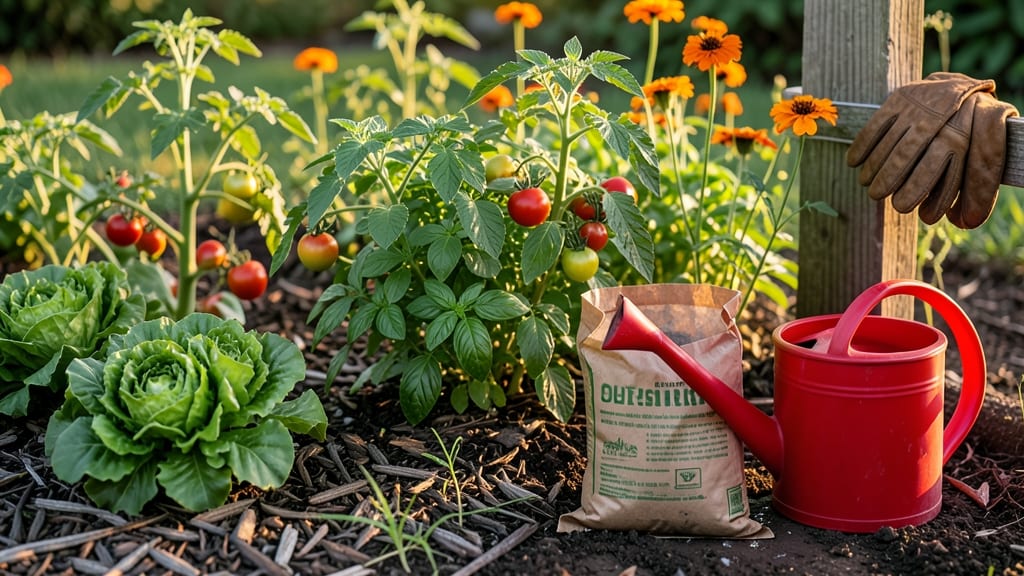
The right garden plant food can turn a struggling patch of 🌱 into a thriving harvest in weeks—but most gardeners waste money on the wrong mix.
Picture this: you’re watering your tomatoes every morning, yet they stay small and pale. The issue isn’t your watering—it’s the fertilizer. Too much nitrogen makes leaves explode, but too little phosphorus keeps roots weak. Balancing nitrogen, phosphorus, and potassium (NPK) is the key to fast growth without burning your plants.
In this guide, I’ll break down how to read NPK labels, match ratios to your crops (like 5-10-10 for tomatoes vs. 30-0-4 for lawns), and avoid the three mistakes that drain your wallet and stunt your garden.
You’ll leave here with a simple cheat sheet for organic and synthetic options, plus when to feed your soil for maximum impact—no guesswork, just results.


How nitrogen-phosphorus-potassium ratios boost garden plant food efficiency
If your garden plants seem stunted or lackluster, the issue might be your NPK ratios. These three numbers—nitrogen (N), phosphorus (P), and potassium (K)—are the backbone of plant nutrition, but most gardeners don’t use them effectively.
Understanding how to match these ratios to your plants’ growth stages can transform your garden’s productivity overnight.
Think of NPK as a growth recipe. Too much nitrogen makes plants grow leafy but weak, while too much phosphorus can stunt roots. Potassium, often overlooked, strengthens stems and disease resistance.
The key is balancing these nutrients based on what your plants need at each stage—whether they’re leafy greens, flowering plants, or fruit-bearing crops.
For example, leafy greens like lettuce and spinach thrive with a high-nitrogen ratio (e.g., 3-1-2), while tomatoes and peppers need a balanced approach (e.g., 5-10-10) to support both foliage and fruit production.
Lawns, on the other hand, often benefit from a heavy nitrogen push (e.g., 30-0-4) to stay lush and green.
Here’s the catch: using the wrong ratio can waste your garden plant food and even harm your plants. Over-fertilizing with nitrogen, for instance, can burn roots, while too much phosphorus can lead to soil compaction and nutrient lockout.
The solution? Tailor your NPK ratios to your plants’ needs at every growth stage.
| Plant Type | Growth Stage | Ideal NPK Ratio | Example Plants | Key Benefits |
|---|---|---|---|---|
| Leafy Greens | Vegetative (Leaf Growth) | 3-1-2 or 4-2-2 | Lettuce, Spinach, Kale | Promotes lush foliage and rapid leaf production |
| Root Vegetables | Early Growth (Root Development) | 2-4-2 or 1-2-2 | Carrots, Potatoes, Beets | Encourages strong root systems and storage organs |
| Fruiting Plants | Flowering/Fruiting | 5-10-10 or 10-10-10 | Tomatoes, Peppers, Cucumbers | Supports flower and fruit development, improves yield |
| Lawns | Vegetative (Grass Growth) | 30-0-4 or 24-0-8 | Kentucky Bluegrass, Fescue | Promotes dense, green grass growth and root strength |
| Flowering Plants | Blooming Stage | 5-10-5 or 7-7-7 | Roses, Petunias, Marigolds | Enhances flower production and plant vigor |
Let’s break down why these ratios work. Nitrogen (N) is the growth engine—it fuels leafy green growth and helps plants develop chlorophyll. If your plants look pale or yellow (chlorosis), they’re likely nitrogen-deficient.
On the other hand, too much nitrogen can delay flowering and fruiting, so it’s crucial to reduce nitrogen as plants transition to flowering stages.
Next up is phosphorus (P), the root and flower booster. Phosphorus helps plants develop strong roots and is essential for energy transfer during flowering and fruiting.
If your plants are slow to flower or produce small, weak fruits, a phosphorus boost (like bone meal or a 0-10-0 fertilizer) can work wonders. For example, tomatoes and peppers need phosphorus to form robust root systems and produce abundant fruits.
Potassium (K) is often the forgotten nutrient, but it’s vital for overall plant health. It regulates water uptake, strengthens cell walls, and boosts disease resistance. A potassium deficiency can lead to weak stems, yellow leaf edges (scorch), and poor fruit quality. Plants like potatoes and corn rely heavily on potassium to produce high-quality tubers and kernels. A ratio like 5-10-10 ensures your fruiting plants get enough potassium to thrive.
One of my favorite real-world examples is comparing tomatoes and lawns. Tomatoes need a balanced ratio like 5-10-10 to support both their leaves and fruit production. The higher phosphorus and potassium help them develop strong roots and resist diseases like blight.
In contrast, lawns thrive on a high-nitrogen ratio like 30-0-4, which promotes rapid leaf growth and a lush green appearance. Using the wrong ratio for either plant would lead to poor results.
To apply this knowledge, start by testing your soil to understand its current NPK levels. Many garden centers offer affordable soil test kits, or you can send a sample to a local agricultural extension office.
Once you know your soil’s baseline, you can amend it with organic matter like compost or use synthetic fertilizers to achieve the ideal ratios for your plants. For instance, if your soil is nitrogen-deficient, add alfalfa meal or a blood meal fertilizer to boost N levels.
Timing is everything when it comes to NPK. For leafy greens, apply a nitrogen-rich fertilizer early in the season to encourage rapid growth. Switch to a lower-nitrogen, higher-phosphorus fertilizer (like 2-4-2) when plants start flowering.
For fruiting plants, begin with a balanced fertilizer (e.g., 10-10-10) at planting, then shift to a phosphorus-heavy fertilizer (e.g., 0-20-10) when flowers appear to encourage fruit set.
Remember, the goal isn’t to over-fertilize—it’s to feed your plants precisely what they need at each stage. By matching your garden plant food to your plants’ growth phases, you’ll see faster growth, healthier plants, and a bountiful harvest.
Start experimenting with NPK ratios this season, and watch your garden transform! 🌱
Best NPK ratios for fast-growth garden plants by category
Choosing the right NPK ratios for your garden plants can transform growth rates—especially when tailored to specific categories. Vegetables, herbs, flowers, and lawns all thrive with different nutrient balances.
For example, leafy greens like lettuce love nitrogen-heavy formulas, while root crops like carrots need more phosphorus for development.
Organic options like compost or fish emulsion provide slow-release nutrients, while synthetic fertilizers offer precise ratios. The key is matching the NPK ratio to your plant’s growth stage—early growth benefits from nitrogen, flowering from phosphorus, and root development from potassium.
| Plant Category | Ideal NPK Ratio | Best Organic Option | Synthetic Alternative |
|---|---|---|---|
| Leafy Vegetables (Lettuce, Spinach) | 3-1-2 | Alfalfa meal | 24-4-8 |
| Root Crops (Carrots, Potatoes) | 2-4-2 | Bone meal | 5-10-10 |
| Fruiting Plants (Tomatoes, Peppers) | 5-10-10 | Fish emulsion | 10-20-20 |
| Herbs (Basil, Mint) | 4-2-3 | Compost tea | 12-6-6 |
| Flowering Plants (Roses, Petunias) | 3-6-6 | Wood ash | 7-9-5 |
| Lawns (Grass) | 30-0-4 | Grass clippings | 21-0-0 |
For vegetables, focus on balanced ratios like 10-10-10 during active growth, but switch to phosphorus-heavy formulas (e.g., 5-10-5) when flowering begins. Herbs often thrive with slightly higher nitrogen early on, while flowers benefit from phosphorus to encourage blooming.
Adjust ratios based on plant behavior: yellowing leaves signal nitrogen deficiency, while stunted growth may mean phosphorus is lacking. Always test your soil first—amending with compost can reduce the need for synthetic fertilizers while improving soil structure.
Lawns are an exception—they need high nitrogen (30-0-4) for lush green growth, but avoid over-fertilizing, which can burn grass. For organic lawn care, use clover or alfalfa as natural nitrogen sources instead of synthetic options.
Start with these ratios, then tweak based on your plants’ responses. A little experimentation will help you find the perfect balance for your garden’s fastest growth! 🌱