
Tools
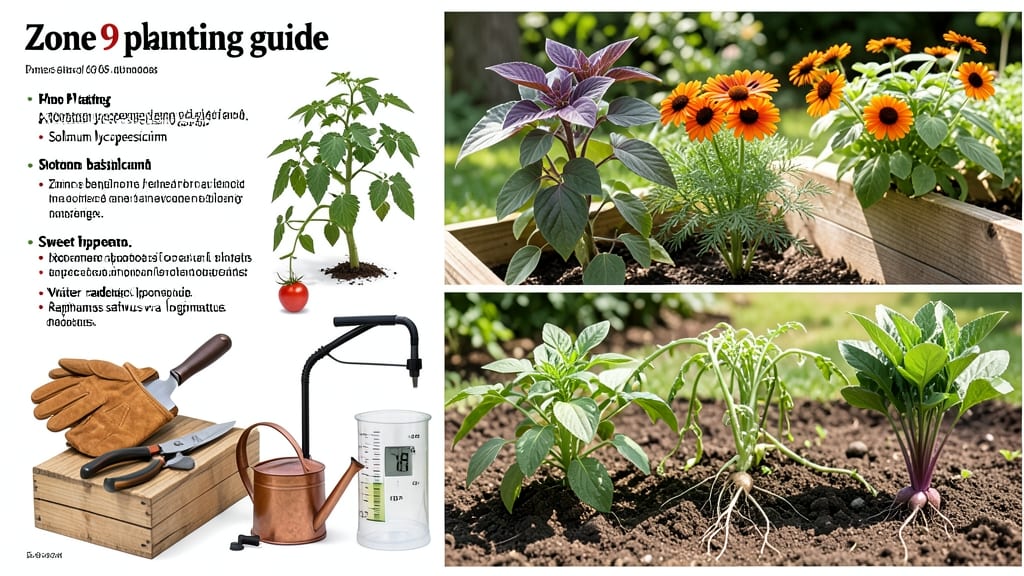
A Zone 9 garden calendar organizes planting around its long frost-free season—about 300+ days—with last frosts typically falling between mid-December and late January. Plant heat-loving crops in spring, cool-season varieties in fall, and protect tender plants during summer's peak heat.
A Zone 9 garden calendar isn't just about dates—it's about working with your region's natural rhythm. 🌱 The extended growing season means you can grow tropical crops like okra or sweet potatoes year-round, but summer's intense heat (often exceeding 100°F) requires careful timing to prevent stress.
I've found that starting seeds indoors 6-8 weeks before the last frost (around mid-December) gives seedlings a head start before spring's warm-up. For fall crops, focus on planting by late August to ensure harvest before winter sets in.
What sets Zone 9 apart is its ability to grow both tropical and temperate plants simultaneously. For example, you can plant basil in spring for summer harvests while still enjoying kale and spinach in fall.
The key is matching each plant's heat tolerance—some, like tomatoes, thrive in summer's heat, while others, like lettuce, bolt quickly when temperatures rise above 80°F. A well-planned calendar helps you maximize your garden's potential without overcrowding or wasting resources.
💡 In This Article
- Zone 9 Frost-Free Timeline and Planting Seasons Explained
- Best Monthly Planting Schedule for Zone 9 Gardens
Zone 9 frost-free timeline and planting seasons explained
Zone 9's frost-free window of roughly 300+ days creates a unique growing environment where frost typically arrives between mid-December and late January, with rare exceptions.
The average last frost date in Southern California (Zone 9a) occurs around December 15, while Florida's Zone 9b often sees frost as late as January 20.
This extended window allows tropical plants like eggplant and okra to thrive year-round, while temperate crops like broccoli and carrots require careful timing to avoid summer heat stress.
The key difference between cool-season and warm-season crops lies in their temperature tolerances. Cool-season plants (e.g., spinach, kale) prefer temperatures between 50-75°F and often go dormant or bolt when exposed to prolonged heat above 80°F.
Warm-season crops (e.g., peppers, tomatoes) thrive in 75-95°F ranges but can suffer from blossom drop or fruit sunscald when temperatures exceed 95°F for extended periods. Zone 9's summer heat (often 100°F+) forces gardeners to plant warm-season crops early in spring or late summer for fall harvests.
Dormancy cycles play a crucial role in Zone 9 gardening. Many cool-season crops (like lettuce) enter dormancy when days shorten in late summer, while warm-season crops (like squash) may struggle during summer's peak heat. The solution?
Succession planting—sowing bush beans every 2-3 weeks from March to August ensures continuous harvests. For heat-sensitive crops, shade cloth (30-50%) can lower soil temperatures by 10-15°F, extending the growing window for lettuce and herbs.
What most gardeners overlook is how soil temperatures affect planting. Warm-season crops need soil at least 60°F to germinate, while cool-season crops prefer 45-55°F. In Zone 9, soil temperatures can reach 90°F+ in summer, making direct sowing of lettuce seeds nearly impossible without pre-cooling the soil.
Mulching with straw or wood chips helps maintain even temperatures and conserve moisture during dry spells.
Consider these seasonal microclimates: Coastal areas (like San Diego) have milder winters with 60-70°F average temperatures, while inland desert regions (like Phoenix) can drop below 32°F but rebound quickly.
This variation means your Zone 9 garden's exact planting dates may shift 2-4 weeks depending on elevation and proximity to large water bodies. Always check local weather patterns for the past 5 years to refine your calendar.
For example, tomatoes planted in Phoenix in early April may suffer from 95°F+ daytime heat by June, while coastal plantings in the same region can extend harvests into September. The solution? Choose heat-tolerant varieties like 'Solar Fire' tomatoes or 'Malagueta' peppers, which handle 100°F temperatures better than standard varieties.
Pro tip: Use a soil thermometer to monitor temperatures at 4-inch depth—this is where seeds sense the environment. Plant warm-season crops when soil hits 65°F consistently, even if air temperatures are cooler. This small adjustment can mean the difference between 90% germination and 20%. 🌱