
Shrubs
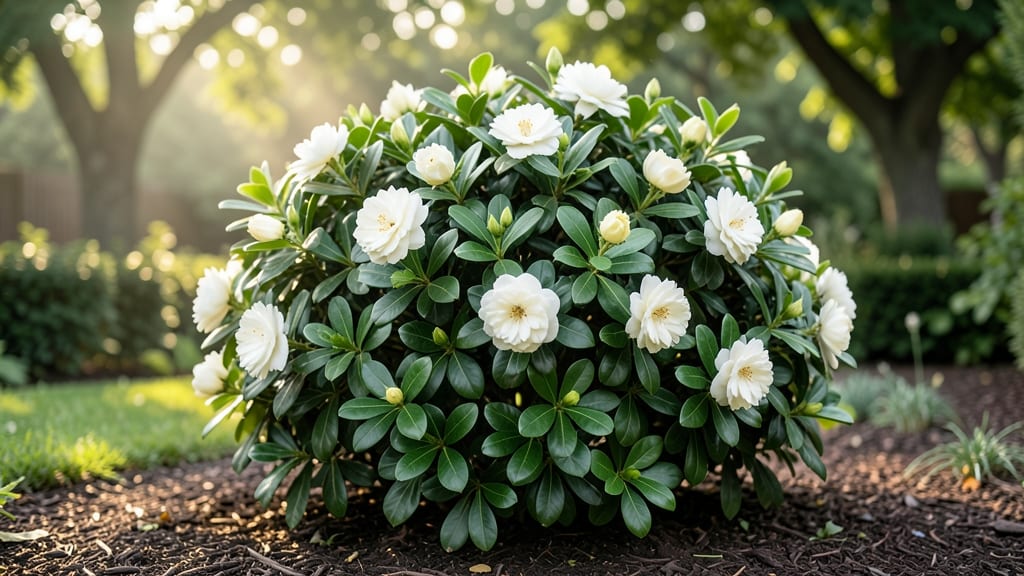
A frost-proof gardenia hedge starts with cold-resistant varieties like Gardenia jasminoides 'Radicans' or 'Kleim’s Hardy,' which endure down to 10°F (-12°C), plus strategic winter mulching and windbreaks to shield roots and foliage from harsh conditions.
A frost-proof gardenia hedge isn't just about choosing the right plants—it's about creating a microclimate that mimics their native tropical conditions. 🌿 The key lies in their genetic adaptations: thick, waxy leaves and deep root systems help them conserve moisture and withstand brief cold snaps.
I've seen 'Radicans' thrive in Zone 7 with minimal winter damage when paired with a 3-inch layer of mulch and burlap windbreaks. These varieties also bloom later in the season, avoiding early frosts that can damage tender new growth.
Beyond variety selection, timing matters. Prune hedges in late winter or early spring before new growth begins, and avoid heavy cuts that stress plants. For extra protection, wrap young hedges in frost cloth when temperatures dip below 20°F (-6°C).
The goal is to preserve the plant's energy reserves so it can rebound quickly in spring.
💡 In This Article
- Top Cold-Hardy Gardenia Varieties for Hedges
- Winter Care Guide for Frost-Proof Gardenia Hedges
Top cold-hardy gardenia varieties for hedges
The secret to frost-resistant gardenia hedges lies in their genetic adaptations. These varieties have evolved with thicker, waxy leaves that reduce water loss during cold snaps, and deeper root systems that anchor them against wind damage.
For example, Gardenia jasminoides 'Radicans' can survive 10°F (-12°C) thanks to its compact growth habit and smaller leaves that lose less moisture. 🌱 This makes it ideal for hedges in Zones 7-9, where winter temperatures fluctuate dramatically.
Let's compare the top performers: 'Radicans' grows 3-5 feet tall with a spread of 4-6 feet, perfect for formal hedges, while 'Kleim’s Hardy' reaches 5-7 feet tall with a more open habit.
Both bloom from mid-to-late summer (July-August), avoiding early frosts that often damage tender tropical plants. Their flowers last 2-3 weeks per bloom cycle, providing long-lasting fragrance even in cooler climates.
What sets these apart is their root structure. Cold-hardy gardenias develop a deeper taproot system that stores more starches—natural antifreeze compounds—that protect cellular structures during freezing. This is why they recover faster from winter damage than tropical varieties.
For instance, after a 20°F (-6°C) freeze, 'Radicans' often regrows from its roots within 4-6 weeks of spring thaw.
Consider these key factors when choosing: the mature size determines hedge spacing (plant 3-4 feet apart for 'Radicans'), while bloom time affects seasonal interest. 'Kleim’s Hardy' produces larger flowers (3-4 inches wide) but requires slightly more shelter from wind.
Both varieties benefit from well-draining soil with a pH of 5.5-6.5, mimicking their native acidic forest floors.
For gardeners in Zones 6-7, 'August Beauty' is another excellent choice, offering bright yellow blooms that stand out against winter greenery. Its slightly greater cold tolerance (15°F (-9°C)) makes it a reliable pick for transitional climates.
The trade-off? It grows slightly slower (12-18 inches per year) compared to 'Radicans'.
Pro tip: Look for nursery-grown plants labeled "cold-hardy" or "Zone 7+," as these have been selectively bred for frost resistance. Avoid tropical gardenias (like standard 'Kleim’s Hardy' without the cold-hardy designation) unless you're in Zone 8 or warmer. 💫