
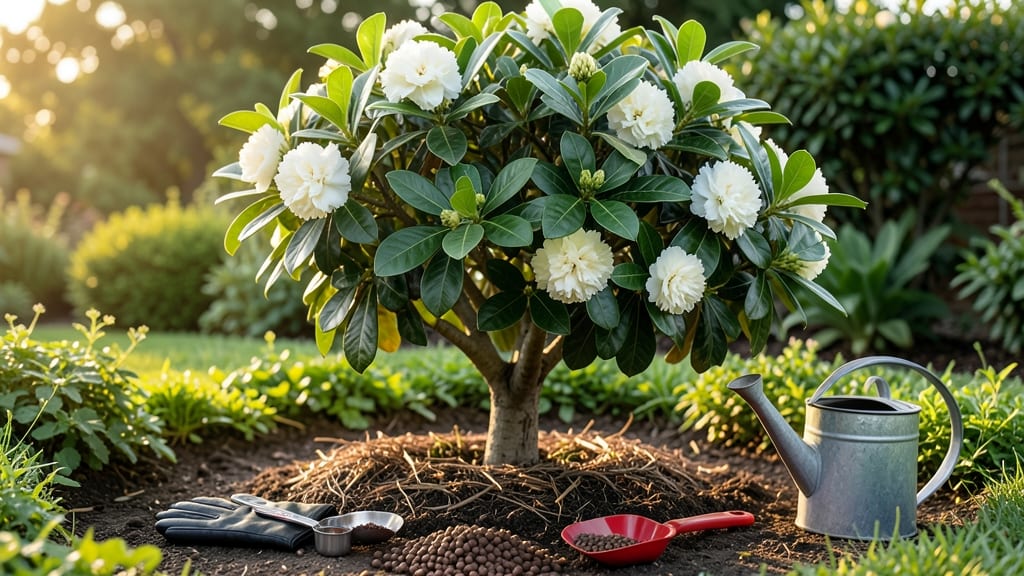
Fertilizer for Gardenia Tree: Acid-Loving Feeds That Boost Blooms

Fertilization

Fertilizer for Gardenia Tree: Acid-Loving Feeds That Boost Blooms

The right fertilizer for gardenia tree is the secret to those fragrant, glossy blooms you dream of—skip the wrong formula, and you’ll end up with yellowing leaves or stunted growth.

Picture this: You’ve nurtured your gardenia for years, but the flowers stay sparse or the leaves lose their luster. The issue might not be water or sunlight—it’s likely the fertilizer. Gardenias crave acidic, nutrient-rich food, and using the wrong type can actually harm them over time.

In this guide, I’ll break down the best acidic fertilizers for your gardenia, whether you prefer organic options like coffee grounds or synthetic blends like azalea food. You’ll also learn the exact timing for feeding (spring and summer only!) and how to spot over- or under-fertilization before it’s too late.

Ready to turn your gardenia into a blooming superstar? Let’s get started with the perfect fertilizer plan for your acid-loving shrub.

💚 💚 💚
🌸 Gardenia Tree Feeding Guide
Frequency
Every 4-6 weeks during growing season
Best Time
Early morning
NPK Ratio
7-9-5 (Acid-loving plant formula)
Amount
1 tbsp per plant (spring), 1 tbsp per 2 sqft (summer)

Best acidic fertilizers for gardenia trees to maximize blooms

Gardenia trees crave acidic soil with a pH between 4.5–6.0 to produce those fragrant, creamy-white blooms you adore. Without the right acidic fertilizer, your gardenia might struggle with yellowing leaves, sparse flowers, or stunted growth.

The key lies in choosing a fertilizer with the perfect nitrogen-phosphorus-potassium (NPK) ratio and micronutrients like magnesium and iron, which gardenias desperately need for vibrant foliage and abundant blooms.

Not all fertilizers are created equal—some are organic, breaking down slowly to feed roots over time, while others are synthetic, delivering quick results. Slow-release options like granular fertilizers are ideal for steady growth, whereas liquid fertilizers provide an immediate nutrient boost.

Let’s explore the top choices tailored for your gardenia’s needs, so you can transform those lackluster stems into a bloom-filled spectacle.

Type NPK Ratio Key Ingredients pH Level Best For Pros Cons
Miracid® Azalea/Camellia 8-3-9 Iron, magnesium, sulfur 4.2–5.0 Bloom production Fast-acting, easy to apply Requires monthly feeding
Jobe’s Azalea & Camellia 10-6-8 Iron chelate, sulfur-coated nitrogen 4.5–5.5 Root development Slow-release granules Higher nitrogen risk
Espoma Organic Acid-Lover 4-3-4 Kelp, sulfur, bone meal 5.0–6.0 Soil health 100% organic, slow release Slower results
Fish Emissions 7-9-5 7-9-5 Fish emulsion, iron 5.5–6.5 Foliar spray Quick nutrient uptake Strong odor
Down to Earth Acid Mix 3-4-6 Alfalfa, kelp, sulfur 4.8–5.8 Container gardenias No synthetic chemicals

How to apply gardenia fertilizer correctly for year-round growth

Timing and technique make all the difference when fertilizing your gardenia tree. These acid-loving beauties need nutrients at specific times to produce those fragrant white blooms you adore. The key is feeding during active growth periods while avoiding harsh chemicals that disrupt their delicate balance.

Let’s break down the seasonal schedule that will transform your gardenia from struggling to stunning.

Start with a soil pH test before applying any fertilizer. Gardenias thrive in acidic soil (pH 4.5–6.0). If your soil tests higher, amend it with sulfur or peat moss before fertilizing.

This ensures your gardenia can absorb nutrients efficiently. Skipping this step often leads to yellowing leaves, even when you’re using the right fertilizer.

⚠️ WARNING: Over-Fertilizing Kills Gardenias!

Never use alkaline fertilizers or those labeled for lawns and vegetables. Gardenias hate high pH, which locks out essential nutrients like iron and magnesium. Even "balanced" 10-10-10 fertilizers can burn roots if applied too frequently. Always choose acid-loving plant formulas (like Azalea/Camellia blends) and halve the recommended dose for your first application.

Symptoms of over-fertilizing include brown leaf tips, stunted growth, and dropped buds. If you see these signs, flush the soil with water for 15 minutes to leach excess salts.

Spring is the most critical fertilization window for gardenias. As new growth emerges (typically April–May in most climates), apply a slow-release acidic fertilizer like 7-9-5. Work it into the top 2–3 inches of soil around the root zone, but avoid touching the trunk.

Water thoroughly after applying to help nutrients penetrate the soil.

During summer, switch to a liquid foliar feed every 4–6 weeks. This method delivers nutrients directly to leaves while avoiding root burn. Look for products with micronutrients like iron and manganese, which gardenias need for vibrant blooms.

Always apply in the early morning to prevent leaf scorch from the sun.

Fall fertilization should be light or skipped entirely. By September–October, gardenias begin preparing for dormancy. A half-dose of fertilizer in early fall can support root strengthening, but avoid heavy feeding. Winter is a no-fertilizer zone—your gardenia’s roots are resting, and feeding can encourage weak, frost-sensitive growth.

For potted gardenias, reduce fertilizer amounts by 50% since roots have less soil to absorb nutrients. Always water before fertilizing to prevent salt buildup in the soil.

If your gardenia’s leaves turn yellow between veins, it’s a classic sign of iron deficiency—chelate iron supplements can help, but first check your soil pH.

Consistency is key. Stick to this seasonal schedule, and your gardenia will reward you with lush foliage and abundant blooms year after year. Happy growing! 🌸

★★★★★4.7(7 reviews)
Categories Fertilization