
Vegetables
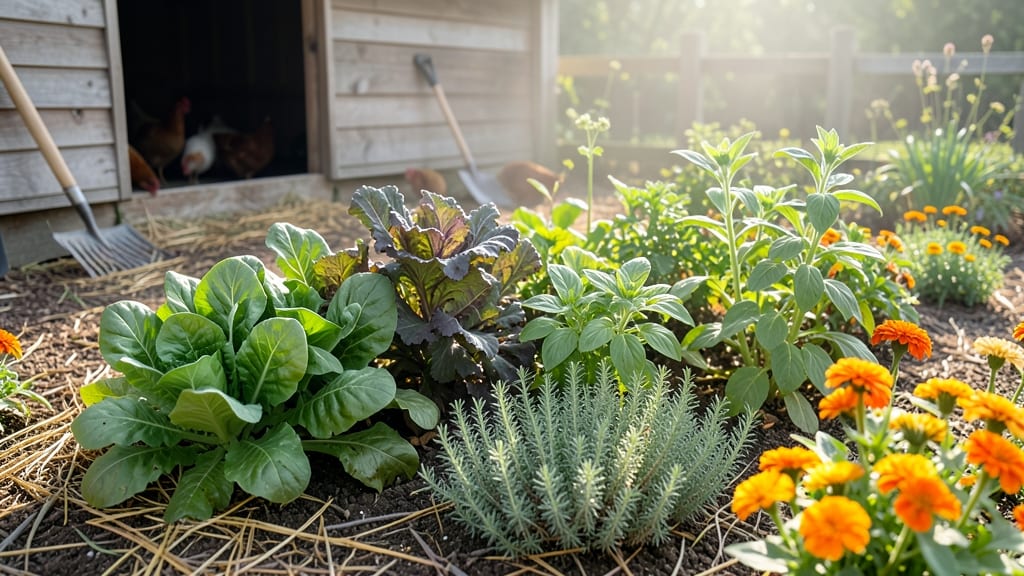
Combining a chicken coop and garden creates an efficient system where chickens deter pests, fertilize soil, and improve composting while sharing space with crops. Position the coop near leafy greens, use mobile setups for flexibility, and place nesting areas under tall plants to optimize both productivity and harmony.
This dual-purpose approach works because chickens naturally suppress garden pests like aphids and slugs while their manure acts as a nutrient-rich fertilizer. 🐔 The key is strategic placement—keeping coops 3-5 feet from leafy greens but 10+ feet from root vegetables to prevent soil contamination.
Many gardeners start with mobile coops on tracks to test compatibility before committing to permanent structures, which also makes seasonal rotations easier.
What makes this layout particularly effective is how it mimics natural ecosystems. Chickens scratch and peck, aerating soil and breaking down organic matter, while their presence deters larger pests that might otherwise devastate your crops.
For urban gardeners with limited space, elevated coops over compost bins or multi-level raised beds create vertical harmony that maximizes every square foot.
💡 In This Article
- Why Chicken Coop Placement Boosts Garden Productivity
- Top 5 Space-Saving Chicken Coop and Garden Layouts
Why chicken coop placement boosts garden productivity
Chickens act as natural pest controllers by targeting insects like aphids, slugs, and cutworms that would otherwise devastate your garden. Their foraging behavior aerates the soil, breaking down organic matter and creating ideal conditions for microbial activity.
Studies show that chicken manure contains 2-3% nitrogen, 1-2% phosphorus, and 0.5-1% potassium, making it one of nature's most efficient fertilizers when properly composted.
The proximity of the coop to your plants directly impacts this synergy. For leafy greens like lettuce or kale, position the coop 3-5 feet away—close enough for the chickens to patrol but far enough to prevent soil compaction.
Root vegetables such as carrots or potatoes need 10+ feet of separation to avoid manure contamination, which can cause forking or bitter flavors. 🐔 The ideal placement also considers wind direction: position the coop upwind of delicate flowers to prevent pollen contamination from chicken dust.
This ecological partnership extends to your compost system. Chickens thrive on kitchen scraps and garden waste, while their bedding materials (straw, wood shavings) break down rapidly when added to compost piles.
The heat generated by their manure accelerates decomposition, creating nutrient-rich "chicken compost" in 4-6 weeks instead of the 6-12 months required for traditional compost. This closed-loop system reduces waste while giving you a steady supply of organic fertilizer.
One often-overlooked benefit is the psychological impact on your garden ecosystem. Chickens' presence deters larger pests like rabbits and deer, which are drawn to gardens but avoid areas with active poultry.
Their constant movement also disrupts the life cycles of soil-borne diseases by exposing pathogens to sunlight and air, a process called "soil solarization." This natural pest management reduces the need for chemical interventions, creating a healthier growing environment.
For fruit trees and berry bushes, consider placing nesting boxes under their canopies. The shade provides protection from predators while the falling leaves and fruit create a natural food source for your flock.
This arrangement also mimics how wild birds and small mammals interact with forest ecosystems, creating a balanced microclimate where both plants and poultry thrive. The key is observing your chickens' natural behaviors and adjusting placements based on their activity patterns.
What most people don't realize is how chicken dust—composed of feathers, skin flakes, and dried manure—can actually benefit certain plants when applied in moderation. Sprinkled lightly around nitrogen-loving plants like corn or squash, it provides a slow-release fertilizer that outperforms synthetic alternatives.
However, avoid applying it directly to leaf surfaces, as it can clog stomata and reduce photosynthesis. 🌱 The secret lies in strategic placement that leverages these natural processes without creating imbalance.