
Planting
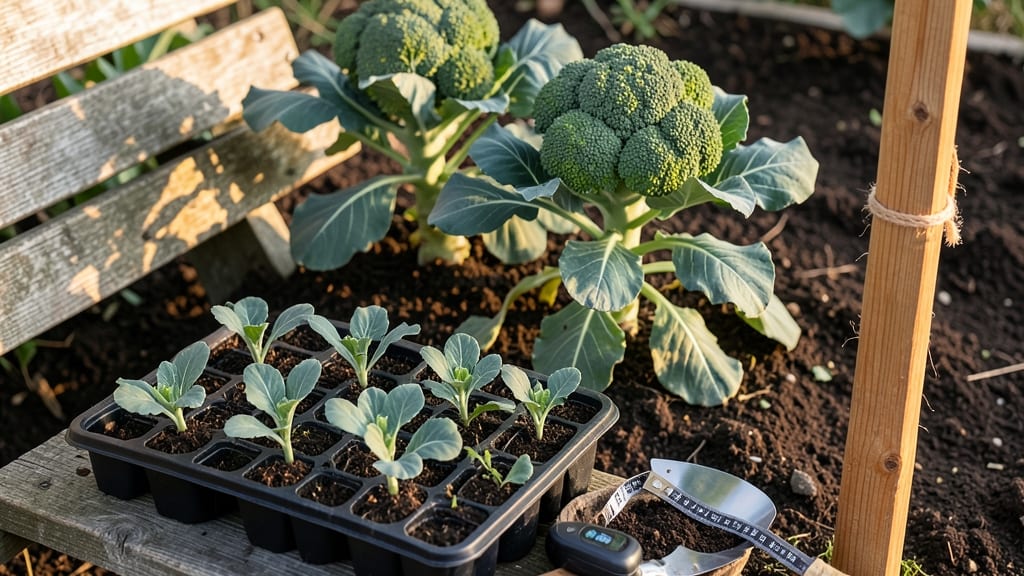
Spacing broccoli in your garden at 18 inches apart is the single move that turns a patchy harvest into a bounty of crisp, healthy heads.
Struggling with patchy broccoli harvests? The secret isn’t just soil or sunlight—it’s the spacing between plants that determines whether you’ll get bushels of crisp florets or stunted, crowded failures.
Too close, and your plants compete for nutrients, leaving you with small, bitter heads and a higher risk of disease. Too far apart, and you waste valuable garden space. Getting it right means bigger yields, faster growth, and plants that thrive from seed to harvest.
Below, I’ll walk you through the science behind 18-inch spacing, how to adjust it for different garden types, and what to do if you’ve already planted too close. No more guessing—just proven results for your 🥦 garden.
Why 18-Inch spacing maximizes broccoli yield and plant health
When I first planted broccoli, I assumed closer spacing would mean more plants and bigger harvests. Big mistake! Crowding my broccoli plants led to smaller heads, yellowing leaves, and even fungal infections.
The 18-inch spacing isn’t just a random number—it’s a science-backed distance that balances growth potential and plant health. This spacing ensures each plant gets the airflow, sunlight, and nutrients it needs to thrive.
Without it, your broccoli will fight for resources, leading to stunted growth and poor yields.
Broccoli plants are heavy feeders, meaning they demand nutrients and water to produce those large, dense heads we all love. When plants are too close—like 12 inches apart—their roots compete aggressively for these resources.
This competition weakens the plants, making them more susceptible to diseases like clubroot or downy mildew. The 18-inch gap gives roots enough room to spread out, allowing them to access deeper soil layers where nutrients and moisture are more abundant.
Here’s the kicker: sunlight exposure plays a huge role too. Broccoli needs 6+ hours of full sun daily to develop those tight, flavorful heads. When plants are crowded, the inner ones get shaded, leading to leggy growth and smaller florets.
Spacing them 18 inches apart ensures every plant gets equal access to sunlight, promoting uniform growth and larger heads. Think of it like giving each plant its own personal sunspot in the garden.
Now, you might wonder why not go even wider, like 24 inches? While extra space might seem ideal, it’s often wasted garden real estate. Broccoli plants mature quickly, and leaving too much space can lead to uneven soil moisture and weed competition.
The 18-inch sweet spot strikes the perfect balance—close enough for efficiency, but far enough to avoid competition. Plus, it makes harvesting and maintenance much easier. You won’t be battling through a jungle of leaves just to reach your broccoli!
| Spacing Type | Plant Health | Yield Quality | Disease Risk | Sunlight Access | Best For |
|---|---|---|---|---|---|
| 12 inches | Weak stems, yellowing leaves | Small, loose heads | High (fungal risk) | Poor (shading) | Tight spaces, containers |
| 18 inches | Strong, healthy plants | Large, dense heads | Low (good airflow) | Optimal (full sun access) | In-ground gardens, raised beds |
| 24+ inches | Healthy but sparse | Good, but fewer plants | Low (but wasted space) | Good (but uneven moisture) | Large gardens, low-density planting |
Let’s talk about disease prevention, because this is where spacing makes or breaks your harvest. Broccoli is prone to fungal diseases like downy mildew and white rot, which thrive in humid, crowded conditions.
When plants are packed too closely, airflow is restricted, and moisture lingers on leaves, creating the perfect breeding ground for pathogens. The 18-inch spacing allows air to circulate freely, keeping leaves dry and reducing the risk of infections.
I’ve seen firsthand how well-spaced broccoli resists diseases far better than crowded patches.
Another critical factor is root competition. Broccoli has a deep taproot system that needs room to explore the soil. When roots are crammed together, they struggle to access water and nutrients deeper in the soil.
This forces them to compete aggressively near the surface, leading to shallow root systems and nutrient deficiencies. With 18-inch spacing, roots can spread out naturally, accessing a larger volume of soil. This leads to stronger plants that can support those heavy broccoli heads without toppling over.
If you’re growing multiple broccoli varieties, like Calabrese and Romanes
How to adjust broccoli spacing for different garden types
Your broccoli plants deserve space just like you do—crowding leads to competition for nutrients, sunlight, and air circulation. The standard 18-inch spacing works for in-ground plots, but different garden setups require adjustments.
Whether you're working with raised beds, containers, or succession planting, getting the spacing right means the difference between bountiful harvests and stunted plants.
Let’s break down the ideal spacing for each garden type, including how to maximize your space without sacrificing plant health. Proper spacing isn’t just about fitting more plants—it’s about giving each plant room to thrive.
For example, in raised beds, you can plant broccoli in tighter rows because the soil warms faster and drains better, but you’ll still need to adjust the plant-to-plant distance.
- 🪴 Raised Beds: 12-14 inches apart in rows spaced 18-24 inches apart. The elevated soil allows for closer rows since drainage is improved.
- 🏺 Containers/Pots: 1 plant per 12-inch pot (or 2 per 18-inch pot). Use stackable pots to save space vertically.
- 🌍 In-Ground Plots: 18-24 inches apart in rows spaced 24-36 inches apart. Wider spacing prevents disease and improves airflow.
- 🔄 Succession Planting: 12-15 inches apart with staggered rows. Plant new seedlings every 2-3 weeks to extend harvest.
For raised beds, the key is to plant broccoli in a grid-like pattern with rows running north-south to maximize sunlight exposure. If your raised bed is only 4 feet wide, plant broccoli on one side and use the other side for faster-growing crops like lettuce or radishes.
This intercropping technique saves space while keeping your broccoli well-spaced.
Container gardening is where creativity comes into play. If you’re using stackable pots, place your broccoli in the largest pots at the bottom (18-inch diameter) and smaller pots on top for companion plants like bush beans or spinach.
Just remember: one broccoli plant per 12-inch pot is the absolute minimum to avoid root competition.
When planning for succession planting, adjust your spacing slightly tighter (12-15 inches apart) to fit more plants initially. As the first batch matures, you’ll harvest those plants and replant the space with new seedlings.
This method ensures a continuous harvest throughout the season, but it requires careful monitoring to avoid overcrowding as plants grow.
Finally, always adjust your spacing based on your broccoli variety. Dwarf varieties like 'Calabrese' can handle 12-inch spacing, while larger varieties like 'Romanesco' need the full 24 inches.
Check the seed packet for variety-specific recommendations—it’s the quickest way to avoid spacing mistakes that could ruin your harvest. 🥦