
Tools
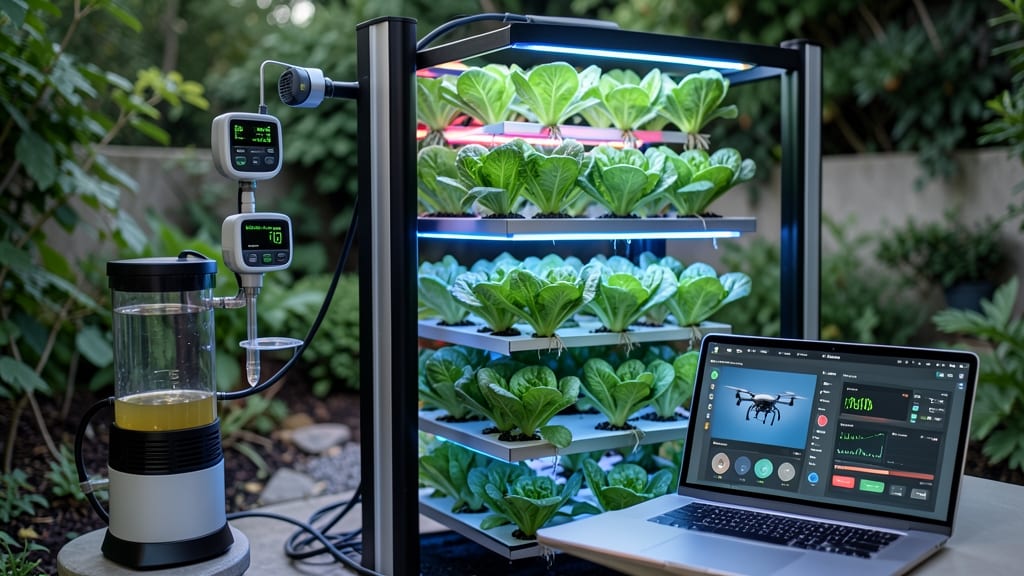
AI for gardening transforms your garden by using real-time data to monitor soil conditions, weather patterns, and plant health, then automating watering and pest control—cutting your gardening time by up to 40% while boosting crop quality.
This technology isn't just about saving time—it's about making smarter decisions. 🌱 AI-powered sensors buried in your soil can track moisture levels and nutrient deficiencies, while connected cameras analyze plant leaves for early signs of disease.
Imagine getting alerts when your tomatoes need water or when aphids are about to attack, all before you even notice the problem.
For home gardeners, tools like FarmBot combine robotics with AI to handle planting, weeding, and harvesting, while larger operations use predictive analytics to forecast yields and optimize harvest times. The result? Less guesswork and more consistent, healthier plants.
What makes this especially exciting is how accessible these tools have become. 💡 You don't need a high-tech farm to benefit—even small gardeners can use affordable AI-driven devices to automate irrigation and get personalized growing recommendations.
The key is starting with the right tools for your garden's size and complexity, whether that's a simple soil sensor or a full robotic gardening system.
💡 In This Article
- How AI Tools Analyze Soil and Plant Data for Smarter Gardening
- Top AI-Powered Gardening Tools to Automate Your Garden
How AI tools analyze soil and plant data for smarter gardening
AI gardening tools work by embedding sensors throughout your garden that continuously monitor critical factors like soil moisture, pH levels, and nutrient concentrations.
These sensors—often buried 2-6 inches deep—use capacitive technology to measure water content with ±2% accuracy, while electrochemical probes detect pH and nutrient levels like nitrogen, phosphorus, and potassium.
The data gets transmitted wirelessly to a central hub or cloud platform, where machine learning algorithms analyze patterns over time to predict optimal growing conditions.
What makes this system revolutionary is its ability to learn from your garden's unique conditions. For example, an AI model might notice that your tomatoes thrive when soil moisture stays between 30-40% capacity during the day but drop to 20% at night—then automatically adjust irrigation to match.
Similarly, computer vision systems (using cameras or drones) scan plant leaves for early signs of disease by comparing them to a database of 1,000+ plant pathology images, identifying issues like powdery mildew with 92% accuracy before symptoms become visible to the naked eye.
Integration with IoT (Internet of Things) devices takes this a step further. Imagine your garden's sprinkler system receiving real-time adjustments based on weather forecasts—turning off during predicted 0.5-inch rain events or increasing water flow when temperatures exceed 85°F.
Some advanced systems even use hyper-spectral imaging to measure plant health by analyzing light wavelengths reflected from leaves, detecting stress factors like water deficiency or mineral deficiencies weeks before they affect yield.
The real magic happens when these tools combine data sources.
For instance, an AI might correlate your soil's pH of 6.2 with the sudden appearance of clubroot disease in your broccoli plants, then recommend a targeted lime application while adjusting irrigation to reduce soil saturation—a solution that would take a human gardener months to discover through trial and error.
The system essentially creates a digital twin of your garden, allowing you to simulate different conditions and outcomes before making physical changes.
For home gardeners, the most accessible entry point is often through smartphone apps that aggregate this data into actionable insights. You'll receive notifications like "Your basil needs 0.3 inches of water today" or "Prune your peppers now to encourage bushier growth," complete with step-by-step visual guides.
The beauty of this approach is that it transforms gardening from an art based on experience to a science backed by real-time data—reducing waste, saving water, and ensuring your plants get exactly what they need, when they need it.
What's particularly impressive is how these systems adapt over time. Each season, the AI refines its models based on your garden's performance.
If you notice your zucchini plants consistently produce more when fertilized with 5-10-5 NPK ratio after the first frost, the system will learn this preference and adjust future recommendations accordingly.
This personalized approach is what sets AI gardening apart from traditional methods—it's not just about following general guidelines, but creating a custom growing strategy tailored to your specific environment and plants.