
Light Requirements
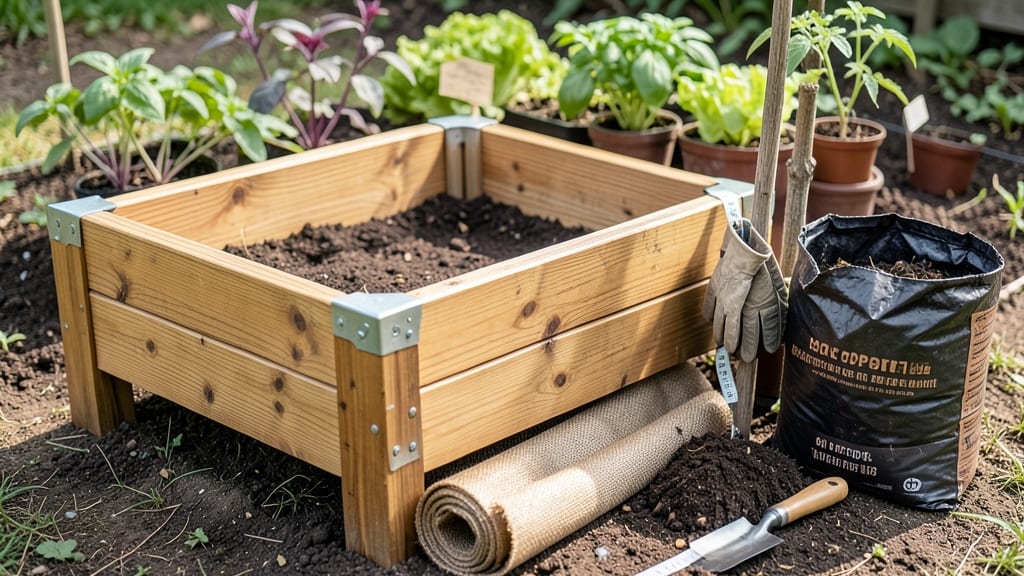
A 4 x 8 raised garden bed needs 1.6 cubic feet of soil per inch of depth—so a typical 10-inch bed requires 12.8 cubic feet, while deeper 24-inch beds demand about 36.5 cubic feet. Multiply your bed's length, width, and depth (in feet) to calculate exact needs, then account for settling by adding 10-20% extra.
A 4 x 8 raised garden bed's soil volume depends on your planting depth—most vegetables thrive in 10-12 inches, but deeper beds (up to 24") support root crops like carrots or potatoes. Loose, amended soil (mixed with compost) settles over time, so always buy 10-20% more than your calculation suggests.
For example, a 12-inch bed needs ~16 cubic feet, but I recommend rounding up to 18 to avoid running short mid-project. 🌱
Pro tip: Buy soil in bulk from local farms or landscaping suppliers—it's often 30-50% cheaper than pre-mixed bags. Mixing your own blend (60% topsoil, 30% compost, 10% perlite) cuts costs further while improving drainage. Just weigh the bags first—many suppliers sell by volume, but density varies!
💡 In This Article
- Calculating Soil Volume for Raised Beds: Depth, Compaction, and Amendments
- Cost-Saving Tips for Buying Raised Garden Bed Soil
Calculating soil volume for raised beds: depth, compaction, and amendments
Your raised bed's soil volume isn't just about the empty space—it's about the settling factor. Loose, amended soil (like compost-blended mixes) can lose 20-30% of its volume within the first few weeks as organic matter decomposes and particles compact.
For example, a 10-inch deep bed filled with fresh compost-topsoil mix might start at 16 cubic feet but settle to just 12 cubic feet after watering and root growth. This is why gardeners always overestimate by 10-20%—it's not just theory, it's physics!
The formula length × width × depth (in feet) gives you the raw volume, but real-world adjustments matter. A 6-inch bed (ideal for herbs) needs just 8 cubic feet, while a 24-inch bed (for deep-rooted plants) jumps to 38.4 cubic feet before accounting for settling.
Pro tip: Measure your bed's interior dimensions precisely—many kits list "external" dimensions that include wood thickness, which can add 1-2 inches to each side, increasing your soil needs unexpectedly. 🌿
Soil type dramatically affects volume too. Pure topsoil compacts less than compost-heavy mixes (which can shrink 30%+), while sandy soils stay looser. For a 12-inch bed, I recommend using a 60/40 mix of topsoil and compost—this gives you better moisture retention while minimizing settling.
Test your soil's density by filling a 12" × 12" × 12" cube (1.7 cubic feet) and weighing it: most amended mixes weigh 80-100 lbs, while pure topsoil can exceed 120 lbs.
Here's a critical detail many overlook: organic matter breaks down. A bag labeled "compost" might contain 50% organic material that will decompose further, reducing volume. For long-term planning, account for annual top-ups—most amended soils lose 5-10% of their volume yearly due to microbial activity.
This is why professional gardeners recommend adding 1-2 inches of compost annually to maintain fertility and structure. 🔄
For precise calculations, convert your measurements to feet first. A 4' × 8' × 1' bed equals 32 cubic feet (4 × 8 × 1), but if you're using 10-inch depth, multiply by 0.833 (10/12) to get 26.67 cubic feet.
Round up to 28 cubic feet to account for settling. For visual learners, imagine stacking 55-gallon drums (each ≈ 4.4 cubic feet)—you'd need 7 drums for a 10-inch bed, but likely 8-9 after settling.
One final pro move: layer your soil strategically. Place 2-3 inches of coarse material (gravel or bark chips) at the bottom for drainage, then 6-8 inches of topsoil, and top with 2-4 inches of compost.
This layering reduces settling in the root zone while improving water infiltration. The compost layer will compress the most, so build it thicker than you think you'll need. 🌱