
Picking
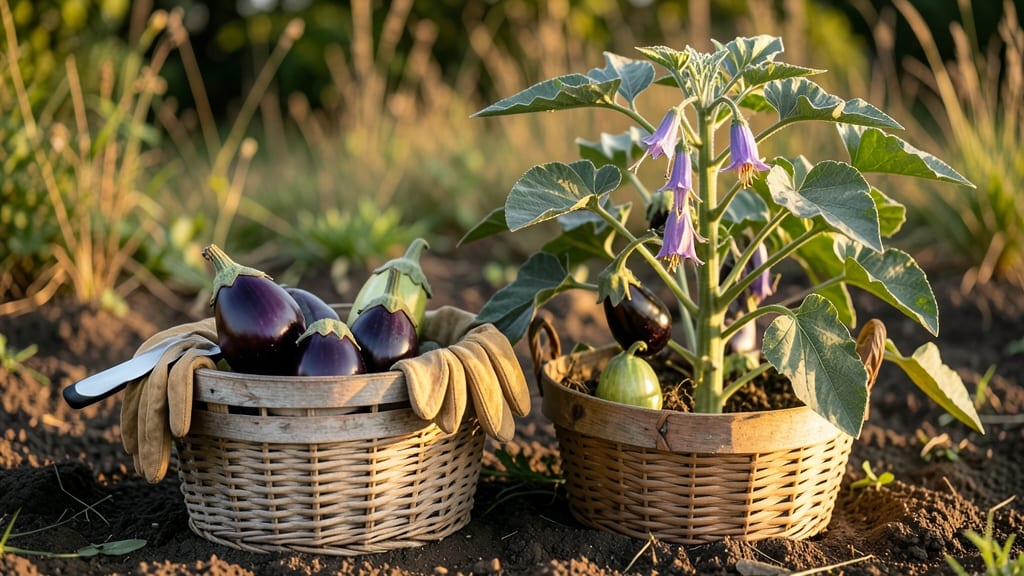
To pick eggplant from your garden at the perfect moment means catching them when they’re glossy, firm, and fully colored—not a second too early or late.
Picture this: you’ve nurtured your 🍆 plants all summer, only to wonder if that deep purple fruit is ready or still needs time. One wrong move, and you’re left with bitter, seedy, or underdeveloped eggplant.
The good news? With just a few simple checks—size, color, and stem snap—you’ll never guess again.
Regional climates throw a wrench into timing, too. In Zone 6a, where summers are short, you’ll need to act fast once July rolls around. But whether you’re in a hotter zone or a cooler one, these visual cues will help you harvest at peak flavor every time.
Below, I’ll walk you through the 5 key signs of ripe eggplant, how to test them like a pro, and even tricks to stretch your harvest season for bigger yields. No more second-guessing—just perfect, restaurant-worthy eggplant straight from your garden.
5 Visual cues to identify perfectly ripe eggplant
Picking eggplant at the right moment transforms your garden harvest from good to exceptional. The difference between a bitter, seedy fruit and one packed with rich flavor often comes down to these five simple visual cues.
I’ve learned the hard way—overripe eggplant turns spongy and bland, while underripe ones lack depth. Let’s break down exactly what to look for before cutting that stem.
First, consider the color intensity. Mature eggplant should display its full, vibrant hue—deep purple, black, or white, depending on the variety. A pale or uneven color means it’s not ready yet.
I always check for a consistent glow under sunlight, which signals peak ripeness. This is especially true for heirloom varieties like Black Beauty or Rosa Bianca, where color depth directly impacts flavor.
Next, examine the skin texture. A perfectly ripe eggplant has a smooth, glossy surface that feels firm to the touch. If the skin feels dull or spongy, it’s past its prime.
I press gently—if it leaves a slight dent, harvest it immediately. This texture check is your best defense against overripe fruit, which can develop a mealy interior.
Now, let’s talk about size and shape. Most varieties reach their mature size between 4 to 8 inches long, depending on the type. For example, Ichiban stays compact, while Long Purple grows elongated.
I measure against the plant’s typical yield—if it’s close to the variety’s standard, it’s likely ready. Smaller fruit often tastes bitter, so don’t rush the harvest!
Here’s a pro tip: Twist the stem gently near the fruit. If it separates cleanly with a slight crack, that’s your cue to pick it. This stem separation test is foolproof for determining ripeness.
I’ve seen gardeners miss this step and end up with fruit that falls off the vine prematurely—wasting both time and effort.
Finally, peek inside (if you’re feeling bold!) by cutting a small slice. The seeds should be small and soft, not large and hard. Large seeds indicate overmaturity, which can make the fruit bitter.
I usually save this step for my most prized varieties, but it’s worth the quick check for perfection.
🌱 When to Pick Eggplant: 5 Key Visual Cues
- 🎨 1. Deep, Vibrant Color
Check for consistent, rich hue (purple, black, or white). Pale or streaky color means it’s not ready. - 💧 2. Glossy, Firm Skin
Skin should feel smooth and slightly shiny. Dull or spongy skin signals overripeness. - 📏 3. Mature Size for Variety
Measure against the plant’s typical fruit size (e.g., 4–8 inches). Smaller = underripe. - ✂️ 4. Stem Snaps Cleanly
Gently twist the stem—if it separates easily, it’s ripe. No twist? Wait a day or two. - 🌱 5. Small, Soft Seeds
Cut a slice to confirm seeds are tiny and soft. Large seeds = bitter, overripe fruit.
💡 Pro Tip: Harvest in the morning when skin is coolest for the best texture.
Timing matters just as much as technique. I’ve found that morning harvests yield the freshest fruit because the skin hasn’t had time to soften in the heat. Avoid picking after rain—wet skin can make eggplant prone to rot or bruising.
Always use a sharp knife or pruners to cut the stem, leaving a small stub to prevent disease entry.
Regional climate plays a role too. In hotter zones (USDA 9+), eggplant ripens faster—sometimes in as little as 60 days. Cooler climates (USDA 6-7) may need 75–90 days to reach peak ripeness.
I adjust my harvest schedule based on local weather, but these visual cues remain my go-to guide.
One last piece of advice: Don’t wait too long. Eggplant continues to ripen off the vine, but flavor peaks at harvest. Overripe fruit loses its mealy texture and develops a hollow center.
By mastering these cues, you’ll enjoy eggplant that’s tender, flavorful, and perfect for grilling, roasting, or stuffing.
Now grab your pruners and head to the garden—your next perfectly ripe eggplant is waiting! 🌿
Common mistakes that ruin eggplant harvest timing
Picking eggplant too early or leaving it on the vine too long can turn your harvest into a bitter disappointment. I’ve seen gardeners waste weeks of effort by missing the optimal ripeness window—and it’s easier to avoid than you think.
The key is understanding how overripe and underripe fruit differ in taste, texture, and even nutritional value.
Overripe eggplant develops a spongy texture and bitter flavor, while underripe fruit stays hard and bland. Both mistakes reduce your garden’s potential, and neither is hard to spot once you know what to look for.
Let’s break down the most common timing errors and how to sidestep them for perfect harvests every season.
⚠️ 3 Critical Timing Mistakes That Waste Your Harvest
- Picking too early: Fruit won’t develop full flavor or reach ideal size.
- Waiting too long: Overripe eggplant becomes bitter and mushy.
- Ignoring variety differences: Some types (like Black Beauty) ripen slower than Ichiban.
Pro tip: Check for stem separation—when the fruit detaches easily, it’s ready. If it doesn’t, wait 2-3 days.
One of the biggest mistakes I see is picking eggplant based on color alone. While deep purple or glossy black skin is a good sign, it’s not the only factor. The fruit’s size and firmness matter just as much—especially in cooler climates where ripening slows down.
For example, Italian varieties like Rosa Bianca stay firm longer than Asian eggplants, which soften quickly.
Another common error is harvesting after the first frost, which ruins the fruit’s quality. Even if the eggplant looks ripe, cold temperatures trigger bitterness and shriveling. Always pick before nighttime temps drop below 50°F, or your harvest will taste like disappointment.
I’ve learned this the hard way—last year, my Black Krim eggplants turned seedy and bitter after an early October chill.
Don’t forget that overcrowded plants also delay ripening. When eggplants compete for nutrients and sunlight, they prioritize growth over fruit development. If your plants are packed too closely, prune lower leaves and thin stems to redirect energy to the remaining fruit.
This simple trick can add 1-2 weeks to your harvest window.
Finally, checking ripeness daily is non-negotiable. Eggplant ripens quickly—sometimes in just 24-48 hours—so don’t assume it’s ready because it’s been on the vine for weeks. Run your fingers over the skin: it should feel smooth and firm, not rough or squishy.
A gentle twist at the stem should make it detach cleanly—if it resists, wait another day or two.
By avoiding these timing traps, you’ll enjoy sweeter, firmer eggplants with fewer seeds and better texture. The difference between a perfect harvest and a disappointing one often comes down to just a few days of patience and attention to detail. Trust me, your taste buds will thank you! 🍆