
How To
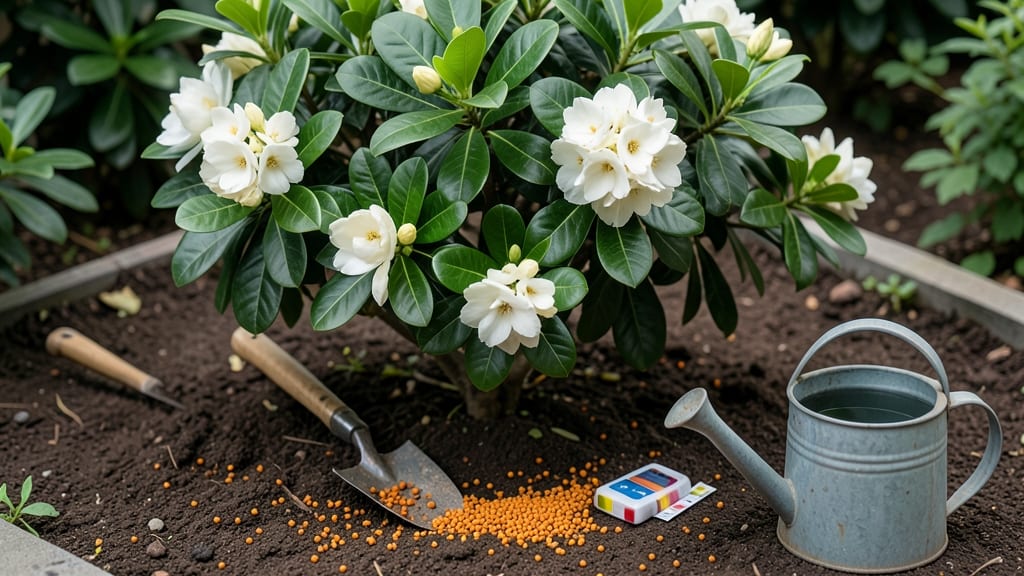
To fertilise gardenias at the right time means the difference between fragrant blooms and struggling shrubs 🌸 — and the key window opens in early spring, just as new growth appears.
Picture this: you’ve waited all winter for your gardenia to wake up, only to fertilise too early and shock the roots, or too late and miss the bloom trigger. The timing isn’t just about the calendar—it’s about reading your plant’s cues, like fresh leaves or bud swells.
In this guide, I’ll walk you through the exact schedule for spring, summer, and fall feeding—plus how to adjust for your climate (Zone 6 or warmer)—so you never over- or under-feed again.
You’ll also learn how to spot nutrient deficiencies (yellowing leaves? That’s a clue!) and when to skip fertiliser entirely to protect your gardenia’s health.
Optimal fertilisation schedule for gardenias: spring feeding for new growth
Spring is the most critical window for fertilising gardenias, when your plant shifts from dormancy to rapid new growth. Timing matters—feed too early, and you risk burning tender roots before they’re ready. Too late, and you miss the bud formation phase that leads to those iconic fragrant blooms.
The key? Start fertilising when you spot new leaf emergence, typically 2-4 weeks after your last frost date.
Gardenias thrive in acidic soil (pH 5.0-6.0), so always test your soil before feeding. If your pH is off, amend with sulfur or peat moss first—fertiliser won’t work well in alkaline conditions.
For organic gardeners, composted leaf mould or worm castings are ideal, while synthetic lovers often reach for slow-release 10-10-10 granules. Both options deliver balanced nutrition without overwhelming your plant.
| Stage | Action | Frequency | Notes |
|---|---|---|---|
| Early Spring (Feb-Mar) | Soil test & amend pH if needed | One-time | Use sulfur or peat moss for acidity |
| New Growth (Late March) | First fertiliser application | Every 4-6 weeks | Organic: compost tea; Synthetic: 10-10-10 granules |
| Bud Formation (April-May) | Continue light feeding | Every 6 weeks | Reduce nitrogen to encourage blooms |
| Post-Bloom (June) | Light feeding or compost top-dress | One-time | Prep for summer growth |
I always start with a light application—about 1 tablespoon of granules per mature plant—or a handful of compost worked into the top 2 inches of soil. Water deeply before and after fertilising to help nutrients absorb and prevent root burn.
For container gardenias, halve the dose since roots are more concentrated. Pro tip: Morning feeding gives roots the whole day to process nutrients before evening heat sets in.
Watch your gardenia’s growth cues to adjust timing. If new leaves appear yellow or stunted, it’s a sign of nutrient deficiency—time to feed. But if you see dark green, glossy leaves with buds forming, you’re on track!
Over-fertilising here causes leaf scorch or bud drop, so err on the side of caution with half-strength applications if your plant looks lush but isn’t blooming.
Organic fertiliser fans swear by fish emulsion or seaweed extract in spring, diluted to half-strength to avoid salt buildup. I’ve had success with a monthly compost tea spray during bud formation—it adds trace minerals without the risk of overfeeding.
For synthetic lovers, slow-release pellets placed in the root zone every 6-8 weeks work wonders, especially in hot climates where frequent watering leaches nutrients.
One mistake I see often? Fertilising after pruning. Always wait 2-3 weeks post-prune to let cuts heal—new growth will be more resilient to nutrient uptake. Also, avoid high-nitrogen fertilisers like lawn food; gardenias need balanced NPK (10-10-10 or 8-3-9) to support both foliage and flowers.
If your soil is already rich, you might skip spring feeding entirely and focus on mulching with pine needles to maintain acidity.
In warmer climates (Zones 8b-9b), gardenias may need two spring feedings—one in February and another in April—since their growing season extends longer. But in cooler Zones (6a-7a), a single late March application followed by a June boost suffices.
Always adjust based on your plant’s visual cues rather than a rigid calendar.
Remember: Healthy soil = happy gardenias. Amend with peat moss or pine bark fines annually to maintain that critical pH 5.0-6.0 range.
And if your gardenia’s leaves start yellowing between veins, it’s a classic sign of iron deficiency—time to switch to an acid-loving plant fertiliser with chelated iron. With the right timing and care, your gardenia will reward you with glossy foliage and fragrant blooms all summer long.
🌸
Fall fertilisation secrets: how to boost next year’s blooms before winter
As gardenias prepare for winter dormancy, many gardeners mistakenly assume fertilisation should stop entirely. But with the right approach, a late-season feeding can supercharge next year’s blooms. The key is timing—too early, and you’ll encourage tender growth that won’t survive frost; too late, and your plant won’t benefit before shutdown.
Let’s uncover the perfect window and methods to strengthen roots without overfeeding.
Gardenias thrive when their roots establish deep reserves before winter. A light feeding in early fall (typically 6-8 weeks before first frost) provides essential nutrients while allowing time for absorption. In USDA Zone 6, this means targeting mid-to-late September.
For warmer zones (Zone 9b), extend this to early October. The goal isn’t to spur growth but to fortify the plant’s foundation for spring’s big bloom show.
- Choose a low-nitrogen, high-phosphorus fertiliser (e.g., 5-10-10 ratio) to promote root development without leafy growth.
- Apply half the spring dose (e.g., ½ tbsp per plant) to avoid salt buildup in soil.
- Water deeply 24 hours before and 48 hours after fertilising to prevent root burn.
- Use organic options like composted pine needles or fish emulsion for slow-release benefits.
- Avoid fertilising if your gardenia shows yellowing leaves or wilting—it’s already stressed.
After fertilising, focus on winter prep adjustments. Mulch heavily with 2-3 inches of pine bark or leaves to insulate roots and retain moisture. In colder zones, wrap young plants with burlap or frost cloth to shield against temperature swings.
Skip fertiliser entirely in winter—your gardenia’s energy should go toward root maintenance, not growth.
Watch for signs your fall feeding worked: dark green leaves by winter and plump buds in early spring signal success. If you see brown leaf edges, flush the soil with water to dilute excess salts. Remember, gardenias reward patience—this fall’s small effort translates to showstopping blooms in May.
For container gardenias, reduce fertiliser to ¼ the dose and use water-soluble options to prevent salt accumulation. Empty pots dry faster, so monitor soil moisture closely—underwatered roots can’t absorb nutrients efficiently.
In both in-ground and potted plants, prune lightly in late fall to remove dead wood and improve airflow for spring.
By mastering this fall strategy, you’ll skip the spring scramble for blooms. Your gardenia will burst into fragrance earlier and more abundantly, proving that seasonal care is the secret to year-round success. 🌸