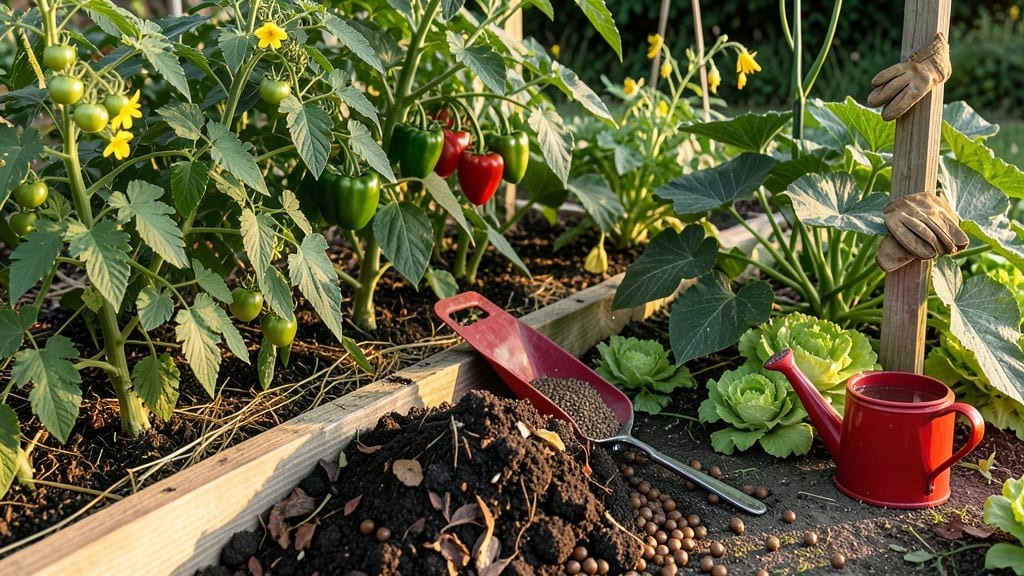
To fertilize a vegetable garden effectively, follow a schedule based on soil tests and plant needs—most crops thrive with feedings every 4 to 6 weeks during the growing season, but timing varies by type.
Wondering why your 🥬 isn’t thriving despite your best efforts? The answer might lie in your fertilization schedule—overdoing it can burn roots, while underdoing it starves plants of essential nutrients. A soil-test-based approach ensures peak yields without wasting resources.
Leafy greens like lettuce need lighter, more frequent feedings, while heavy feeders like tomatoes benefit from balanced nutrients every 3 to 4 weeks. Synthetic fertilizers offer quick results, but organic options like compost build long-term soil health.
Below, I break down the exact schedule for your garden, from spring planting to fall harvest, plus how to spot when your plants are begging for (or rejecting) more food.
💚
💚
💚

🥬
Vegetable Garden Feeding Guide
Frequency
Every 4-6 weeks during the growing season
Best Time
Early morning or evening after watering
NPK Ratio
10-10-10 (balanced) or 5-10-10 (for leafy greens)
Amount
1 tbsp per plant or 1 cup per 10 sqft
Soil-test-based fertilization frequency by plant type and growth stage
Fertilizing your vegetable garden isn’t a one-size-fits-all task—it depends on your soil test results, plant type, and growth stage. A soil test reveals your N-P-K ratios (nitrogen, phosphorus, potassium), which dictate how often and what type of fertilizer to apply.
For example, leafy greens like lettuce thrive with high nitrogen, while root crops like carrots need phosphorus-rich soil for strong roots. Ignoring these differences can lead to poor yields or even plant stress.
Start by grouping your vegetables into three main categories: leafy greens, root crops, and fruiting plants. Each has unique fertilization needs tied to their growth stages—seedlings need gentle feeding, flowering plants require phosphorus, and fruiting plants benefit from potassium.
Organic fertilizers like compost or synthetic options like 10-10-10 blends each play a role, depending on your soil’s deficiencies and your gardening goals.
Below is a soil-test-based fertilization schedule tailored to common vegetable families. Adjust frequencies based on your soil’s N-P-K levels—if your soil is already high in nitrogen, skip the nitrogen-heavy feedings. Always water after fertilizing to prevent root burn, and avoid fertilizing in extreme heat or drought conditions.
| Plant Type |
Growth Stage |
Soil Test N-P-K Needs |
Fertilization Frequency |
Fertilizer Type |
Notes |
| Leafy Greens (Lettuce, Spinach, Kale) |
Seedling |
High N (Nitrogen) |
Every 2 weeks |
Balanced (e.g., 10-10-10) or Fish Emulsion |
Avoid over-fertilizing—leaf burn risk |
| Leafy Greens |
Mature |
Moderate N, Low P-K |
Every 3-4 weeks |
Compost Tea or Low-N Synthetic |
Harvest leaves before fertilizing |
| Root Crops (Carrots, Beets, Radishes) |
Seedling |
Low N, High P (Phosphorus) |
Every 3 weeks |
Bone Meal or 5-10-10 |
Avoid nitrogen—promotes leafy growth |
| Fruiting Plants (Tomatoes, Peppers, Cucumbers) |
Flowering |
Moderate N, High P-K |
Every 2 weeks |
5-10-10 or Potassium Sulfate |
Boost potassium for fruit development |
| Fruiting Plants |
Fruiting |
Low N, High K (Potassium) |
Every 3 weeks |
Banana Peel Tea or 0-0-50 |
Signs your vegetable garden needs fertilizer (and when to hold off)
Your vegetable garden might be silently screaming for nutrients—or begging you to stop! Yellowing leaves on tomatoes or stunted growth in peppers are classic red flags.
But here’s the catch: these signs could also mean you’re overdoing it. Leaf burn or wilting after fertilization? That’s your garden’s way of saying, “Too much!”
Seasonal needs change dramatically. Spring is prime time for feeding—your plants are hungry after winter. But by late summer, most veggies slow down and don’t need extra nutrients. Fall is almost always a “hold off” season, as plants prep for dormancy.
Let’s decode these signals so you can feed your garden just right.
Fertilizing Your Vegetable Garden: Pros & Cons
✅ Pros
- Boosts growth: Extra nutrients = bigger yields
- Fixes deficiencies: Corrects yellow leaves or weak stems
- Improves flavor: Balanced N-P-K enhances taste
- Seasonal timing: Spring feedings jumpstart growth
❌ Cons
- Burns roots: Too much salt or nitrogen causes leaf burn
- Wastes money: Over-fertilizing harms soil and budget
- Attracts pests: Excess nutrients invite aphids or fungus
- Seasonal mistakes: Fertilizing in fall delays dormancy
Key Tip: Always water first, then fertilize. This prevents root burn and ensures nutrients reach deep soil.
Leafy greens like spinach or kale often show nitrogen deficiency first—leaves turn pale yellow. But tomatoes or peppers might drop flowers or fruits if they’re starving for phosphorus or potassium. Stunted growth in root crops like carrots? That’s usually a phosphorus cry for help.
On the flip side, crispy leaf edges or brown tips mean you’ve overdone it. Wilting after feeding? Your plants are stressed from too much salt. Slow down and focus on organic matter like compost instead. Summer is tricky—heat can mask deficiency signs, so monitor closely.
For spring, feed every 4-6 weeks with a balanced 10-10-10 fertilizer. But by July, switch to light feedings or skip entirely. Fall is always a “no-go” unless you’re growing winter greens. Test your soil first—it’s the best way to avoid guessing games.
Pro tip: Observe your plants daily. Healthy vegetable gardens grow steadily, not sporadically. If your tomatoes are flowering but not fruiting, it’s time for a potassium boost. But if your basil is wilting after feeding, flush the soil with water to dilute excess salts. 🌱
★★★★★4.7(2 reviews)
|