
Light Requirements
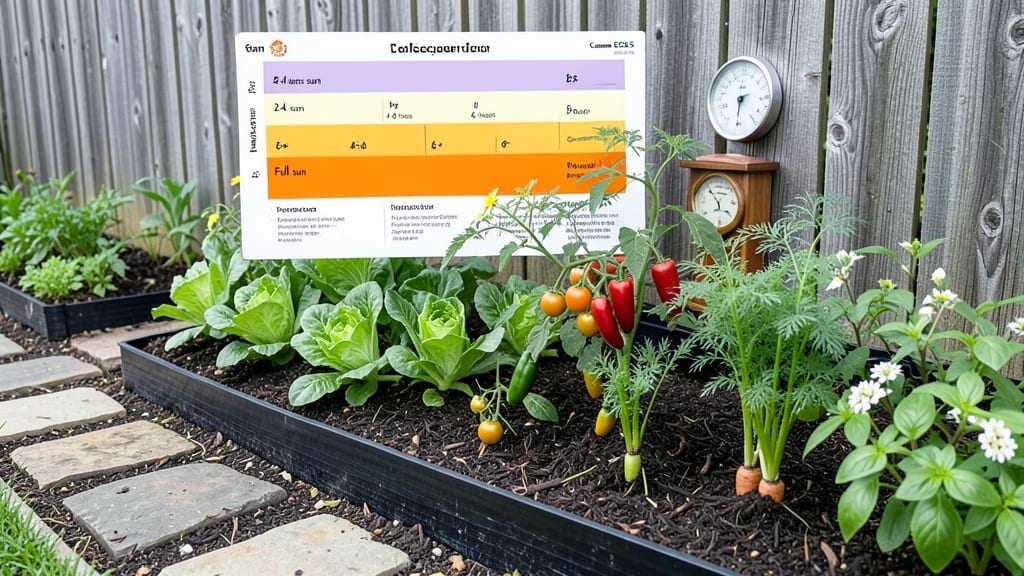
A vegetable garden needs how much sun does a veggie garden need to thrive—specifically, 6 to 8 hours of sunlight daily—the difference between a bountiful harvest and a sad, stunted patch.
Struggling to decide where to plant your veggies? Sunlight is the single most critical factor for a thriving vegetable garden—yet too much or too little can spell disaster for your harvest.
Most vegetables crave full sun, but some, like leafy greens, handle partial shade. Knowing the exact light needs of your crops lets you design a layout that maximizes space and productivity, even in less-than-ideal spots.
Below, I break down how many hours each type of vegetable needs, how to measure sunlight in your garden, and which crops can handle shadier corners—so you can grow more with less guesswork.

Sunlight requirements for vegetable plants by type (full guide)
Understanding sunlight requirements for your vegetable garden is the first step to a bountiful harvest. Most vegetables thrive with 6-8 hours of direct sunlight daily, but some adapt to partial shade or even low-light conditions.
Misplacing plants can lead to stunted growth, poor yields, or even plant death—so let’s break it down by category to help you plan your garden layout like a pro.
Vegetables fall into three main groups based on their sunlight needs: full sun lovers (6+ hours), partial sun plants (4-6 hours), and shade-tolerant varieties (<4 hours). Knowing where each belongs in your garden ensures they get the perfect amount of light without competing for space.
Let’s dive into the specifics so you can maximize your garden’s potential!
For full sun vegetables, think of your garden’s sunniest spots—like south-facing beds or raised containers. These plants, such as tomatoes and peppers, need intense light to produce fruit.
If you’re growing corn or cucumbers, place them where they can stretch toward the sky without being overshadowed by taller plants like sunflowers or pole beans.
Partial sun plants, like spinach and kale, are the garden’s chameleons. They thrive with 4-6 hours of sunlight and can handle a little afternoon shade, making them perfect for east-facing beds or areas with dappled light.
These are great for beginners or gardeners with limited full-sun space—they’re forgiving and still produce well.
Don’t overlook shade-tolerant vegetables! While they won’t thrive in full sun, they’re lifesavers for north-facing gardens or spots under trees. Lettuce, arugula, and parsley can grow happily with just 2-4 hours of light.
These plants are ideal for extending your growing season into late summer or early fall when the sun is less intense.
Pro tip: If your garden has mixed sunlight, use vertical gardening to maximize space. Trellises for cucumbers or beans can climb toward the sun, while shade-loving greens can be tucked underneath.
This way, every inch of your garden works efficiently, and no plant feels left out in the light (or shade)!
One common mistake is assuming all vegetables need full sun. While it’s true that most do, overcrowding sun-lovers can create competition, leading to weaker plants. Rotate crops annually to ensure even sunlight distribution and prevent soil depletion.
For example, if your tomatoes took up the south bed last year, swap them with shade-tolerant greens this season to balance the light.
Ready to map your garden? Start by observing your yard’s sunlight patterns for a week. Note which areas get morning sun, afternoon shade, or full-day light.
Then, group your plants accordingly. With this approach, you’ll create a harmonious garden where every vegetable gets exactly what it needs to thrive—no guesswork required!
Remember, the key to a successful vegetable garden lies in balance. Whether you’re a seasoned gardener or just starting, understanding these sunlight categories will help you design a layout that’s both productive and low-stress. Happy planting!
How to measure sunlight in your garden and adjust plant placement
Measuring sunlight in your garden isn't just guesswork—it's the foundation for a thriving veggie patch. Without knowing how much sun each area gets, you risk planting tomatoes in the shade or lettuce where they'll scorch.
I've learned the hard way that even a 1-hour difference in sunlight can mean the difference between a bountiful harvest and struggling plants.
Start by observing your garden over a week, especially during the longest days of summer and shortest days of winter. Use a simple sunlight tracker (like a white board or notebook) to mark how many hours each spot gets direct sun.
This helps you account for seasonal changes that can shift sunlight exposure by 20-30% between seasons.
- 🌞 Full Sun (6+ hours): Best for tomatoes, peppers, and cucumbers. Place these in the southernmost part of your garden where sunlight lasts from 10 AM to 4 PM.
- ☀️ Partial Sun (4-6 hours): Ideal for beans, carrots, and spinach. These thrive in morning sun with afternoon shade, like near a west-facing fence.
- 🌿 Partial Shade (2-4 hours): Perfect for lettuce, kale, and radishes. Look for spots under dappled shade from trees or near north-facing walls.
- 🌧️ Shade (<2 hours): Reserve for microgreens or shade-loving herbs like cilantro. Use reflective surfaces (like white walls) to bounce extra light into these areas.
For urban balconies or micro-gardens, get creative with reflective surfaces. Place a white tray under pots to reflect light upward, or use mirror panels to redirect sunlight into shady corners. I once increased my balcony garden's light exposure by 30% with just a few strategically placed mirrors!
Adjust plant placement every 4-6 weeks to match seasonal sunlight changes. Rotate heavy feeders like corn and squash to fresh soil to prevent nutrient depletion. In containers, swap pots between sunny and shady spots as needed—just be gentle to avoid root damage.
Don't forget to account for obstructions like trees, buildings, or even your neighbor's fence. These can cast unexpected shade, especially in the late afternoon. Use a sun path diagram (free templates online) to map your garden's light patterns before planting.
Pro tip: If your garden has hot afternoon sun, consider using shade cloth for heat-sensitive plants like peppers or eggplants. This gives you the best of both worlds—full sun exposure without the risk of sunburn or bolting.