
Light Requirements
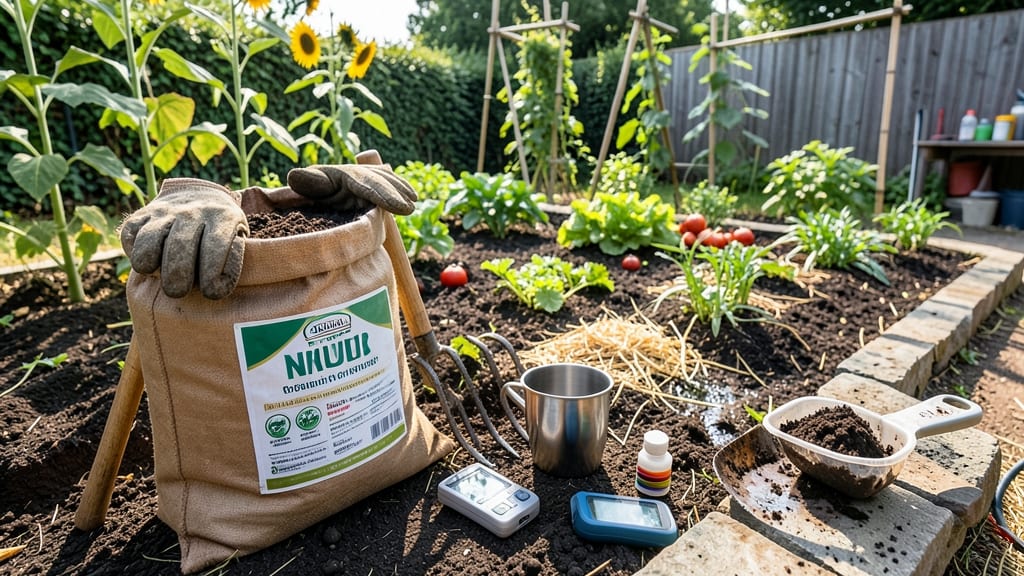
To determine how much cow manure for garden use, start with 1 part fresh manure to 25 parts soil for new garden beds, or 1 part composted manure to 4-6 parts soil for established plants. Adjust these ratios based on your soil type—sandy soils may need up to 50% more, while clay soils should use slightly less. Always compost fresh manure for at least 6 months before applying to avoid burning plants or creating odor problems.
Fresh cow manure is a powerhouse of nutrients, but its raw form is too intense for most plants—especially young seedlings. 🌱 The key is letting it compost first, which stabilizes nitrogen levels and reduces the risk of over-fertilizing.
For vegetables like leafy greens (spinach, lettuce) that crave nitrogen, I recommend mixing composted manure at a 1:6 ratio in spring when plants are actively growing. Root crops like carrots or beets, however, need less nitrogen—stick to a 1:8 ratio to prevent forked roots.
Always work the manure into the top 6 inches of soil rather than piling it on the surface, where it can create ammonia fumes and attract pests.
One common mistake is assuming "more manure equals better growth."
Too much can actually stunt plants by disrupting soil microbes and creating a toxic environment. 🚫 For fruit trees, I've found that a 1:10 ratio of composted manure mixed into the root zone in early spring provides just the right boost without overwhelming the tree.
Always test your soil's pH first—manure works best in slightly acidic to neutral soil (pH 6.0-7.0). If your soil is already rich, you might only need a light top-dressing of composted manure once a year.
💡 In This Article
- Cow Manure Nutrient Breakdown by Composting Stage
- Applying Cow Manure by Plant Type and Soil Condition
Cow manure nutrient breakdown by composting stage
Fresh cow manure has a nitrogen-to-carbon ratio of about 20:1, which is far too high for direct garden use. This imbalance means nitrogen—essential for leafy growth—gets released too quickly, often burning plant roots and creating ammonia fumes. 🌿 The decomposition process transforms this raw material into a balanced fertilizer.
After 6 months of composting, the ratio stabilizes to around 15:1, making it safer for most plants. Phosphorus and potassium remain stable during composting, but their availability increases as organic matter breaks down, creating a slow-release nutrient profile.
During composting, microbial activity converts complex organic compounds into plant-accessible forms. Fresh manure contains 0.5-1.0% nitrogen, but only 10-20% is immediately available to plants. Composting increases this availability to 30-50% while reducing volatile compounds that cause odor.
The phosphorus content (typically 0.2-0.5%) becomes more bioavailable through mineralization, while potassium (about 0.5-1.5%) remains consistent but more evenly distributed in the soil. This is why composted manure works better for long-term soil health rather than quick nutrient boosts.
Temperature plays a crucial role in nutrient transformation. Hot composting (above 130°F) accelerates decomposition but can volatilize some nitrogen, while cooler composting (below 100°F) preserves more nitrogen but takes longer.
I've found that turning the pile every 2-3 weeks maintains optimal temperatures and speeds up the process. 🔥 For gardeners, this means waiting at least 3-6 months for "cold compost" or 2-3 months for "hot compost" before safe application.
The darker, crumbly texture and earthy aroma signal readiness—fresh manure looks coarse and smells strongly ammonia-like.
Overapplying fresh manure can create a "hot spot" effect, where localized high nitrogen concentrations disrupt soil microbes and harm beneficial fungi. Composted manure, however, introduces mycorrhizal fungi and beneficial bacteria that improve soil structure.
The key difference lies in the ammonification process: fresh manure releases ammonia quickly, while composted manure releases nitrogen gradually through nitrification. This makes composted manure ideal for side-dressing (applying alongside growing plants) without risking burn.
For container gardens, where soil volumes are limited, I recommend using 1 part composted manure to 3 parts potting mix—this prevents nutrient overload in small spaces.
The composted version also introduces humus, which improves water retention and aeration. 💫 Unlike fresh manure, which can create anaerobic pockets, composted manure supports aerobic soil life.
Always mix it thoroughly into the top 4-6 inches of soil rather than applying it as a surface layer, which would create a barrier that roots can't penetrate.