
Companion Plants
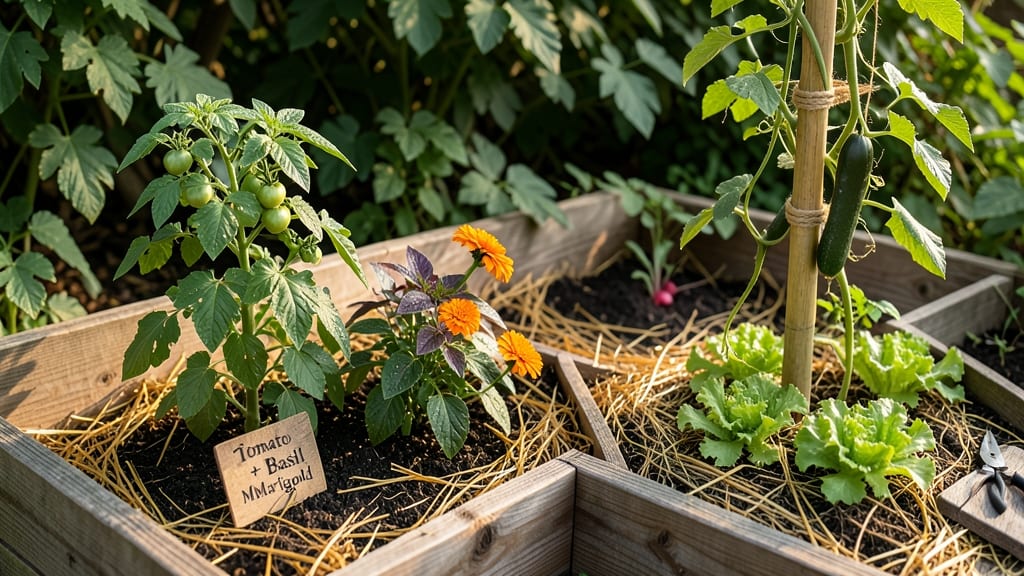
A strategic companion garden layout 🌱 turns your plot into a self-sustaining pest-free zone where every plant plays a role—like a living puzzle where marigolds guard tomatoes and basil boosts their flavor.
Picture this: You’ve spent hours weeding, only to watch pests return the next day. The secret isn’t more sprays—it’s smart spacing that tricks bugs into bypassing your garden entirely. These 3D hacks stack plants vertically, layer them for shade, and pair them for mutual defense, all while saving space.
Whether you’re working with a sun-drenched bed or a shady corner, the right combinations can double your yield, slash pests, and even improve taste. No more guessing which plants belong together—just proven pairings that work in Zone 6 and beyond.
Below, I’ll walk you through the top 3D spacing tricks, the best pest-repelling pairings for your zone, and the common mistakes that wreck even the best layouts—so you can finally grow a garden that thrives on its own.
How to design a 3D companion garden layout for maximum pest control
A 3D companion garden layout isn’t just about planting—it’s about creating a living pest defense system using vertical space, scent barriers, and strategic plant pairings. By layering plants from ground level to trellises, you can deter pests naturally while maximizing your harvest.
The key? Understanding how certain plants repel insects, attract beneficial predators, or compete for nutrients—all while fitting into a compact, efficient design.
Think of your garden as a multi-story apartment building where each plant has its own role. Tall sunflowers or pole beans can act as living trellises, while ground covers like clover suppress weeds.
Meanwhile, herbs like basil and thyme release scents that confuse pests. The best part? This approach works in small urban gardens or large backyard plots—no extra space required!
Here’s how to build your pest-proof 3D garden in simple steps:
Plan Your Layers
Start with three zones: ground level (low-growing plants), mid-height (bushes/herbs), and vertical (trellises/climbers). For example, plant marigolds at ground level to repel nematodes, basil in the middle for tomato pests, and cucumbers on a trellis to save space.
Choose Pest-Repelling Pairs
Pair high-value crops with their natural protectors. Try these combos:
- Tomatoes + basil (repels flies)
- Carrots + leeks (deters carrot flies)
- Cabbage + dill (confuses cabbage moths)
Use Vertical Trellises
Train cucumbers, beans, or squash to climb 3-6 ft trellises to keep them off the ground. Add nasturtiums at the base—their peppery scent deters squash bugs. For tomatoes, use cage trellises and interplant with garlic to repel aphids.
Add Hanging Baskets
Suspend herbs like mint or oregano in baskets above cabbage or lettuce—their strong scents deter pests without crowding below. For fruit trees, hang garlic bulbs in mesh bags to repel codling moths naturally.
Incorporate Ground Covers
Use clover or creeping thyme between rows to suppress weeds and attract beneficial insects like ladybugs. Avoid bare soil—it invites pests like cutworms and slugs. For berry bushes, mulch with straw to deter voles.
Rotate Crops Annually
Prevent soil-borne pests by rotating families (e.g., tomatoes after peppers). Keep a planting map to track rotations. For example, if you grew beans in a spot last year, plant squash there this year—they’re not related and share few pests.
Pro tip: Space plants based on their mature size—crowding invites pests. For instance, tomatoes need 18-24 inches apart, while basil thrives in 6-inch pots beside them. Use straw mulch to retain moisture and deter slugs, which hate dry soil.
My go-to pest-repelling combo? Plant marigolds around the edges of the garden—they release alpha-terthienyl, a compound that repels nematodes, aphids, and even rabbits.
Pair them with bush beans (which fix nitrogen) and lettuce (which loves shade from taller plants). The result? A low-maintenance, high-yield system that pests avoid.
Start small with a 10x10 ft plot and expand. Even a balcony garden can use this method with hanging herbs and vertical strawberries. The key is observation—watch which pests linger and adjust your pairings.
Soon, you’ll have a garden so pest-free, you’ll forget what a tomato hornworm looks like!
🌱
Best pest-free plant pairings by garden zone (with spacing charts)
A companion garden layout works best when you pair plants that naturally repel pests while supporting each other’s growth. In sunny zones (Zones 6-8), focus on tomatoes with basil or carrots with onions—these combos deter aphids and flies.
For shady spots (Zones 4-5), try lettuce with radishes or spinach with strawberries to maximize space and minimize pests.
Herbs like dill, mint, and thyme are powerhouses for pest control—their strong scents confuse insects like cabbage moths and squash bugs. Meanwhile, marigolds and nasturtiums attract beneficial predators like ladybugs and lacewings, creating a natural defense system.
The key? Spacing matters—crowd plants too close, and you’ll invite disease; space them too far, and pests slip through.
Below, I’ve mapped out science-backed pairings for your garden zone, complete with optimal spacing to ensure high yields and pest-free growth. These charts are designed for Zone 6 gardens but adapt easily to nearby zones by adjusting spacing slightly for larger or smaller plants.
| Plant Pairing | Sun Needs | Spacing (inches) | Pest Control Benefit |
|---|---|---|---|
| Tomatoes + Basil | Full Sun (6+ hrs) | 18" apart (tomatoes), 12" apart (basil) | Basil repels whiteflies and improves tomato flavor |
| Carrots + Onions | Partial Sun (4-6 hrs) | 3" apart (carrots), 6" apart (onions) | Onions deter carrot flies; carrots loosen soil for onions |
| Marigolds + Vegetables (e.g., cucumbers, squash) | Full Sun (6+ hrs) | 12" apart (marigolds), 24" apart (vegetables) | Marigolds repel nematodes and attract ladybugs |
| Lettuce + Radishes | Partial Shade (3-4 hrs) | 6" apart (lettuce), 2" apart (radishes) | Radishes mature fast, shading soil to keep lettuce cool |
| Spinach + Strawberries | Partial Sun (4-5 hrs) | 12" apart (strawberries), 4" apart (spinach) | Spinach shades roots; strawberries deter slugs |
| Corn + Beans + Squash (Three Sisters) | Full Sun (6+ hrs) | 12" apart (corn), 6" apart (beans), 36" apart (squash) | Beans fix nitrogen; squash shades soil; corn provides trellis |
For shady gardens, prioritize leafy greens and herbs like parsley or cilantro, which thrive with 3-4 hours of sunlight. Pair them with fuchsia or alyssum to attract hoverflies—natural aphid predators.
In sunny beds, use vertical space with trellises for cucumbers or pole beans, planting nasturtiums at their base to repel squash bugs.
Pro tip: Rotate your layout annually to prevent soil depletion and pest buildup. For example, swap heavy feeders like tomatoes with light feeders like lettuce the following year. This keeps your soil healthy and pests guessing.
Start with these pairings, adjust spacing based on your plants’ mature sizes, and watch your garden become a self-sustaining ecosystem—no chemicals needed! 🌱